

Ready & Packaged Foods
All →Vegetables & Legumes
All →Desserts & Confectionery
All →Meat & Protein
All →Grains & Bakery
All →Beverages
All →Milk & Dairy
All →

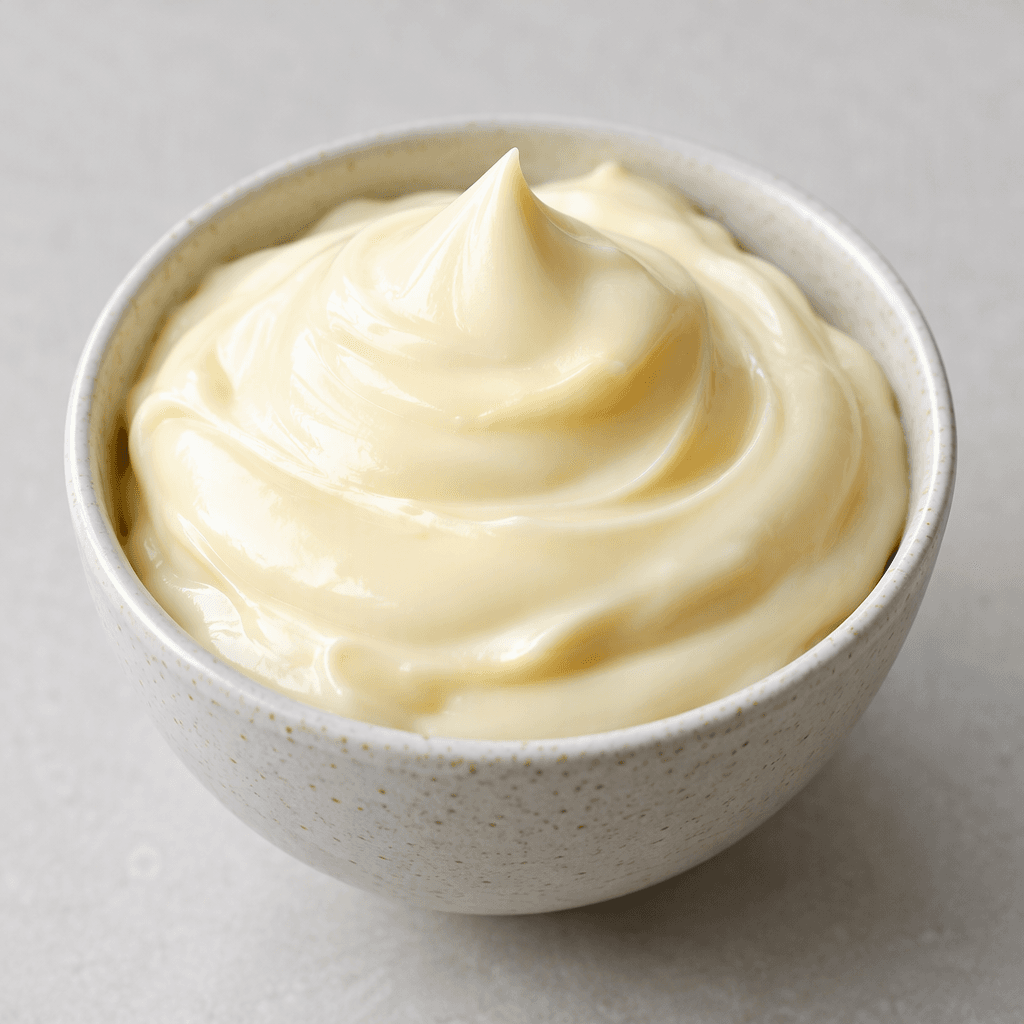
Mayonnaise Calories
High fat, low protein, low carbohydrate, source of vitamin E and K
In season: Spring · Summer · Autumn · Winter
CALORIES
GI
POTASSIUM
FIBER
Quick answer
1 tablespoon (medium) of Mayonnaise (15 g) has 102 calories. That works out to 680 calories per 100 g. It contains 0.1 g of carbs, 0.2 g of protein, 11.3 g of fat and 0 g of fiber. Its 1.1 mg of Vitamin E covers 8% of the Daily Value. Its glycemic index is 0 (low), so it raises blood sugar slowly.
What is Mayonnaise?
Mayonnaise is a thick, creamy emulsion made by whisking oil with egg yolk and an acid such as vinegar or lemon juice. Its name is linked to Mahón, on the Spanish island of Menorca, though the sauce has travelled widely and recipes vary. Mildly tangy and smooth, it brings richness to sandwiches, burgers, salads and dips. In many places it is served alongside chips or used to bind ingredients in dishes such as potato salad; it is also a familiar sandwich spread in English-speaking kitchens. Mayonnaise is mostly fat, with very little protein or carbohydrate, so a modest spoonful adds plenty of richness. For a lighter dip or dressing, mix it with plain yoghurt or add lemon and herbs.
Mayonnaise Nutrition Facts
Selected: 100 g
680
KCAL / 100G
Carbs
0.6g
· 0% DV
Protein
1.1g
· 2% DV
Fat
75g
· 96% DV
Fiber
0g
· 0% DV
DV is the share of the daily value covered, on a 2,000 kcal reference diet.
Calories come from: Carbs 0% · Protein 1% · Fat 99%
Mayonnaise Vitamins & Minerals
Vitamins
Vitamin E
7.5mg · 50% DV
Vitamin K
55µg · 46% DV
Biotin
1.5µg · 5% DV
B5
0.2mg · 4% DV
Minerals
Sodium
700mg · 30% DV
Selenium
2µg · 4% DV
Phosphorus
18mg · 3% DV
Calcium
8mg · 1% DV
How Nutritious Is Mayonnaise?
Nutrient density
Low
How many vitamins, minerals and how much fiber this food carries per calorie. A high score means a lot of nutrition for few calories.
Satiety score
Low
An EatBetter score computed from fiber, protein and calorie density. A high score means staying full longer on the same calories.
Both scores are calculated per 100 g and do not change with the selected portion. The satiety score is EatBetter's own calculation, not a clinical measure.
Mayonnaise Glycemic Index
GLYCEMIC INDEX
GLYCEMIC LOAD
Accounts for portion size — a more realistic measure than GI alone.
How to Burn Off Mayonnaise
To burn the 680 calories in 100 g:
🚶
Walking (5 km/h)
🏃
Running (8 km/h)
🚴
Cycling
🏊
Swimming
Times are calculated with the MET equation for a 70 kg adult. Actual burn varies with your weight, age and pace.
Is Mayonnaise Processed?
NOVA 3
Processed
1. Unprocessed
2. Minimally Processed
3. Processed
4. Ultra-Processed
NOVA classifies foods into 4 groups by industrial processing. NOVA 1 (unprocessed) is the healthiest.
Does Mayonnaise Contain Allergens?
Contains these allergens:
Which Diets Is Mayonnaise Good For?
Vegan
— Not suitable
Vegetarian
✓ Suitable
Gluten-Free
— Not suitable
Dairy-Free
— Not suitable
Mediterranean
✓ Suitable
Paleo
— Not suitable
Whole30
— Not suitable
DASH
— Not suitable
Keto
— Not suitable
Low FODMAP
— Not suitable
Mayonnaise Fat Profile
SATURATED
11.5g
MONOUNSATURATED
22g
POLYUNSATURATED
25.5g
Omega 6:3 ratio 10.5:1
Above the ideal 4:1 (10.5:1).
Compare Mayonnaise
Foods Similar to Mayonnaise
Frequently Asked Questions About Mayonnaise
What is mayonnaise made of?
Mayonnaise is an emulsion of oil and egg, usually egg yolk, combined with an acid such as vinegar or lemon juice. Salt and mustard are common additions, while commercial recipes may include other ingredients for flavor or stability.
How do you make mayonnaise from scratch?
To make mayonnaise, whisk an egg yolk with lemon juice or vinegar, then add oil very slowly while whisking continuously. Once it thickens, season it with salt and, if you like, mustard. Use a pasteurized egg if the mixture will remain uncooked.
Why does mayonnaise split?
Mayonnaise splits when the oil is added too quickly for the egg to emulsify it, or when the ingredients are very cold. The mixture then loses its smooth structure and looks oily, thin, or curdled.
How do you fix split mayonnaise?
You can usually fix split mayonnaise by whisking a teaspoon of water or lemon juice in a clean bowl, then slowly whisking in the broken mixture. If that fails, start with a fresh egg yolk and gradually beat the split mayonnaise into it.
Does mayonnaise need to be refrigerated after opening?
Yes, refrigerate mayonnaise after opening and return it to the fridge promptly after serving. Leaving the jar at room temperature for extended periods can shorten its safe storage time, especially if it has been exposed to warm conditions or contaminated utensils.
Can you freeze mayonnaise?
No, freezing mayonnaise is not recommended because thawing commonly separates the oil and liquid, leaving a grainy or watery texture. The separated mixture may still be usable in a cooked dish, but it usually will not return to its original creamy consistency.
Is mayonnaise dairy?
No, traditional mayonnaise is not a dairy product; it is made mainly from oil, egg, and an acidic ingredient. Some flavored sauces or mayonnaise-style spreads may include dairy ingredients, so check the product details if you need to avoid them.
What is the difference between mayonnaise and aioli?
Traditional aioli is an emulsion of garlic and olive oil, while mayonnaise is made with egg and oil plus vinegar or lemon juice. In many modern restaurants, “aioli” means mayonnaise flavored with garlic, so the name can refer to either preparation.
Can you cook with mayonnaise?
Yes, mayonnaise can be used in cooking as a coating for baked foods or as an ingredient in batters and sauces. It may separate over direct high heat, so mix it into a recipe or spread it on food before baking rather than frying it alone.
Does mayonnaise contain raw egg?
Some mayonnaise contains egg, but commercial products are generally made with pasteurized egg, which is not the same as using untreated raw egg. Homemade mayonnaise often uses uncooked egg; choose pasteurized eggs when preparing it without cooking.
Have another question about Mayonnaise?
Ask the AI nutrition coach — calories, portions, alternatives and more, answered in seconds in the app.

Scan calories with your camera
Instant AI nutrition analysis

Nutrition data compiled from USDA FoodData Central and scientific sources.