

Ready & Packaged Foods
All →Vegetables & Legumes
All →Desserts & Confectionery
All →Meat & Protein
All →Grains & Bakery
All →Beverages
All →Milk & Dairy
All →

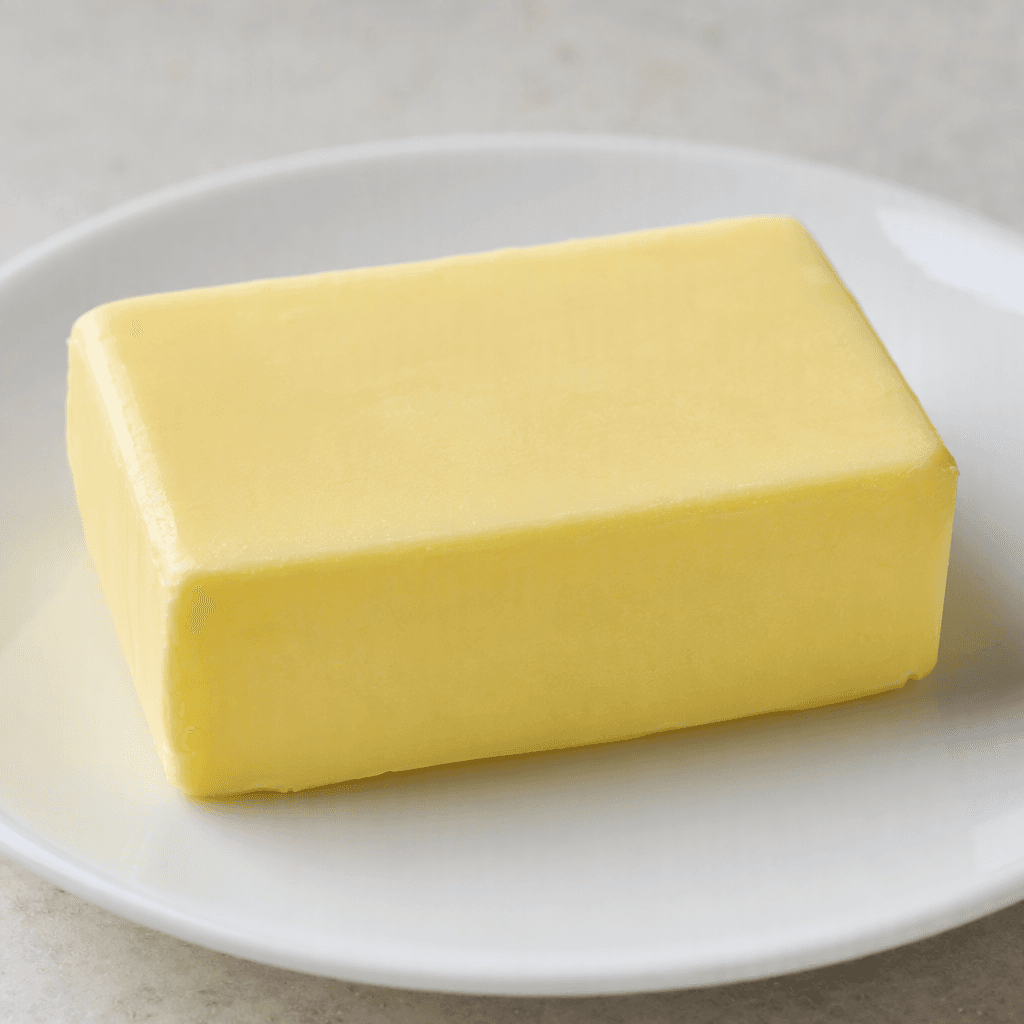
Butter Calories
Rich source of fat, contains vitamins A and D
In season: Spring · Summer · Autumn · Winter
CALORIES
GI
POTASSIUM
FIBER
Quick answer
1 tablespoon (medium) of Butter (14 g) has 100 calories. That works out to 717 calories per 100 g. It contains 0 g of carbs, 0.1 g of protein, 11.3 g of fat and 0 g of fiber. Its 95.8 µg of Vitamin A covers 11% of the Daily Value. Its glycemic index is 0 (low), so it raises blood sugar slowly.
What is Butter?
Butter is a dairy fat made from milk cream, valued for its rich flavor and high fat content. Per 100 grams, it provides 717 calories and 81 grams of fat, with 0.9 grams of protein and just 0.1 grams of carbohydrates. It contains no fiber and has a glycemic index of 0.
Its distinctive taste makes it a common choice for cooking, baking, and spreading. Butter contains dairy and is not suitable for people with dairy allergies. It can fit omnivore, keto, ketovore, paleo, Mediterranean, and flexitarian eating patterns when used in appropriate portions.
Butter Nutrition Facts
Selected: 100 g
717
KCAL / 100G
Carbs
0.1g
· 0% DV
Protein
0.9g
· 2% DV
Fat
81g
· 104% DV
Fiber
0g
· 0% DV
DV is the share of the daily value covered, on a 2,000 kcal reference diet.
Calories come from: Carbs 0% · Protein 0% · Fat 100%
Butter Vitamins & Minerals
Vitamins
Vitamin A
684µg · 76% DV
Vitamin E
2.3mg · 15% DV
Vitamin D
1.5µg · 8% DV
B12
0.17µg · 7% DV
Minerals
Sodium
715mg · 31% DV
Phosphorus
24mg · 3% DV
Calcium
24mg · 2% DV
Selenium
1µg · 2% DV
How Nutritious Is Butter?
Nutrient density
Low
How many vitamins, minerals and how much fiber this food carries per calorie. A high score means a lot of nutrition for few calories.
Satiety score
Low
An EatBetter score computed from fiber, protein and calorie density. A high score means staying full longer on the same calories.
Both scores are calculated per 100 g and do not change with the selected portion. The satiety score is EatBetter's own calculation, not a clinical measure.
Butter Glycemic Index
GLYCEMIC INDEX
GLYCEMIC LOAD
Accounts for portion size — a more realistic measure than GI alone.
How to Burn Off Butter
To burn the 717 calories in 100 g:
🚶
Walking (5 km/h)
🏃
Running (8 km/h)
🚴
Cycling
🏊
Swimming
Times are calculated with the MET equation for a 70 kg adult. Actual burn varies with your weight, age and pace.
Is Butter Processed?
NOVA 2
Minimally Processed
1. Unprocessed
2. Minimally Processed
3. Processed
4. Ultra-Processed
NOVA classifies foods into 4 groups by industrial processing. NOVA 1 (unprocessed) is the healthiest.
Does Butter Contain Allergens?
Contains these allergens:
Which Diets Is Butter Good For?
Vegan
— Not suitable
Vegetarian
— Not suitable
Gluten-Free
— Not suitable
Dairy-Free
— Not suitable
Mediterranean
✓ Suitable
Paleo
✓ Suitable
Whole30
— Not suitable
DASH
— Not suitable
Keto
✓ Suitable
Low FODMAP
— Not suitable
Butter Fat Profile
SATURATED
51g
MONOUNSATURATED
21.2g
POLYUNSATURATED
2.7g
Omega 6:3 ratio 7:1
Above the ideal 4:1 (7:1).
Compare Butter
Foods Similar to Butter
Frequently Asked Questions About Butter
Can you leave butter out on the counter?
Yes, you can leave a small amount of butter out briefly to soften it for spreading or baking. Keep it covered and away from heat and sunlight; refrigerate the rest to protect its flavor and freshness.
Can butter be frozen?
Yes, butter freezes well when wrapped tightly to keep out air and odors. Thaw it in the refrigerator before use. Its texture may change slightly after thawing, but it usually works well in cooking and baking.
How can you tell if butter has gone bad?
Butter that has spoiled may smell sour, rancid, or unusually stale, and its flavor can turn unpleasant. Discard it if you see mold or a marked color change. Keeping butter covered and refrigerated helps preserve its quality.
What is the difference between salted and unsalted butter?
Salted butter has salt added, while unsalted butter does not. Unsalted butter gives you more control over seasoning in recipes, especially baking; when substituting salted butter, reduce the added salt to avoid an overly salty result.
Why does butter turn brown when heated?
Butter turns brown when its milk solids toast in the pan, creating a nutty aroma and flavor. This is called brown butter. Use moderate heat and watch it closely, because those solids can quickly go from browned to burnt.
Is butter suitable for frying at high heat?
No, ordinary butter is not ideal for high-heat frying because its milk solids can burn and taste bitter. Use it over moderate heat, or choose clarified butter, which has had most of those milk solids removed.
Can you use butter instead of oil in a cake?
Sometimes, but butter and oil do not behave identically in cake batter. Butter is solid at room temperature and contains some water, so replacing oil can make the cake less moist or change its texture. Follow a recipe designed for butter when possible.
How do you make brown butter without burning it?
Melt butter in a light-colored pan over medium-low heat, stirring as it foams. When the milk solids turn golden and smell nutty, remove the pan from the heat and transfer the butter promptly; residual heat can keep browning it.
Is ghee the same as butter?
No, ghee is made by heating butter to remove water and milk solids, leaving clarified fat. It has a toasted flavor and handles higher cooking temperatures than ordinary butter, but it is not interchangeable with butter in every baking recipe.
Does butter raise cholesterol?
Butter contains saturated fat, and diets high in saturated fat can raise LDL cholesterol. Using large amounts regularly may therefore affect cholesterol levels. If you have high cholesterol or take medication for it, ask your clinician for advice suited to you.
Have another question about Butter?
Ask the AI nutrition coach — calories, portions, alternatives and more, answered in seconds in the app.

Scan calories with your camera
Instant AI nutrition analysis

Nutrition data compiled from USDA FoodData Central and scientific sources.