

Ready & Packaged Foods
All →Vegetables & Legumes
All →Desserts & Confectionery
All →Meat & Protein
All →Grains & Bakery
All →Beverages
All →Milk & Dairy
All →

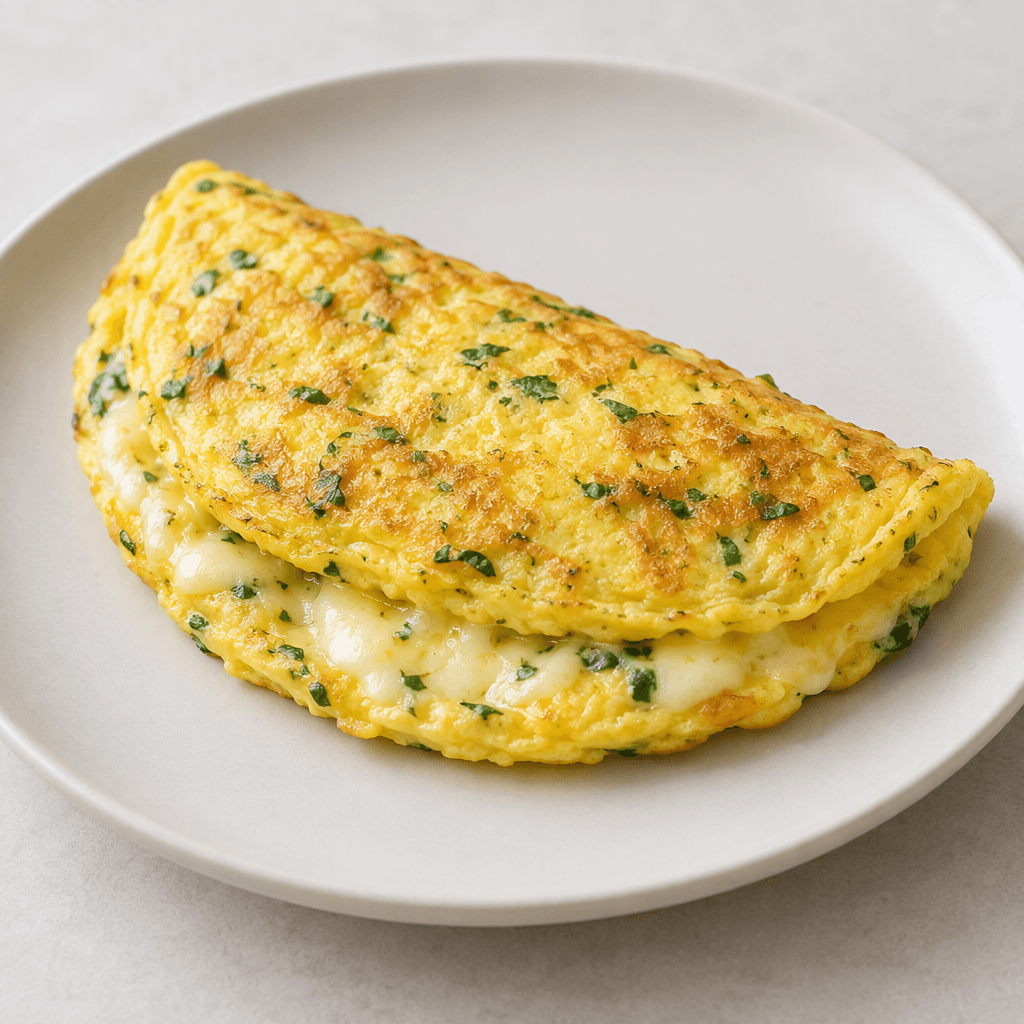
Herb Cheese Omelette Calories
Egg omelette with cheese and fresh herbs, rich in protein and calcium.
In season: Spring · Summer · Autumn · Winter
CALORIES
GI
POTASSIUM
FIBER
Quick answer
1 piece (medium) of Herb Cheese Omelette (120 g) has 222 calories. That works out to 185 calories per 100 g. It contains 2.6 g of carbs, 13.8 g of protein, 17 g of fat and 0.6 g of fiber. Its 21.6 µg of Biotin covers 72% of the Daily Value. Its glycemic index is 35 (low), so it raises blood sugar slowly.
What is Herb Cheese Omelette?
A herb cheese omelette is a simple pan-cooked dish of beaten eggs folded around cheese and chopped fresh herbs. The herbs might be parsley, chives or dill, while the cheese can vary with the cook and what is on hand; it is a familiar home-style combination rather than a dish tied to one precise recipe.
Its tender middle, lightly golden outside and savoury, creamy filling make it an easy breakfast or light meal. In Turkey, it is often served hot with bread and tea; elsewhere, it works just as well with toast or a crisp salad. It offers protein along with very little carbohydrate. For a lighter plate, use a modest amount of cheese and add extra herbs or fresh vegetables.
Herb Cheese Omelette Nutrition Facts
Selected: 100 g
185
KCAL / 100G
Carbs
2.2g
· 1% DV
Protein
11.5g
· 23% DV
Fat
14.2g
· 18% DV
Fiber
0.5g
· 2% DV
DV is the share of the daily value covered, on a 2,000 kcal reference diet.
Calories come from: Carbs 5% · Protein 25% · Fat 70%
Herb Cheese Omelette Vitamins & Minerals
Vitamins
Biotin
18µg · 60% DV
B12
1.1µg · 46% DV
B2
0.32mg · 25% DV
B5
1.1mg · 22% DV
Minerals
Phosphorus
180mg · 26% DV
Selenium
14µg · 25% DV
Calcium
180mg · 18% DV
Sodium
350mg · 15% DV
How Nutritious Is Herb Cheese Omelette?
Nutrient density
High
How many vitamins, minerals and how much fiber this food carries per calorie. A high score means a lot of nutrition for few calories.
Satiety score
Medium
An EatBetter score computed from fiber, protein and calorie density. A high score means staying full longer on the same calories.
Both scores are calculated per 100 g and do not change with the selected portion. The satiety score is EatBetter's own calculation, not a clinical measure.
Herb Cheese Omelette Glycemic Index
GLYCEMIC INDEX
GLYCEMIC LOAD
Accounts for portion size — a more realistic measure than GI alone.
How to Burn Off Herb Cheese Omelette
To burn the 185 calories in 100 g:
🚶
Walking (5 km/h)
🏃
Running (8 km/h)
🚴
Cycling
🏊
Swimming
Times are calculated with the MET equation for a 70 kg adult. Actual burn varies with your weight, age and pace.
Is Herb Cheese Omelette Processed?
NOVA 2
Minimally Processed
1. Unprocessed
2. Minimally Processed
3. Processed
4. Ultra-Processed
NOVA classifies foods into 4 groups by industrial processing. NOVA 1 (unprocessed) is the healthiest.
Does Herb Cheese Omelette Contain Allergens?
Contains these allergens:
Which Diets Is Herb Cheese Omelette Good For?
Vegan
— Not suitable
Vegetarian
✓ Suitable
Gluten-Free
✓ Suitable
Dairy-Free
— Not suitable
Mediterranean
✓ Suitable
Paleo
— Not suitable
Whole30
— Not suitable
DASH
— Not suitable
Keto
— Not suitable
Low FODMAP
— Not suitable
Herb Cheese Omelette Fat Profile
SATURATED
6.1g
MONOUNSATURATED
5.1g
POLYUNSATURATED
1.5g
Omega 6:3 ratio 10:1
Above the ideal 4:1 (10:1).
Compare Herb Cheese Omelette
Foods Similar to Herb Cheese Omelette
Frequently Asked Questions About Herb Cheese Omelette
How do you make a herb cheese omelette?
Whisk the eggs just until combined, then stir in chopped herbs and crumbled cheese. Pour the mixture into a lightly buttered, preheated pan over medium-low heat. When the edges are set, fold the omelette and cook until the center is no longer runny.
What cheese works best in a herb cheese omelette?
Feta gives a herb cheese omelette a salty, crumbly filling, while cheddar or Gruyère melts into a smoother one. Use a cheese that complements rather than overwhelms the herbs, and taste it before adding salt because some cheeses are already quite salty.
Which herbs go well in a herb cheese omelette?
Chives, parsley, and dill pair especially well with the egg and cheese in a herb cheese omelette. Tarragon or basil gives it a more distinctive flavor. Chop fresh herbs finely and dry them after washing so they do not add excess moisture.
How do you stop a herb cheese omelette from turning watery?
Dry the herbs thoroughly and drain wet cheese before adding them to a herb cheese omelette. Cook it over moderate heat rather than rushing it over high heat; that lets the eggs set without releasing excess moisture or overcooking the outside.
How do you keep a herb cheese omelette from sticking to the pan?
Use a well-seasoned nonstick pan and coat its surface with a little butter or oil before adding the eggs. Let the edges of the herb cheese omelette set before loosening them with a thin spatula; moving it too soon can tear it.
How do you fold a herb cheese omelette without breaking it?
Cook a herb cheese omelette until its underside is set but the top is still slightly soft, then slide a spatula under one half and fold it over. Avoid overfilling it with cheese, which makes the fold heavy and more likely to split.
Can you bake a herb cheese omelette instead of cooking it in a pan?
Yes, you can bake a herb cheese omelette mixture in a small oven-safe dish, although the result will be thicker and more like a crustless quiche. Grease the dish, add the egg, herbs, and cheese, and bake until the center is set.
How long do leftover herb cheese omelettes keep?
Refrigerate leftover herb cheese omelette promptly in a covered container and eat it within three to four days. Reheat only the portion you plan to eat, until steaming hot throughout; discard it if it was left at room temperature for too long.
Can you freeze a herb cheese omelette?
Yes, but freezing can make a herb cheese omelette less tender and slightly watery after thawing. Cool it completely, wrap individual portions tightly, and freeze. Thaw in the refrigerator and reheat thoroughly in a covered pan or microwave.
What should you serve with a herb cheese omelette?
A herb cheese omelette goes well with toast, a simple green salad, or sliced tomatoes. For brunch, add roasted potatoes or sautéed mushrooms; for a lighter plate, serve it with fresh vegetables and skip heavier sides.
Have another question about Herb Cheese Omelette?
Ask the AI nutrition coach — calories, portions, alternatives and more, answered in seconds in the app.

Scan calories with your camera
Instant AI nutrition analysis

Nutrition data compiled from USDA FoodData Central and scientific sources.