

Ready & Packaged Foods
All →Vegetables & Legumes
All →Desserts & Confectionery
All →Meat & Protein
All →Grains & Bakery
All →Beverages
All →Milk & Dairy
All →

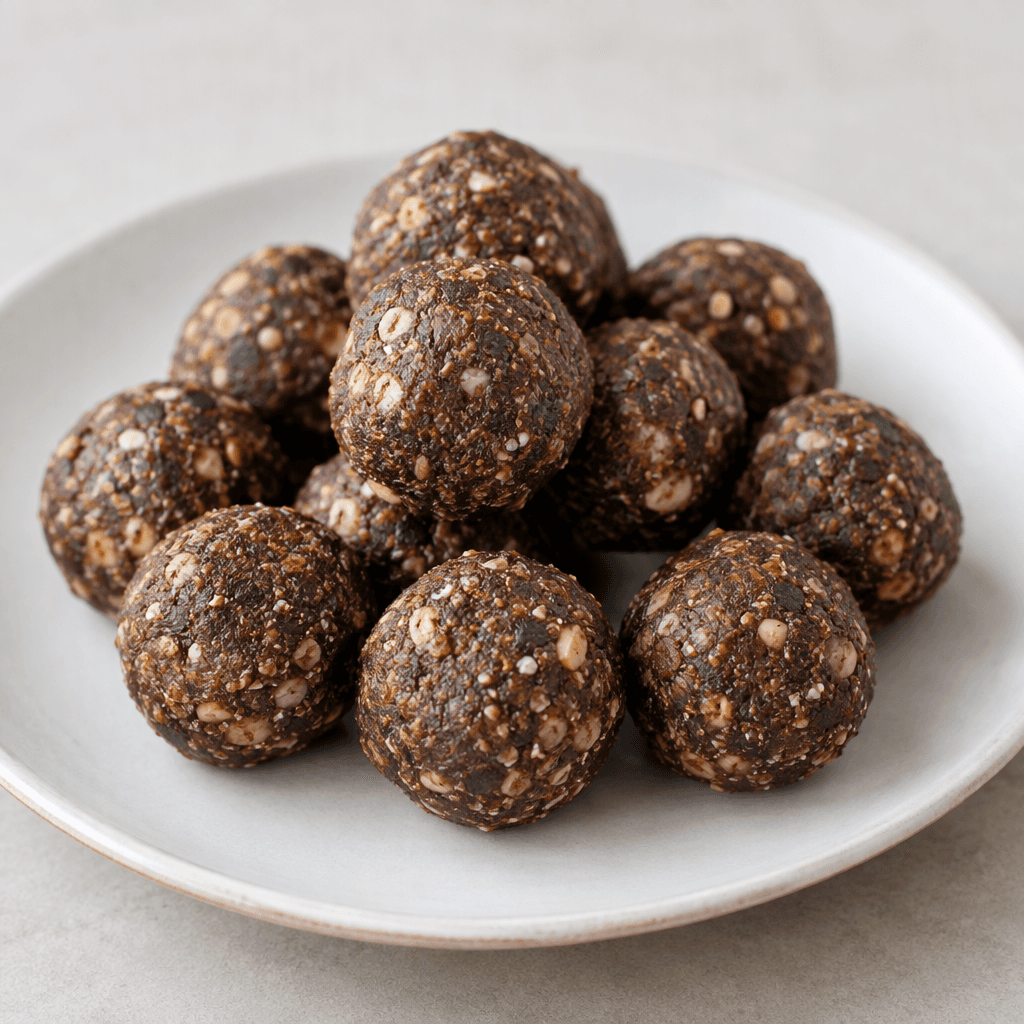
Harras protein ball Calories
Source of protein and fiber
CALORIES
GI
POTASSIUM
FIBER
Quick answer
1 piece (medium) of Harras protein ball (40 g) has 80 calories. That works out to 200 calories per 100 g. It contains 0 g of carbs, 6.7 g of protein, 0 g of fat and 0 g of fiber. Its 0.2 mg of Copper covers 21% of the Daily Value. Its glycemic index is 42 (low), so it raises blood sugar slowly.
What is Harras protein ball?
Harras protein ball is a small, ready-to-eat protein snack sold as an individual bite. It is round and dark brown, with a slightly speckled surface; the ingredient details aren’t provided, so it’s best not to assume what it is made from. Its compact shape makes it easy to carry and eat without preparation.
You can have one between meals, alongside coffee or tea, or as a quick bite after exercise. The texture of protein balls is generally dense, though the exact taste and texture depend on the recipe. The nutrition information lists 16.67 g of protein per 100 g, making this a protein-focused snack rather than a full meal. For a lighter snack, stick to one piece and pair it with fruit or an unsweetened drink.
Harras protein ball Nutrition Facts
Selected: 100 g
200
KCAL / 100G
Carbs
0g
· 0% DV
Protein
16.7g
· 33% DV
Fat
0g
· 0% DV
Fiber
0g
· 0% DV
DV is the share of the daily value covered, on a 2,000 kcal reference diet.
Calories come from: Carbs 0% · Protein 100% · Fat 0%
Harras protein ball Vitamins & Minerals
Vitamins
Vitamin E
3.1mg · 21% DV
B3
2.8mg · 18% DV
B6
0.3mg · 18% DV
B2
0.22mg · 17% DV
Minerals
Phosphorus
310mg · 44% DV
Manganese
1mg · 43% DV
Magnesium
125mg · 30% DV
Selenium
12µg · 22% DV
How Nutritious Is Harras protein ball?
Nutrient density
Medium
How many vitamins, minerals and how much fiber this food carries per calorie. A high score means a lot of nutrition for few calories.
Satiety score
Medium
An EatBetter score computed from fiber, protein and calorie density. A high score means staying full longer on the same calories.
Both scores are calculated per 100 g and do not change with the selected portion. The satiety score is EatBetter's own calculation, not a clinical measure.
Harras protein ball Glycemic Index
GLYCEMIC INDEX
GLYCEMIC LOAD
Accounts for portion size — a more realistic measure than GI alone.
How to Burn Off Harras protein ball
To burn the 200 calories in 100 g:
🚶
Walking (5 km/h)
🏃
Running (8 km/h)
🚴
Cycling
🏊
Swimming
Times are calculated with the MET equation for a 70 kg adult. Actual burn varies with your weight, age and pace.
Is Harras protein ball Processed?
NOVA 3
Processed
1. Unprocessed
2. Minimally Processed
3. Processed
4. Ultra-Processed
NOVA classifies foods into 4 groups by industrial processing. NOVA 1 (unprocessed) is the healthiest.
Does Harras protein ball Contain Allergens?
Contains these allergens:
Which Diets Is Harras protein ball Good For?
Vegan
— Not suitable
Vegetarian
✓ Suitable
Gluten-Free
— Not suitable
Dairy-Free
— Not suitable
Mediterranean
— Not suitable
Paleo
— Not suitable
Whole30
— Not suitable
DASH
— Not suitable
Keto
— Not suitable
Low FODMAP
— Not suitable
Harras protein ball Fat Profile
SATURATED
3.1g
MONOUNSATURATED
7.2g
POLYUNSATURATED
4.4g
Omega 6:3 ratio 52.5:1
Above the ideal 4:1 (52.5:1).
Compare Harras protein ball
Foods Similar to Harras protein ball
Frequently Asked Questions About Harras protein ball
What does a Harras protein ball taste like?
A Harras protein ball is a small, ready-to-eat snack with a dark-brown, speckled appearance. The exact flavour depends on its recipe, so the package description is the best guide if you are choosing it for a particular taste.
Can I eat a Harras protein ball straight from the pack?
Yes, a Harras protein ball is ready to eat and does not need cooking or mixing. Take it out of the pack as a portable snack, or serve it alongside fruit or yogurt when you want something more substantial.
Does a Harras protein ball need to be refrigerated?
A Harras protein ball does not necessarily need refrigeration while unopened; follow the storage directions printed on its pack. After opening, close the packaging and store it as directed rather than assuming it should be chilled.
Can a Harras protein ball replace a protein shake?
A Harras protein ball can be a convenient alternative to a protein shake when you want a solid snack. It is not interchangeable in every situation: check the serving and nutrition information on both products if you are comparing them for a specific purpose.
Is a Harras protein ball useful as a hiking or travel snack?
Yes, a Harras protein ball is convenient for travel because it is compact and ready to eat. Keep it in its packaging until you are ready to have it, and avoid leaving it in conditions the package advises against.
Can I crumble a Harras protein ball into oatmeal or yogurt?
Yes, you can crumble a Harras protein ball over oatmeal or yogurt for added texture and flavour. Add it just before serving so it stays distinct, rather than expecting it to dissolve like protein powder.
Is a Harras protein ball a good snack before a workout?
A Harras protein ball can work as a small pre-workout snack if you tolerate it comfortably. Try it well before exercise rather than immediately beforehand, and choose a different option if eating it makes you feel too full.
Can a Harras protein ball help with weight loss?
A Harras protein ball can fit into a weight-loss eating plan as a planned snack, but it does not cause weight loss by itself. It is most useful when it replaces an unplanned snack rather than being added on top of your usual food.
Is a Harras protein ball filling enough to replace lunch?
No, a Harras protein ball is better treated as a snack than as a full lunch. Pair it with more substantial foods if you need a meal, since one small packaged item does not provide the variety of a complete meal.
How can I tell whether my Harras protein ball is still fresh?
Check the Harras protein ball’s date and storage instructions, and do not eat it if the packaging is damaged or the product looks or smells unusual. Properly closing the pack after opening helps protect the remaining snack.
Have another question about Harras protein ball?
Ask the AI nutrition coach — calories, portions, alternatives and more, answered in seconds in the app.

Scan calories with your camera
Instant AI nutrition analysis

Nutrition data compiled from USDA FoodData Central and scientific sources.