

Ready & Packaged Foods
All →Vegetables & Legumes
All →Desserts & Confectionery
All →Meat & Protein
All →Grains & Bakery
All →Beverages
All →Milk & Dairy
All →

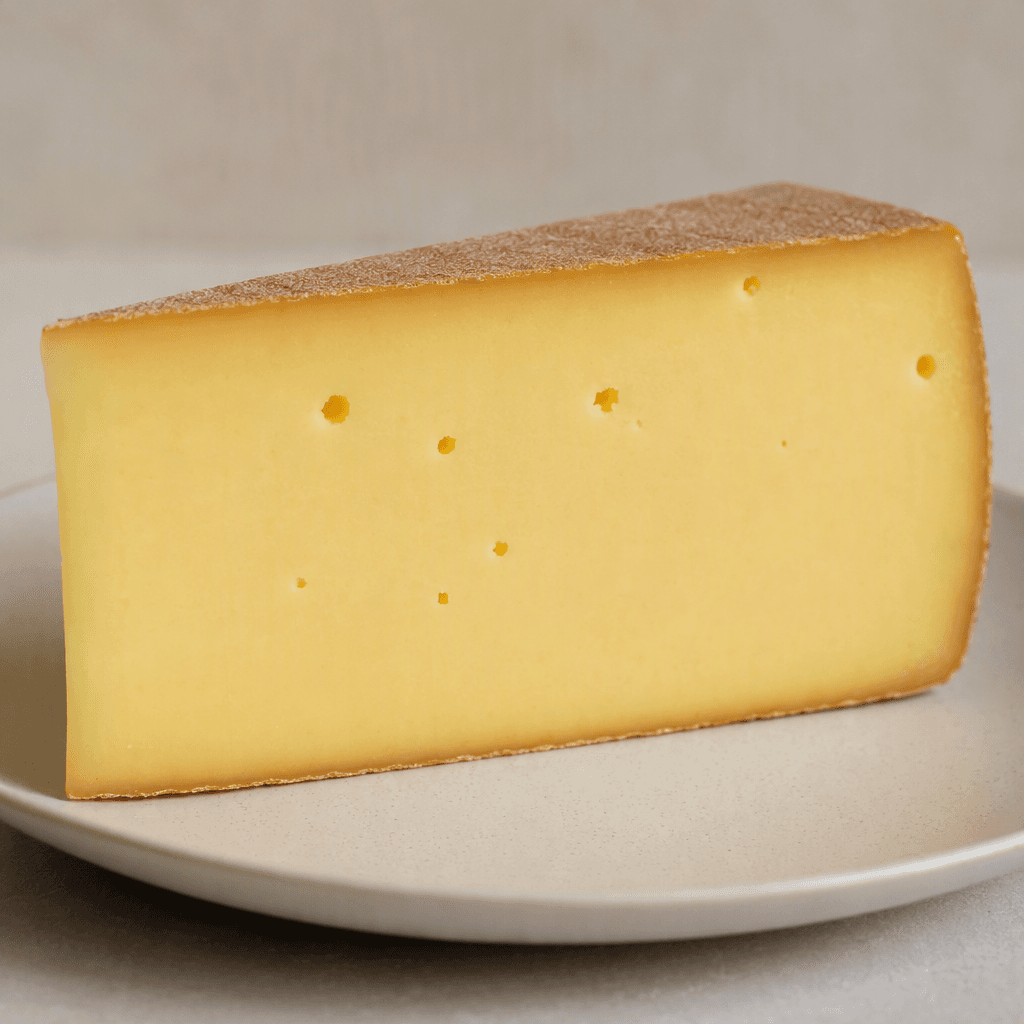
Gruyere Cheese Calories
Rich, nutty Swiss cheese. High in calcium and protein.
In season: Spring · Summer · Autumn · Winter
CALORIES
GI
POTASSIUM
FIBER
Quick answer
1 slice (medium) of Gruyere Cheese (30 g) has 124 calories. That works out to 413 calories per 100 g. It contains 0.1 g of carbs, 8.9 g of protein, 9.7 g of fat and 0 g of fiber. Its 303.3 mg of Calcium covers 30% of the Daily Value. Its glycemic index is 0 (low), so it raises blood sugar slowly.
What is Gruyere Cheese?
Gruyere Cheese is a firm, aged cow’s-milk cheese made in Turkey, particularly around Kars. Its name and style reflect the influence of Swiss Gruyère, and it is known for a pale yellow interior with occasional small holes and a thin rind.
It has a concentrated, gently sweet, nutty flavour and a dense texture that slices cleanly. Enjoy it on a cheese board, in a sandwich, or grated into soups and baked dishes. In Turkey, it is also served at breakfast; elsewhere, it pairs naturally with bread, fruit and tea or wine.
Gruyere Cheese is rich in protein and fat, so a modest portion can add plenty of flavour. It provides about 29.8 g of protein per 100 g. For a lighter plate, serve a few slices with fresh vegetables or fruit.
Gruyere Cheese Nutrition Facts
Selected: 100 g
413
KCAL / 100G
Carbs
0.4g
· 0% DV
Protein
29.8g
· 60% DV
Fat
32.3g
· 41% DV
Fiber
0g
· 0% DV
DV is the share of the daily value covered, on a 2,000 kcal reference diet.
Calories come from: Carbs 0% · Protein 29% · Fat 71%
Gruyere Cheese Vitamins & Minerals
Vitamins
B12
1.5µg · 63% DV
Vitamin A
330µg · 37% DV
B2
0.45mg · 35% DV
B5
0.5mg · 10% DV
Minerals
Calcium
1011mg · 101% DV
Phosphorus
560mg · 80% DV
Zinc
4mg · 36% DV
Sodium
800mg · 35% DV
How Nutritious Is Gruyere Cheese?
Nutrient density
Medium
How many vitamins, minerals and how much fiber this food carries per calorie. A high score means a lot of nutrition for few calories.
Satiety score
Low
An EatBetter score computed from fiber, protein and calorie density. A high score means staying full longer on the same calories.
Both scores are calculated per 100 g and do not change with the selected portion. The satiety score is EatBetter's own calculation, not a clinical measure.
Gruyere Cheese Glycemic Index
GLYCEMIC INDEX
GLYCEMIC LOAD
Accounts for portion size — a more realistic measure than GI alone.
How to Burn Off Gruyere Cheese
To burn the 413 calories in 100 g:
🚶
Walking (5 km/h)
🏃
Running (8 km/h)
🚴
Cycling
🏊
Swimming
Times are calculated with the MET equation for a 70 kg adult. Actual burn varies with your weight, age and pace.
Is Gruyere Cheese Processed?
NOVA 3
Processed
1. Unprocessed
2. Minimally Processed
3. Processed
4. Ultra-Processed
NOVA classifies foods into 4 groups by industrial processing. NOVA 1 (unprocessed) is the healthiest.
Does Gruyere Cheese Contain Allergens?
Contains these allergens:
Which Diets Is Gruyere Cheese Good For?
Vegan
— Not suitable
Vegetarian
✓ Suitable
Gluten-Free
✓ Suitable
Dairy-Free
— Not suitable
Mediterranean
✓ Suitable
Paleo
— Not suitable
Whole30
— Not suitable
DASH
— Not suitable
Keto
— Not suitable
Low FODMAP
— Not suitable
Gruyere Cheese Fat Profile
SATURATED
18.9g
MONOUNSATURATED
8.9g
POLYUNSATURATED
0.7g
Omega 6:3 ratio 7.5:1
Above the ideal 4:1 (7.5:1).
Compare Gruyere Cheese
Foods Similar to Gruyere Cheese
Frequently Asked Questions About Gruyere Cheese
What is Gruyere cheese?
Gruyere cheese is a firm, aged cheese traditionally made from cow’s milk in Switzerland. It has a pale interior and a savory, nutty flavor, and it is widely used both as a table cheese and in cooked dishes.
What does Gruyere cheese taste like?
Gruyere cheese tastes savory and nutty, often with a gentle sweetness and a deeper flavor as it ages. Its texture is firm but becomes smooth when melted; the exact flavor varies with how it is made and matured.
What is the best substitute for Gruyere cheese?
Comté is a close substitute for Gruyere cheese because it has a similar firm texture and savory, nutty flavor. Emmental or Jarlsberg can also work, especially when melting matters more than matching Gruyere’s exact taste.
Does Gruyere cheese melt well?
Yes, Gruyere cheese melts smoothly and becomes creamy without losing its rich flavor. It is a classic choice for fondue, gratins, French onion soup, and grilled cheese; grate it for more even melting in sauces and baked dishes.
Is Gruyere cheese the same as Swiss cheese?
No, Gruyere cheese is a specific Swiss cheese, while “Swiss cheese” often refers to several styles, especially cheeses with larger holes such as Emmental. Gruyere typically has a denser texture, smaller or fewer holes, and a more savory flavor.
Can you eat the rind on Gruyere cheese?
Yes, the natural rind on Gruyere cheese is generally edible, though it can be firm and stronger-tasting than the interior. Remove it if you dislike its texture or flavor, and discard any cheese with signs of spoilage.
Why does Gruyere cheese have holes?
Small holes in Gruyere cheese can form when bacteria release gas during aging. Their size and number vary with production and maturation, so a wheel may have few visible holes without being faulty.
How should you store Gruyere cheese?
Store Gruyere cheese in the refrigerator, wrapped in cheese paper or parchment so it can breathe without drying out. Keep it in a separate container to limit odor transfer, and wrap the cut surface carefully between servings.
Can you freeze Gruyere cheese?
Yes, you can freeze Gruyere cheese, but thawing may make it crumbly or slightly change its texture. Freeze it tightly wrapped, then use it grated in soups, sauces, or baked dishes rather than serving it as a table cheese.
What dishes are made with Gruyere cheese?
Gruyere cheese is a traditional choice for Swiss fondue and French onion soup, and it is also used in gratins, quiches, and croque monsieur. Its smooth melt and bold flavor work especially well in baked or toasted dishes.
Have another question about Gruyere Cheese?
Ask the AI nutrition coach — calories, portions, alternatives and more, answered in seconds in the app.

Scan calories with your camera
Instant AI nutrition analysis

Nutrition data compiled from USDA FoodData Central and scientific sources.