

Ready & Packaged Foods
All →Vegetables & Legumes
All →Desserts & Confectionery
All →Meat & Protein
All →Grains & Bakery
All →Beverages
All →Milk & Dairy
All →

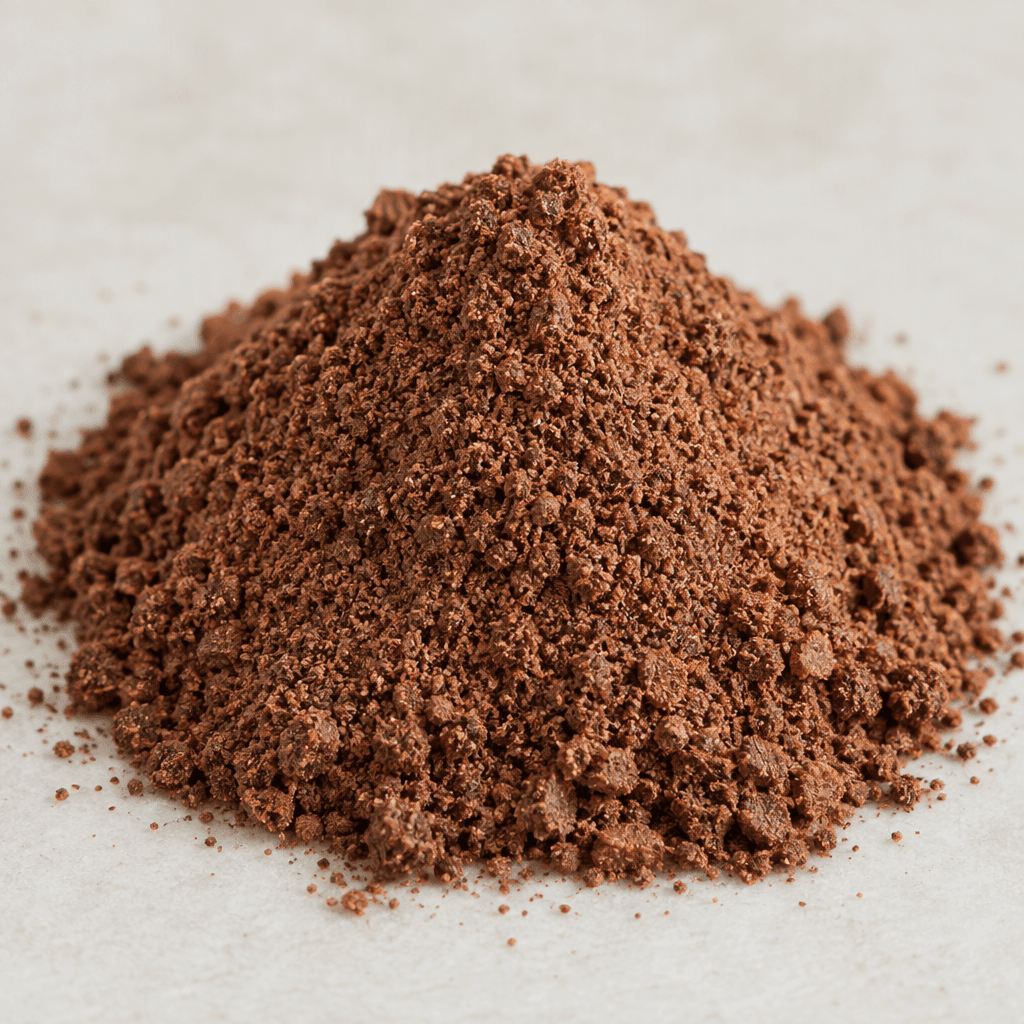
Grape seed powder Calories
Rich in antioxidants, source of fiber, contains polyphenols
In season: Spring · Summer · Autumn
CALORIES
GI
POTASSIUM
FIBER
Quick answer
1 tablespoon (medium) of Grape seed powder (8 g) has 28 calories. That works out to 350 calories per 100 g. It contains 3 g of carbs, 1 g of protein, 1 g of fat and 2.6 g of fiber. Its 0.2 mg of Manganese covers 10% of the Daily Value. Its glycemic index is 5 (low), so it raises blood sugar slowly.
What is Grape seed powder?
Grape seed powder is made by drying and finely grinding grape seeds, often those left after grapes are pressed for juice or wine. It is a concentrated ingredient rather than a snack, and is used in small amounts in cooking and drinks.
Its deep colour, slightly grainy texture and distinctly earthy, tannic bitterness come through most in simple mixtures. Stir it into yoghurt or porridge, blend it into a smoothie, or add a little to bread and muffin batter. It provides fibre and grape-seed polyphenols, so a modest spoonful can add character as well as substance. Pair it with fruit, honey or other naturally sweet ingredients to balance the bitterness, and mix it thoroughly to avoid a gritty mouthfeel.
Grape seed powder Nutrition Facts
Selected: 100 g
350
KCAL / 100G
Carbs
38g
· 14% DV
Protein
12g
· 24% DV
Fat
13g
· 17% DV
Fiber
32g
· 114% DV
DV is the share of the daily value covered, on a 2,000 kcal reference diet.
Calories come from: Carbs 48% · Protein 15% · Fat 37%
Grape seed powder Vitamins & Minerals
Vitamins
Vitamin E
9.5mg · 63% DV
B1
0.18mg · 15% DV
B5
0.6mg · 12% DV
Vitamin K
12µg · 10% DV
Minerals
Manganese
3mg · 130% DV
Magnesium
180mg · 43% DV
Iron
7mg · 39% DV
Phosphorus
210mg · 30% DV
How Nutritious Is Grape seed powder?
Nutrient density
Very high
How many vitamins, minerals and how much fiber this food carries per calorie. A high score means a lot of nutrition for few calories.
Satiety score
Medium
An EatBetter score computed from fiber, protein and calorie density. A high score means staying full longer on the same calories.
Both scores are calculated per 100 g and do not change with the selected portion. The satiety score is EatBetter's own calculation, not a clinical measure.
Grape seed powder Glycemic Index
GLYCEMIC INDEX
GLYCEMIC LOAD
Accounts for portion size — a more realistic measure than GI alone.
How to Burn Off Grape seed powder
To burn the 350 calories in 100 g:
🚶
Walking (5 km/h)
🏃
Running (8 km/h)
🚴
Cycling
🏊
Swimming
Times are calculated with the MET equation for a 70 kg adult. Actual burn varies with your weight, age and pace.
Is Grape seed powder Processed?
NOVA 2
Minimally Processed
1. Unprocessed
2. Minimally Processed
3. Processed
4. Ultra-Processed
NOVA classifies foods into 4 groups by industrial processing. NOVA 1 (unprocessed) is the healthiest.
Does Grape seed powder Contain Allergens?
No known major allergens
Which Diets Is Grape seed powder Good For?
Vegan
✓ Suitable
Vegetarian
✓ Suitable
Gluten-Free
✓ Suitable
Dairy-Free
— Not suitable
Mediterranean
✓ Suitable
Paleo
✓ Suitable
Whole30
— Not suitable
DASH
— Not suitable
Keto
✓ Suitable
Low FODMAP
— Not suitable
Grape seed powder Fat Profile
SATURATED
1.2g
MONOUNSATURATED
2.5g
POLYUNSATURATED
8.7g
Omega 6:3 ratio 12.1:1
Above the ideal 4:1 (12.1:1).
Compare Grape seed powder
Foods Similar to Grape seed powder
Frequently Asked Questions About Grape seed powder
What is grape seed powder made from?
Grape seed powder is made by drying and finely grinding grape seeds, which are often left after grapes are pressed. It is not the same as ground whole grapes, and its earthy, slightly coarse texture comes from the seeds.
How do you use grape seed powder?
Grape seed powder can be stirred into yogurt, oatmeal, smoothies, or other drinks. Its flavor is concentrated and slightly bitter, so start with a small amount and mix it into foods with flavors that complement it.
Does grape seed powder taste bitter?
Yes, grape seed powder usually tastes mildly bitter and astringent, with an earthy edge. Mixing it with fruit, cocoa, or yogurt can make the flavor less noticeable; the exact taste varies with the grape seeds and processing.
Can you eat grape seed powder raw?
Yes, grape seed powder can be eaten without cooking. Stir it into a moist food such as yogurt or a smoothie, since the fine, slightly gritty powder may feel dry or unpleasant if eaten by itself.
Is grape seed powder the same as grape seed extract?
No, grape seed powder is ground grape seed, while grape seed extract is processed to concentrate selected compounds. The powder retains the seed’s fiber, so it is not a direct substitute for extract or a supplement dose.
Can grape seed powder replace flour in baking?
Grape seed powder can be added to baked goods, but it does not behave like wheat flour and should not replace all the flour. Use a small portion in muffins, bread, or pancakes, as it can darken the color and add bitterness.
Does grape seed powder contain caffeine?
No, grape seed powder is not a natural source of caffeine. Its earthy taste can seem strong, but it does not provide the stimulant effect associated with coffee, tea, or cocoa.
How should you store grape seed powder?
Keep grape seed powder tightly sealed in a cool, dry place away from sunlight and moisture. Use a dry spoon, and close the container promptly so the powder stays free-flowing and does not absorb odors.
Can grape seed powder help with weight loss?
Grape seed powder is not a weight-loss product. Its fiber may add some bulk when mixed into food, but adding it alone does not cause weight loss; use it as an ingredient rather than a replacement for meals.
Can grape seed powder interact with blood thinners?
It may interact with medicines that affect blood clotting, so ask your doctor or pharmacist before using grape seed powder regularly if you take a blood thinner. Grape seed products can also matter before surgery.
Have another question about Grape seed powder?
Ask the AI nutrition coach — calories, portions, alternatives and more, answered in seconds in the app.

Scan calories with your camera
Instant AI nutrition analysis

Nutrition data compiled from USDA FoodData Central and scientific sources.