

Ready & Packaged Foods
All →Vegetables & Legumes
All →Desserts & Confectionery
All →Meat & Protein
All →Grains & Bakery
All →Beverages
All →Milk & Dairy
All →

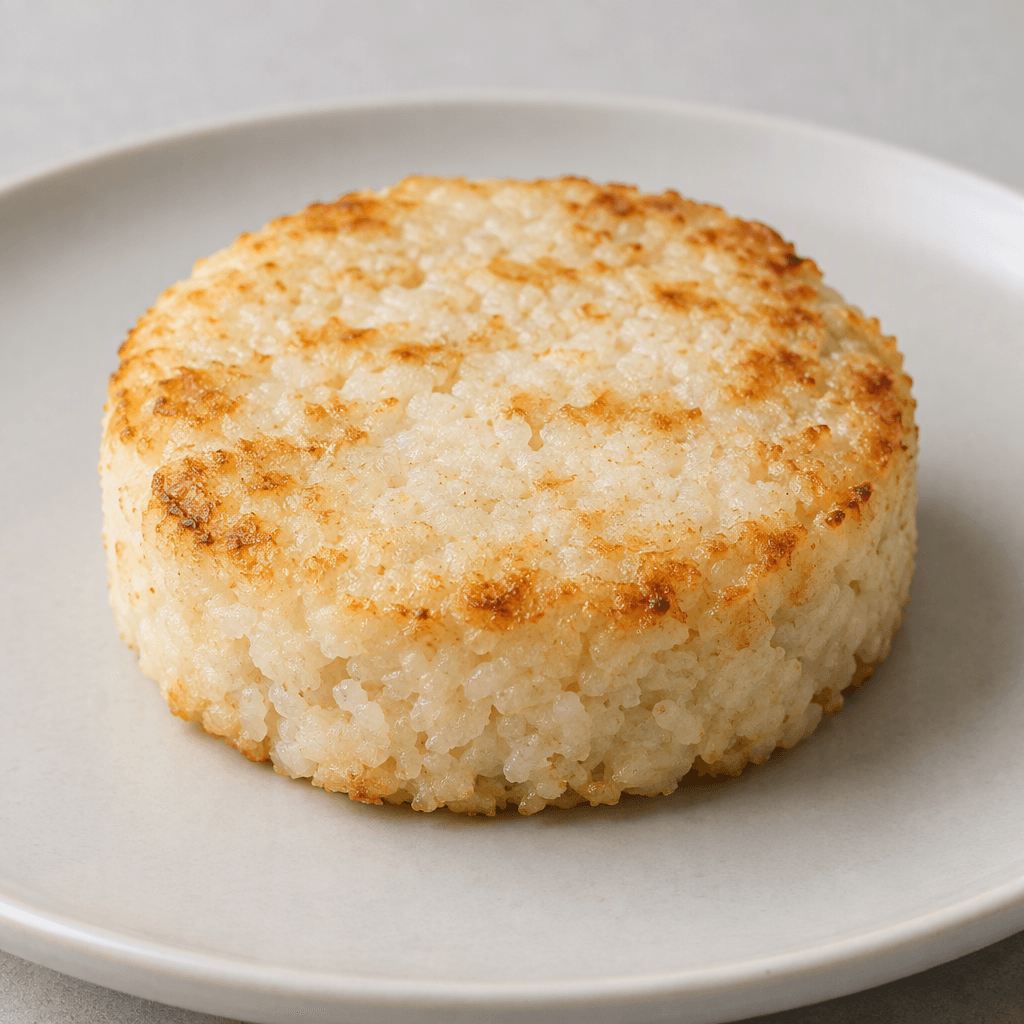
Gluten-Free Rice Cake Calories
Low calorie, gluten-free, light snack
In season: Spring · Summer · Autumn · Winter
CALORIES
GI
POTASSIUM
FIBER
Quick answer
1 piece (medium) of Gluten-Free Rice Cake (9 g) has 35 calories. That works out to 387 calories per 100 g. It contains 7.4 g of carbs, 0.7 g of protein, 0.1 g of fat and 0.3 g of fiber. Its glycemic index is 85 (high), so it raises blood sugar quickly.
What is Gluten-Free Rice Cake?
A Gluten-Free Rice Cake is made by heating and puffing rice into a small, round cake. It has a pale, lightly toasted surface and a dry, crisp texture that can crumble as you bite. Rice cakes are eaten in many places as a quick snack; they are also familiar in gluten-free kitchens as a simple base for toppings.
Enjoy one plain, or add nut butter, sliced fruit, cheese or avocado for more flavour and staying power. It is mostly carbohydrate and very low in fat, so the plain cake is light but may not keep you full for long on its own. Pair it with a protein-rich topping or yoghurt for a more substantial snack.
Gluten-Free Rice Cake Nutrition Facts
Selected: 100 g
387
KCAL / 100G
Carbs
82.3g
· 30% DV
Protein
7.9g
· 16% DV
Fat
0.6g
· 1% DV
Fiber
3.6g
· 13% DV
DV is the share of the daily value covered, on a 2,000 kcal reference diet.
Calories come from: Carbs 90% · Protein 9% · Fat 1%

Log this food in EatBetter
100,000+ people use it
- Get your daily calorie target
- Snap your meal, log it in seconds
- See every vitamin and mineral

📸 Scan the code to get the app free.

Gluten-Free Rice Cake Vitamins & Minerals
Vitamins
B3
1.6mg · 10% DV
B5
0.5mg · 10% DV
B1
0.11mg · 9% DV
B6
0.13mg · 8% DV
Minerals
Manganese
1mg · 43% DV
Phosphorus
115mg · 16% DV
Selenium
7µg · 13% DV
Potassium ⭐
115mg · 3% DV
Copper
0mg · 0% DV
How Nutritious Is Gluten-Free Rice Cake?
Nutrient density
Low
How many vitamins, minerals and how much fiber this food carries per calorie. A high score means a lot of nutrition for few calories.
Satiety score
Low
An EatBetter score computed from fiber, protein and calorie density. A high score means staying full longer on the same calories.
Both scores are calculated per 100 g and do not change with the selected portion. The satiety score is EatBetter's own calculation, not a clinical measure.
Gluten-Free Rice Cake Glycemic Index
GLYCEMIC INDEX
GLYCEMIC LOAD
Accounts for portion size — a more realistic measure than GI alone.
How to Burn Off Gluten-Free Rice Cake
To burn the 387 calories in 100 g:
🚶
Walking (5 km/h)
🏃
Running (8 km/h)
🚴
Cycling
🏊
Swimming
Times are calculated with the MET equation for a 70 kg adult. Actual burn varies with your weight, age and pace.
Is Gluten-Free Rice Cake Processed?
NOVA 2
Minimally Processed
1. Unprocessed
2. Minimally Processed
3. Processed
4. Ultra-Processed
NOVA classifies foods into 4 groups by industrial processing. NOVA 1 (unprocessed) is the healthiest.
Does Gluten-Free Rice Cake Contain Allergens?
No known major allergens
Which Diets Is Gluten-Free Rice Cake Good For?
Vegan
✓ Suitable
Vegetarian
✓ Suitable
Gluten-Free
✓ Suitable
Dairy-Free
— Not suitable
Mediterranean
✓ Suitable
Paleo
— Not suitable
Whole30
— Not suitable
DASH
— Not suitable
Keto
— Not suitable
Low FODMAP
— Not suitable
Gluten-Free Rice Cake Fat Profile
SATURATED
0.16g
MONOUNSATURATED
0.18g
POLYUNSATURATED
0.22g
Omega 6:3 ratio 13:1
Above the ideal 4:1 (13:1).
Compare Gluten-Free Rice Cake
Foods Similar to Gluten-Free Rice Cake
Frequently Asked Questions About Gluten-Free Rice Cake
Are gluten-free rice cakes healthy?
Gluten-free rice cakes can be a convenient, light snack, but they are not especially filling on their own. Pair one with a protein-rich topping such as hummus, nut butter, or cottage cheese to make it more satisfying.
Are gluten-free rice cakes good for weight loss?
Gluten-free rice cakes can fit into a weight-loss eating plan, but they do not cause weight loss by themselves. Their light texture may leave you hungry soon, so add a filling topping rather than relying on plain rice cakes as a meal.
Do gluten-free rice cakes raise blood sugar?
Yes, gluten-free rice cakes can raise blood sugar because they are made mainly from rice starch and are digested quickly. Pairing one with protein or healthy fat may slow the meal’s overall effect; people managing diabetes should consider their individual response.
How are gluten-free rice cakes made?
Gluten-free rice cakes are usually made by heating rice under pressure so it puffs, then shaping or compressing it into a cake. The process creates their airy, crisp texture; homemade versions may need a rice-puffing machine to achieve the same result.
What can you put on a gluten-free rice cake?
You can top a gluten-free rice cake with peanut butter and banana, avocado and egg, or hummus and sliced vegetables. Add wet toppings just before eating, since they can soften the cake and make it lose its crunch.
How should you store gluten-free rice cakes after opening?
Store gluten-free rice cakes in an airtight container in a cool, dry place after opening. Moisture makes them lose their crisp texture, so avoid leaving the package exposed to humid air and follow any storage directions on the pack.
Do gluten-free rice cakes contain arsenic?
They can contain trace amounts of arsenic because rice absorbs arsenic from soil and water as it grows. The amount varies, so eating a varied diet rather than relying on rice products for most snacks is a sensible way to limit exposure.
Are gluten-free rice cakes a good pre-workout snack?
Yes, a gluten-free rice cake can work as a quick source of carbohydrate before exercise, especially with a small topping such as banana. For longer or harder workouts, it may not provide enough energy on its own, so choose a more substantial snack.
Can you freeze gluten-free rice cakes?
You can freeze gluten-free rice cakes, but freezing may affect their crisp texture, particularly if moisture gets into the package. Seal them well and thaw them while still wrapped; if they soften, briefly warming them in a dry pan may help.
Are gluten-free rice cakes more filling than bread?
Usually, gluten-free rice cakes are less filling than a similar serving of hearty, higher-fiber bread because they are light and airy. Add a substantial topping, or choose bread when you want a more filling base for a meal.
Have another question about Gluten-Free Rice Cake?
Ask the AI nutrition coach — calories, portions, alternatives and more, answered in seconds in the app.

Scan calories with your camera
Instant AI nutrition analysis

Nutrition data compiled from USDA FoodData Central and scientific sources.