

Ready & Packaged Foods
All →Vegetables & Legumes
All →Desserts & Confectionery
All →Meat & Protein
All →Grains & Bakery
All →Beverages
All →Milk & Dairy
All →

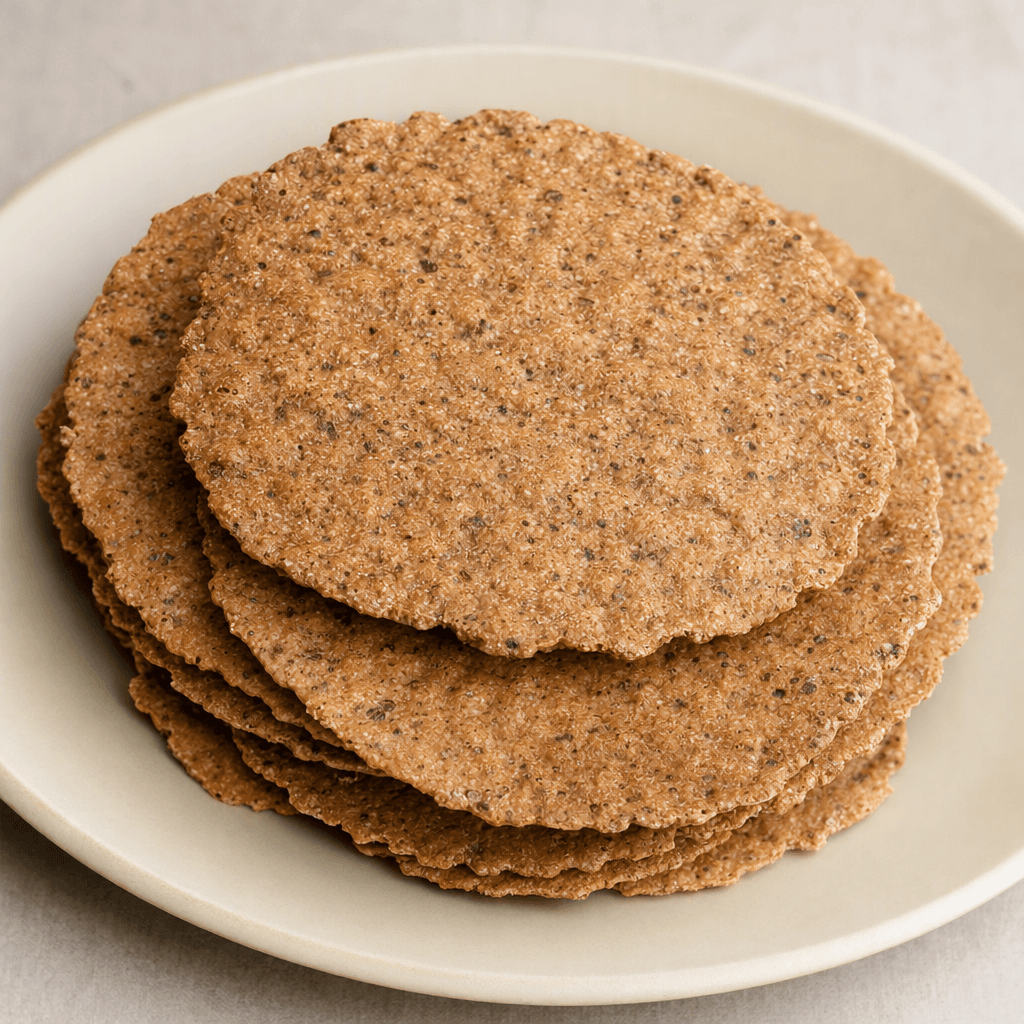
Gluten-Free Buckwheat Cracker Calories
Gluten-free, fiber-rich, made from buckwheat
In season: Spring · Summer · Autumn · Winter
CALORIES
GI
POTASSIUM
FIBER
Quick answer
4 piece (medium) of Gluten-Free Buckwheat Cracker (30 g) has 123 calories. That works out to 410 calories per 100 g. It contains 20.4 g of carbs, 3.3 g of protein, 2.4 g of fat and 2.1 g of fiber. Its 0.2 mg of Copper covers 17% of the Daily Value. Its glycemic index is 55 (medium), so it raises blood sugar at a moderate pace.
What is Gluten-Free Buckwheat Cracker?
Gluten-Free Buckwheat Cracker is a thin, crisp cracker made with buckwheat, a seed used much like a grain. Despite its name, buckwheat is not a type of wheat. The crackers have a dry, lightly bubbled texture and a toasted, earthy flavour, and are often eaten plain or topped.
They work as a snack on their own, alongside soup, or with cheese, hummus and other dips. In places where gluten-free crackers are a familiar pantry staple, they can also stand in for bread at breakfast or lunch. Buckwheat gives them a useful amount of fibre: each 100 g provides 7 g. For a more filling bite, add avocado or a protein-rich topping; pair them with fresh vegetables for a lighter snack.
Gluten-Free Buckwheat Cracker Nutrition Facts
Selected: 100 g
410
KCAL / 100G
Carbs
68g
· 25% DV
Protein
11g
· 22% DV
Fat
8g
· 10% DV
Fiber
7g
· 25% DV
DV is the share of the daily value covered, on a 2,000 kcal reference diet.
Calories come from: Carbs 70% · Protein 11% · Fat 19%
Gluten-Free Buckwheat Cracker Vitamins & Minerals
Vitamins
B1
0.35mg · 29% DV
B3
4.2mg · 26% DV
Biotin
7µg · 23% DV
B6
0.35mg · 21% DV
Minerals
Copper
1mg · 111% DV
Manganese
1mg · 43% DV
Phosphorus
220mg · 31% DV
Magnesium
120mg · 29% DV
How Nutritious Is Gluten-Free Buckwheat Cracker?
Nutrient density
High
How many vitamins, minerals and how much fiber this food carries per calorie. A high score means a lot of nutrition for few calories.
Satiety score
Medium
An EatBetter score computed from fiber, protein and calorie density. A high score means staying full longer on the same calories.
Both scores are calculated per 100 g and do not change with the selected portion. The satiety score is EatBetter's own calculation, not a clinical measure.
Gluten-Free Buckwheat Cracker Glycemic Index
GLYCEMIC INDEX
GLYCEMIC LOAD
Accounts for portion size — a more realistic measure than GI alone.
How to Burn Off Gluten-Free Buckwheat Cracker
To burn the 410 calories in 100 g:
🚶
Walking (5 km/h)
🏃
Running (8 km/h)
🚴
Cycling
🏊
Swimming
Times are calculated with the MET equation for a 70 kg adult. Actual burn varies with your weight, age and pace.
Is Gluten-Free Buckwheat Cracker Processed?
NOVA 3
Processed
1. Unprocessed
2. Minimally Processed
3. Processed
4. Ultra-Processed
NOVA classifies foods into 4 groups by industrial processing. NOVA 1 (unprocessed) is the healthiest.
Does Gluten-Free Buckwheat Cracker Contain Allergens?
No known major allergens
Which Diets Is Gluten-Free Buckwheat Cracker Good For?
Vegan
✓ Suitable
Vegetarian
✓ Suitable
Gluten-Free
✓ Suitable
Dairy-Free
— Not suitable
Mediterranean
✓ Suitable
Paleo
— Not suitable
Whole30
— Not suitable
DASH
— Not suitable
Keto
— Not suitable
Low FODMAP
— Not suitable
Gluten-Free Buckwheat Cracker Fat Profile
SATURATED
1.1g
MONOUNSATURATED
2.7g
POLYUNSATURATED
3.1g
Omega 6:3 ratio 31.4:1
Above the ideal 4:1 (31.4:1).
Compare Gluten-Free Buckwheat Cracker
Foods Similar to Gluten-Free Buckwheat Cracker
Frequently Asked Questions About Gluten-Free Buckwheat Cracker
What is a gluten-free buckwheat cracker made of?
A gluten-free buckwheat cracker is usually made with buckwheat flour, water, and oil, though recipes may also include seeds, seasonings, or other flours. Ingredients vary by product, so check the ingredient list if you need to avoid a particular ingredient.
Are gluten-free buckwheat crackers safe for people with celiac disease?
Buckwheat is naturally gluten-free, but crackers can pick up gluten through cross-contact during production. People with celiac disease should choose products specifically labeled gluten-free and made to meet their needs.
How do you eat gluten-free buckwheat crackers?
Eat gluten-free buckwheat crackers plain or top them with hummus, cheese, avocado, or sliced vegetables. Their dry, crisp texture works especially well with soft spreads; add toppings just before eating to keep the crackers crunchy.
Do gluten-free buckwheat crackers taste like wheat crackers?
No, gluten-free buckwheat crackers usually have a toasted, earthy flavor that is distinct from wheat crackers. The taste can vary with the amount of buckwheat and any added seeds or seasonings.
How should you store gluten-free buckwheat crackers after opening?
Store gluten-free buckwheat crackers in an airtight container in a cool, dry place after opening. Moisture makes them lose their crunch, so keep the container away from steam and close it promptly after serving.
Can you make gluten-free buckwheat crackers at home?
Yes, you can make gluten-free buckwheat crackers at home with buckwheat flour, water, and a little oil. Roll the dough thin, cut it into pieces, and bake until crisp; keeping the pieces an even thickness helps them bake uniformly.
What toppings go well with gluten-free buckwheat crackers?
Hummus, soft cheese, avocado, and sliced vegetables pair well with gluten-free buckwheat crackers. Creamy toppings balance the cracker’s dry crunch, while herbs or a little spice can add flavor without overpowering buckwheat’s earthy taste.
Are gluten-free buckwheat crackers good for weight loss?
Gluten-free buckwheat crackers are not a weight-loss food by themselves. Their fiber can help make a snack more filling, but portion size and toppings matter too; rich spreads can make the snack substantially more energy-dense.
Can gluten-free buckwheat crackers be frozen?
Yes, gluten-free buckwheat crackers can be frozen in an airtight package, but thawing may soften them. Freeze a portion you can use at once, then crisp softened crackers briefly in the oven and let them cool before eating.
Why do gluten-free buckwheat crackers break so easily?
Gluten-free buckwheat crackers can be fragile because buckwheat dough lacks gluten’s stretchy structure and crackers are often rolled thin. Handle them gently, and store them in a snug container so they are less likely to break during storage.
Have another question about Gluten-Free Buckwheat Cracker?
Ask the AI nutrition coach — calories, portions, alternatives and more, answered in seconds in the app.

Scan calories with your camera
Instant AI nutrition analysis

Nutrition data compiled from USDA FoodData Central and scientific sources.