

Ready & Packaged Foods
All →Vegetables & Legumes
All →Desserts & Confectionery
All →Meat & Protein
All →Grains & Bakery
All →Beverages
All →Milk & Dairy
All →

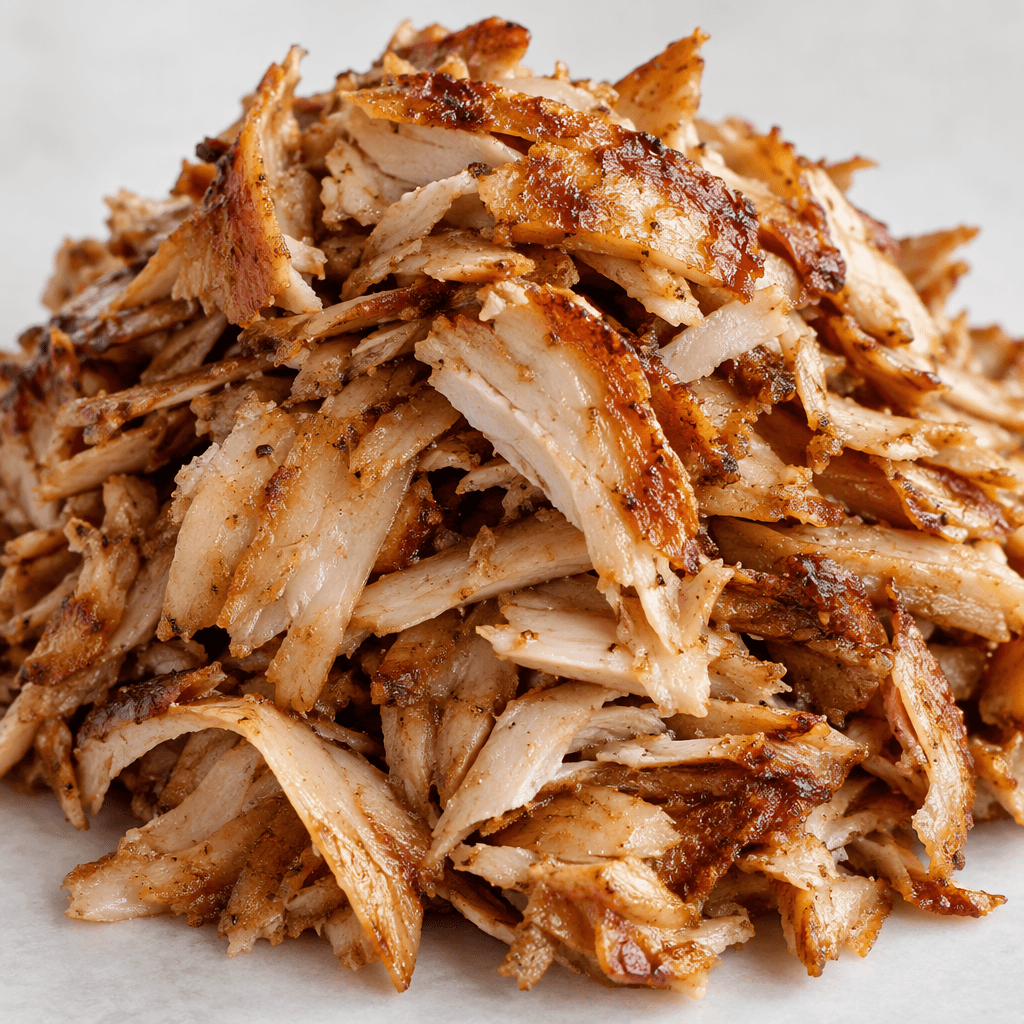
Gedik chicken doner Calories
Protein source, doner-style chicken, quick to prepare
In season: Spring · Summer · Autumn · Winter
CALORIES · 100 G
GI
POTASSIUM · 100 G
FIBER · 100 G
Quick answer
1 serving (medium) of Gedik chicken doner (120 g) has 204 calories. That works out to 170 calories per 100 g. It contains 3 g of carbs, 21.6 g of protein, 10.8 g of fat and 0.6 g of fiber. Its 6.6 mg of B3 covers 41% of the Daily Value. Its glycemic index is 5 (low), so it raises blood sugar slowly.
Gedik chicken doner Nutrition Facts
Selected: 1 serving (medium) · 120 g
204
KCAL / 120G
Carbs
3g
· 1% DV
Protein
21.6g
· 43% DV
Fat
10.8g
· 14% DV
Fiber
0.6g
· 2% DV
DV is the share of the daily value covered, on a 2,000 kcal reference diet.
Calories come from: Carbs 6% · Protein 44% · Fat 50%
Gedik chicken doner nutrition facts table · 1 serving (medium) (120 g)
| Nutrient | Amount | % DV |
|---|---|---|
| Calories | 204 kcal | |
| Total fat | 10.8 g | 14% |
| Saturated fat | 2.64 g | 13% |
| Trans fat | 0.06 g | |
| Sodium | 780 mg | 34% |
| Total carbohydrate | 3 g | 1% |
| Fiber | 0.6 g | 2% |
| Protein | 21.6 g | 43% |
Calories: Calories measure energy. Average daily need is 2,000 kcal. Excess calories are stored as fat, too few cause weight loss.
Carbs: Your body's primary energy source. The brain runs exclusively on carbs. Daily need: 275g.
Protein: Essential for muscle repair and cell growth. Daily need: 50g. Keeps you full and boosts metabolism.
Fat: Needed for hormone production and vitamin absorption. Daily need: 78g. Limit saturated fats, choose unsaturated.
Fiber: Critical for digestive health and satiety. Daily need: 28g. Stabilizes blood sugar, lowers cholesterol.

Log this food in EatBetter
100,000+ people use it
- Get your daily calorie target
- Snap your meal, log it in seconds
- See every vitamin and mineral

📸 Scan the code to get the app free.

How Many Calories in 1 Serving of Gedik chicken doner?
| Serving | Amount | Calories |
|---|---|---|
| 1 serving (medium) | 120 g | 204 kcal |
| 1 piece (small) | 60 g | 102 kcal |
| 1 serving (small) | 80 g | 136 kcal |
| 100 g | 100 g | 170 kcal |
| 1 piece (medium) | 100 g | 170 kcal |
| 1 piece (large) | 150 g | 255 kcal |
| 1 serving (large) | 180 g | 306 kcal |
| 1 pack (whole) | 250 g | 425 kcal |
| 1 pack (jumbo) | 500 g | 850 kcal |
Calculated from 170 calories per 100 g.
Frequently Asked Questions About Gedik chicken doner
How do you cook Gedik chicken doner in a pan?
Heat Gedik chicken doner in a pan according to the package directions. Spread it in a single layer and stir as it heats so the pieces warm evenly; a non-stick pan helps crisp the edges without adding much oil.
Can you cook Gedik chicken doner in an air fryer?
Yes, you can heat Gedik chicken doner in an air fryer if the package directions allow it. Arrange the pieces loosely in the basket, follow the product and appliance instructions, and check that they are heated through before serving.
Is Gedik chicken doner already cooked?
The package instructions are the reliable way to tell whether Gedik chicken doner is raw or cooked. Cook raw product fully; if it is sold cooked, reheat it as directed before eating rather than assuming it is ready to serve straight from the pack.
What ingredients are in Gedik chicken doner?
The ingredients in Gedik chicken doner can vary by product. It may include chicken and seasonings, but the package’s ingredient list gives the exact recipe for the version you bought; check it again if you switch product lines.
Do you need to thaw Gedik chicken doner before cooking it?
You only need to thaw Gedik chicken doner if its package directions call for it. If thawing is required, thaw it in the refrigerator rather than on the counter; cook it from frozen only when the instructions say that is suitable.
How should you store Gedik chicken doner after opening?
Keep leftover Gedik chicken doner covered in the refrigerator and follow the package’s instructions for how soon to use it. Don’t leave it at room temperature for an extended period, and keep raw product separate from cooked foods.
Can you freeze Gedik chicken doner again after thawing it?
Gedik chicken doner that thawed in the refrigerator can generally be refrozen while it is still cold, though quality may decline. Don’t refreeze it if it has been left at room temperature; follow any specific freezing guidance on the package.
How do you make Gedik chicken doner crispy?
For crispier Gedik chicken doner, heat it in a hot pan in a loose, single layer instead of piling it up. Let moisture evaporate and turn the pieces as needed; avoid crowding the pan, which can make them steam rather than brown.
What can you serve with Gedik chicken doner?
Serve Gedik chicken doner with flatbread, rice, salad, or roasted vegetables. For a quick doner-style wrap, add chopped vegetables and a yogurt or tahini sauce after heating; keeping wet toppings separate helps the bread stay firm.
Is Gedik chicken doner a healthy choice?
Gedik chicken doner can fit into a meal with vegetables and a simple side. Packaged doner products vary in salt, so check the package if that matters to you; heating it without extra oil and adding fresh vegetables keeps the meal straightforward.
Gedik chicken doner Vitamins & Minerals
Vitamins
B3
6.6mg · 41% DV
B6
0.46mg · 27% DV
B5
1.32mg · 26% DV
Biotin
6µg · 20% DV
Minerals
Sodium
780mg · 34% DV
Phosphorus
168mg · 24% DV
Selenium
9.6µg · 17% DV
Zinc
0.96mg · 9% DV
Potassium ⭐
264mg · 8% DV
Gedik chicken doner Glycemic Index
GLYCEMIC INDEX
GLYCEMIC LOAD
Accounts for portion size — a more realistic measure than GI alone.
How to Burn Off Gedik chicken doner
To burn the 204 calories in 1 serving (medium) (120 g):
🚶
Walking (5 km/h)
🏃
Running (8 km/h)
🚴
Cycling
🏊
Swimming
Times are calculated with the MET equation for a 70 kg adult. Actual burn varies with your weight, age and pace.
What is Gedik chicken doner?
Gedik chicken doner is a ready-to-heat product made with seasoned chicken prepared in the style of Turkish döner. It offers a convenient way to serve döner at home without preparing the meat from scratch.
The chicken is savoury and gently spiced, with a tender texture when heated through and lightly browned. Serve it in a flatbread or wrap, or as a plate with rice, salad and a cooling yogurt-based sauce. It is a useful protein source, providing 18 g per 100 g. For a lighter meal, pair it with plenty of salad and go easy on creamy sauces or extra bread.
How Nutritious Is Gedik chicken doner?
Nutrient density
Medium
How many vitamins, minerals and how much fiber this food carries per calorie. A high score means a lot of nutrition for few calories.
Satiety score
Medium
An EatBetter score computed from fiber, protein and calorie density. A high score means staying full longer on the same calories.
Both scores are calculated per 100 g and do not change with the selected portion. The satiety score is EatBetter's own calculation, not a clinical measure.
Is Gedik chicken doner Processed?
NOVA 3
Processed
1. Unprocessed
2. Minimally Processed
3. Processed
4. Ultra-Processed
NOVA classifies foods into 4 groups by industrial processing. NOVA 1 (unprocessed) is the healthiest.
Does Gedik chicken doner Contain Allergens?
No known major allergens
Which Diets Is Gedik chicken doner Good For?
Vegan
— Not suitable
Vegetarian
— Not suitable
Gluten-Free
✓ Suitable
Dairy-Free
— Not suitable
Mediterranean
✓ Suitable
Paleo
✓ Suitable
Whole30
— Not suitable
DASH
— Not suitable
Keto
— Not suitable
Low FODMAP
— Not suitable
Gedik chicken doner Fat Profile
SATURATED
2.64g
MONOUNSATURATED
3.84g
POLYUNSATURATED
2.52g
Omega 6:3 ratio 20.4:1
Above the ideal 4:1 (20.4:1).
Compare Gedik chicken doner
Foods Similar to Gedik chicken doner
Have another question about Gedik chicken doner?
Ask the AI nutrition coach — calories, portions, alternatives and more, answered in seconds in the app.

Scan calories with your camera
Instant AI nutrition analysis

Nutrition data compiled from USDA FoodData Central and scientific sources.