

Ready & Packaged Foods
All →Vegetables & Legumes
All →Desserts & Confectionery
All →Meat & Protein
All →Grains & Bakery
All →Beverages
All →Milk & Dairy
All →

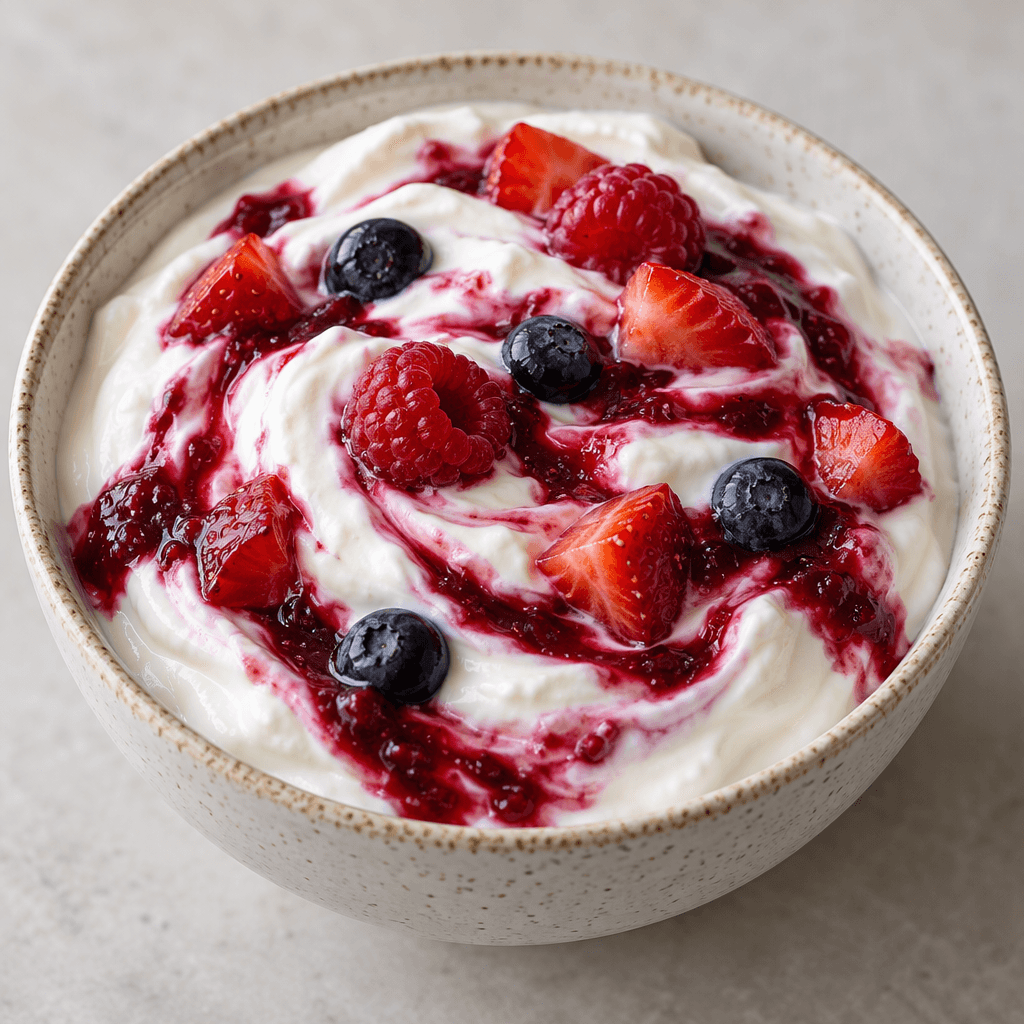
Fruit Quark Calories
Rich in protein and calcium, refreshing with fresh fruit pieces.
In season: Spring · Summer · Autumn · Winter
CALORIES
GI
POTASSIUM
FIBER
Quick answer
1 cup (medium) of Fruit Quark (150 g) has 135 calories. That works out to 90 calories per 100 g. It contains 18 g of carbs, 11.3 g of protein, 2.3 g of fat and 1.8 g of fiber. Its 0.8 µg of B12 covers 31% of the Daily Value. Its glycemic index is 40 (low), so it raises blood sugar slowly.
What is Fruit Quark?
Fruit Quark is a Central European dairy snack, especially familiar in Germany: creamy quark, a fresh cheese with a soft, thick texture, mixed with fruit purée and small pieces of fruit. It is commonly sold ready to eat in individual cups, though you can also serve it from a larger tub.
Its flavour is gently tangy and fruity, with a smooth base and little bites of fruit. In Germany it is enjoyed at breakfast or as a quick snack; elsewhere, it also works as an easy breakfast or light dessert. Fruit Quark provides protein, and its creamy texture can make it more satisfying than fruit alone. Add oats or a small handful of nuts for extra texture, or pair it with plain fruit if you prefer a less sweet bowl.
Fruit Quark Nutrition Facts
Selected: 100 g
90
KCAL / 100G
Carbs
12g
· 4% DV
Protein
7.5g
· 15% DV
Fat
1.5g
· 2% DV
Fiber
1.2g
· 4% DV
DV is the share of the daily value covered, on a 2,000 kcal reference diet.
Calories come from: Carbs 52% · Protein 33% · Fat 15%

Log this food in EatBetter
100,000+ people use it
- Get your daily calorie target
- Snap your meal, log it in seconds
- See every vitamin and mineral

📸 Scan the code to get the app free.

Fruit Quark Vitamins & Minerals
Vitamins
B12
0.5µg · 21% DV
B5
0.7mg · 14% DV
B2
0.18mg · 14% DV
Biotin
2.5µg · 8% DV
Minerals
Phosphorus
75mg · 11% DV
Calcium
85mg · 9% DV
Zinc
1mg · 9% DV
Selenium
3µg · 5% DV
Potassium ⭐
160mg · 5% DV
How Nutritious Is Fruit Quark?
Nutrient density
High
How many vitamins, minerals and how much fiber this food carries per calorie. A high score means a lot of nutrition for few calories.
Satiety score
Medium
An EatBetter score computed from fiber, protein and calorie density. A high score means staying full longer on the same calories.
Both scores are calculated per 100 g and do not change with the selected portion. The satiety score is EatBetter's own calculation, not a clinical measure.
Fruit Quark Glycemic Index
GLYCEMIC INDEX
GLYCEMIC LOAD
Accounts for portion size — a more realistic measure than GI alone.
How to Burn Off Fruit Quark
To burn the 90 calories in 100 g:
🚶
Walking (5 km/h)
🏃
Running (8 km/h)
🚴
Cycling
🏊
Swimming
Times are calculated with the MET equation for a 70 kg adult. Actual burn varies with your weight, age and pace.
Is Fruit Quark Processed?
NOVA 3
Processed
1. Unprocessed
2. Minimally Processed
3. Processed
4. Ultra-Processed
NOVA classifies foods into 4 groups by industrial processing. NOVA 1 (unprocessed) is the healthiest.
Does Fruit Quark Contain Allergens?
Contains these allergens:
Which Diets Is Fruit Quark Good For?
Vegan
— Not suitable
Vegetarian
✓ Suitable
Gluten-Free
— Not suitable
Dairy-Free
— Not suitable
Mediterranean
— Not suitable
Paleo
— Not suitable
Whole30
— Not suitable
DASH
— Not suitable
Keto
— Not suitable
Low FODMAP
— Not suitable
Fruit Quark Fat Profile
SATURATED
0.9g
MONOUNSATURATED
0.3g
POLYUNSATURATED
0.2g
Omega 6:3 ratio 2:1
Below the ideal 4:1 — a good omega balance.
Compare Fruit Quark
Foods Similar to Fruit Quark
Frequently Asked Questions About Fruit Quark
What is fruit quark?
Fruit quark is thick quark—a fresh, soft dairy product—mixed with fruit purée and pieces of fruit. It is eaten with a spoon and is typically denser and creamier than fruit yogurt.
How is fruit quark different from Greek yogurt?
Fruit quark is made with quark, a fresh dairy product, while Greek yogurt is strained yogurt. Fruit quark usually has a soft, cheese-like thickness; Greek yogurt has the tangy flavor and texture of strained yogurt.
Is fruit quark a good breakfast?
Yes, fruit quark can make a convenient breakfast, especially when paired with oats, muesli, or nuts. Those additions provide texture and make it a more substantial meal than eating a small pot on its own.
Can you make fruit quark at home?
Yes, stir chopped fresh fruit and a little fruit purée into plain quark to make fruit quark at home. Strained yogurt can give a similar thick texture if quark is unavailable, but it is not the same ingredient.
Does fruit quark contain added sugar?
Fruit quark may contain added sugar as well as the natural sugars in its fruit. Recipes vary, so compare the ingredient lists of products and choose one without added sugar if you want to limit it.
What can you make with fruit quark?
Fruit quark works well in cold desserts such as parfaits and layered dessert cups. Layer it with oats, granola, or crushed biscuits; avoid heating it, since warming can make its thick dairy texture less smooth.
How should you store fruit quark after opening?
Keep fruit quark refrigerated with the lid closed, and use a clean spoon each time. Follow the package’s instructions for how long it keeps after opening, since that period can vary between products.
Can you freeze fruit quark?
You can freeze fruit quark, but it may separate and turn grainy when thawed, while the fruit pieces can become soft. For the best texture, keep it refrigerated and eat it soon after opening.
Can you eat fruit quark during pregnancy?
Yes, fruit quark can be eaten during pregnancy if it is made from pasteurized milk and has been kept refrigerated. Avoid products made with unpasteurized milk, since they can carry bacteria that are unsafe in pregnancy.
Is fruit quark suitable for people with lactose intolerance?
Fruit quark may cause symptoms for people with lactose intolerance because it is a dairy product and can contain lactose. Tolerance varies; a lactose-free quark product is a more suitable choice if ordinary dairy triggers symptoms.
Have another question about Fruit Quark?
Ask the AI nutrition coach — calories, portions, alternatives and more, answered in seconds in the app.

Scan calories with your camera
Instant AI nutrition analysis

Nutrition data compiled from USDA FoodData Central and scientific sources.