

Ready & Packaged Foods
All →Vegetables & Legumes
All →Desserts & Confectionery
All →Meat & Protein
All →Grains & Bakery
All →Beverages
All →Milk & Dairy
All →

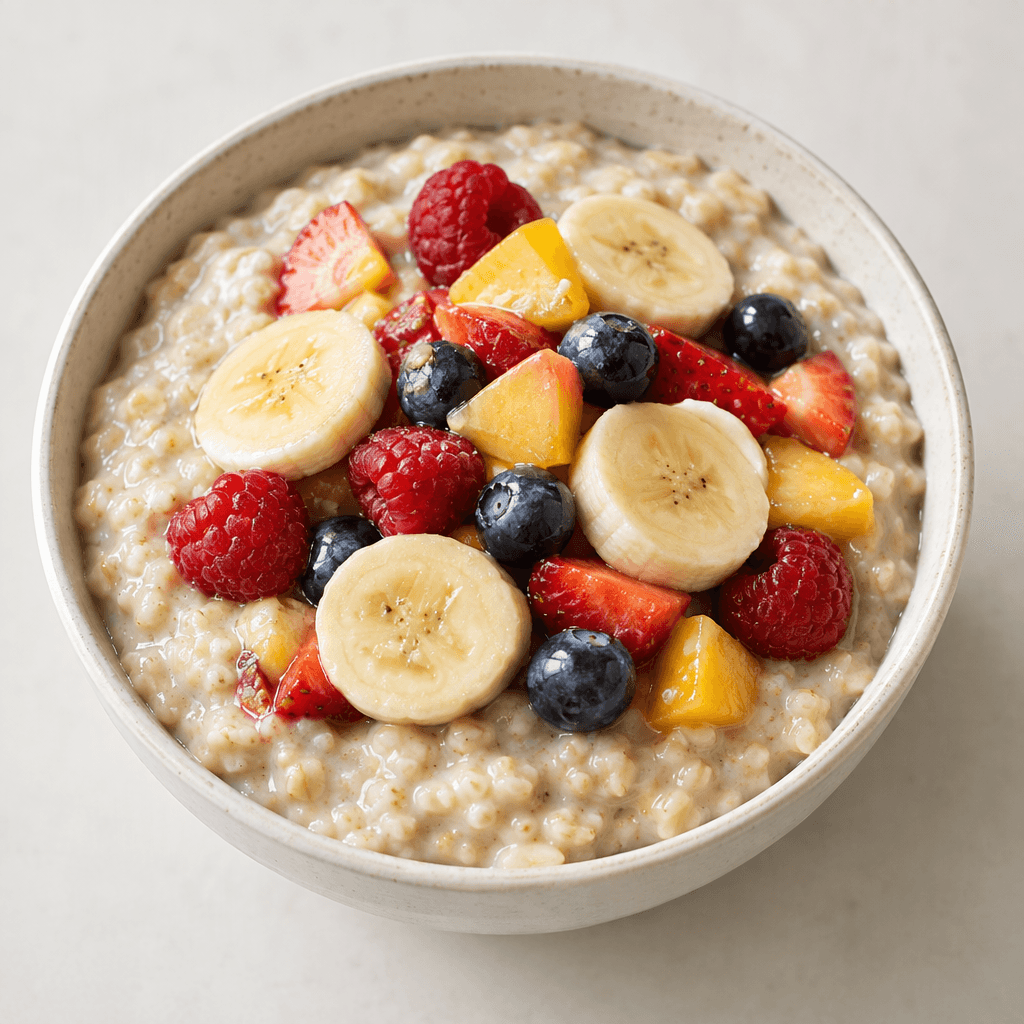
Fruit Oatmeal Porridge Calories
High in fiber and vitamins, low fat, filling breakfast.
In season: Spring · Summer · Autumn · Winter
CALORIES
GI
POTASSIUM
FIBER
Quick answer
1 cup (medium) of Fruit Oatmeal Porridge (220 g) has 209 calories. That works out to 95 calories per 100 g. It contains 40.7 g of carbs, 5.7 g of protein, 3.7 g of fat and 5.9 g of fiber. Its 1.2 mg of Manganese covers 53% of the Daily Value. Its glycemic index is 55 (medium), so it raises blood sugar at a moderate pace.
What is Fruit Oatmeal Porridge?
Fruit Oatmeal Porridge combines oats simmered in water or milk with fruit, either stirred in as it cooks or added on top. It is a familiar variation on breakfast porridge, with a creamy, gently chewy base and fresh, sweet-tart notes from fruit such as banana or berries.
In Britain and Ireland, porridge is often served warm at breakfast; elsewhere, it is an easy make-ahead or quick weekday meal. The oats provide fibre and make the bowl filling, while fruit adds freshness and naturally occurring sweetness. For a lighter bowl, cook it with water or an unsweetened plant drink, and choose ripe fruit instead of adding sugar.
Fruit Oatmeal Porridge Nutrition Facts
Selected: 100 g
95
KCAL / 100G
Carbs
18.5g
· 7% DV
Protein
2.6g
· 5% DV
Fat
1.7g
· 2% DV
Fiber
2.7g
· 10% DV
DV is the share of the daily value covered, on a 2,000 kcal reference diet.
Calories come from: Carbs 74% · Protein 10% · Fat 16%
Fruit Oatmeal Porridge Vitamins & Minerals
Vitamins
B1
0.09mg · 8% DV
Biotin
2.2µg · 7% DV
Vitamin C
6mg · 7% DV
B2
0.05mg · 4% DV
Minerals
Manganese
1mg · 43% DV
Phosphorus
68mg · 10% DV
Zinc
1mg · 9% DV
Magnesium
29mg · 7% DV
How Nutritious Is Fruit Oatmeal Porridge?
Nutrient density
High
How many vitamins, minerals and how much fiber this food carries per calorie. A high score means a lot of nutrition for few calories.
Satiety score
Medium
An EatBetter score computed from fiber, protein and calorie density. A high score means staying full longer on the same calories.
Both scores are calculated per 100 g and do not change with the selected portion. The satiety score is EatBetter's own calculation, not a clinical measure.
Fruit Oatmeal Porridge Glycemic Index
GLYCEMIC INDEX
GLYCEMIC LOAD
Accounts for portion size — a more realistic measure than GI alone.
How to Burn Off Fruit Oatmeal Porridge
To burn the 95 calories in 100 g:
🚶
Walking (5 km/h)
🏃
Running (8 km/h)
🚴
Cycling
🏊
Swimming
Times are calculated with the MET equation for a 70 kg adult. Actual burn varies with your weight, age and pace.
Is Fruit Oatmeal Porridge Processed?
NOVA 2
Minimally Processed
1. Unprocessed
2. Minimally Processed
3. Processed
4. Ultra-Processed
NOVA classifies foods into 4 groups by industrial processing. NOVA 1 (unprocessed) is the healthiest.
Does Fruit Oatmeal Porridge Contain Allergens?
No known major allergens
Which Diets Is Fruit Oatmeal Porridge Good For?
Vegan
✓ Suitable
Vegetarian
✓ Suitable
Gluten-Free
— Not suitable
Dairy-Free
— Not suitable
Mediterranean
✓ Suitable
Paleo
— Not suitable
Whole30
— Not suitable
DASH
— Not suitable
Keto
— Not suitable
Low FODMAP
— Not suitable
Fruit Oatmeal Porridge Fat Profile
SATURATED
0.3g
MONOUNSATURATED
0.5g
POLYUNSATURATED
0.4g
Omega 6:3 ratio 7.3:1
Above the ideal 4:1 (7.3:1).
Compare Fruit Oatmeal Porridge
Foods Similar to Fruit Oatmeal Porridge
Frequently Asked Questions About Fruit Oatmeal Porridge
How do you make fruit oatmeal porridge?
Make fruit oatmeal porridge by simmering oats in water or milk until soft, then adding fruit. Mash banana into the porridge while it cooks for sweetness, or add sliced berries and other fresh fruit just before serving to keep their texture.
What fruit goes best in fruit oatmeal porridge?
Banana, berries, apple, and pear all work well in fruit oatmeal porridge. Banana blends smoothly into warm oats, while berries add a tart, fresh topping. Cook firm apple pieces with the oats if you prefer them soft.
Can you make fruit oatmeal porridge with frozen fruit?
Yes, frozen fruit works well in fruit oatmeal porridge. Stir it into the oats while they cook so it heats through; it may release extra liquid and soften the texture. For a topping, thaw the fruit first and drain off excess juice.
Can fruit oatmeal porridge be made ahead overnight?
Yes, you can prepare fruit oatmeal porridge the night before and refrigerate it in a covered container. Eat it cold or warm it in the morning with a splash of milk or water. Add delicate fresh fruit just before serving.
How do you store leftover fruit oatmeal porridge?
Store leftover fruit oatmeal porridge in a covered container in the refrigerator and eat it the next day. The oats will thicken as they cool, so stir in a little milk or water when reheating. Do not leave cooked porridge out for an extended time.
Can you reheat fruit oatmeal porridge?
Yes, fruit oatmeal porridge can be reheated on the stovetop or in a microwave-safe bowl. Stir it as it warms and add a little water or milk if it has become too thick. If it already has fresh fruit on top, expect that fruit to soften.
Should fruit be added before or after cooking fruit oatmeal porridge?
Add fruit before cooking fruit oatmeal porridge if you want it to soften and flavor the oats, as with chopped apple or mashed banana. Add berries or other delicate fruit after cooking when you want a fresher taste and firmer texture.
Is fruit oatmeal porridge the same as overnight oats?
No, fruit oatmeal porridge is usually made by cooking oats, while overnight oats soften by soaking in liquid in the refrigerator without cooking. Either can include fruit, but their texture and usual serving temperature are different.
Is fruit oatmeal porridge a good breakfast for weight loss?
Fruit oatmeal porridge can be a filling breakfast, but it does not cause weight loss by itself. Keep added sweeteners modest and choose toppings thoughtfully; large amounts of honey, sugar, or calorie-dense extras can make the bowl more energy-rich.
Can children eat fruit oatmeal porridge?
Yes, fruit oatmeal porridge can be served to children when the oats are cooked soft and the fruit is prepared in an age-appropriate texture. Mash or finely cut fruit for younger children, and avoid hard chunks that could be difficult to chew.
Have another question about Fruit Oatmeal Porridge?
Ask the AI nutrition coach — calories, portions, alternatives and more, answered in seconds in the app.

Scan calories with your camera
Instant AI nutrition analysis

Nutrition data compiled from USDA FoodData Central and scientific sources.