

Ready & Packaged Foods
All →Vegetables & Legumes
All →Desserts & Confectionery
All →Meat & Protein
All →Grains & Bakery
All →Beverages
All →Milk & Dairy
All →

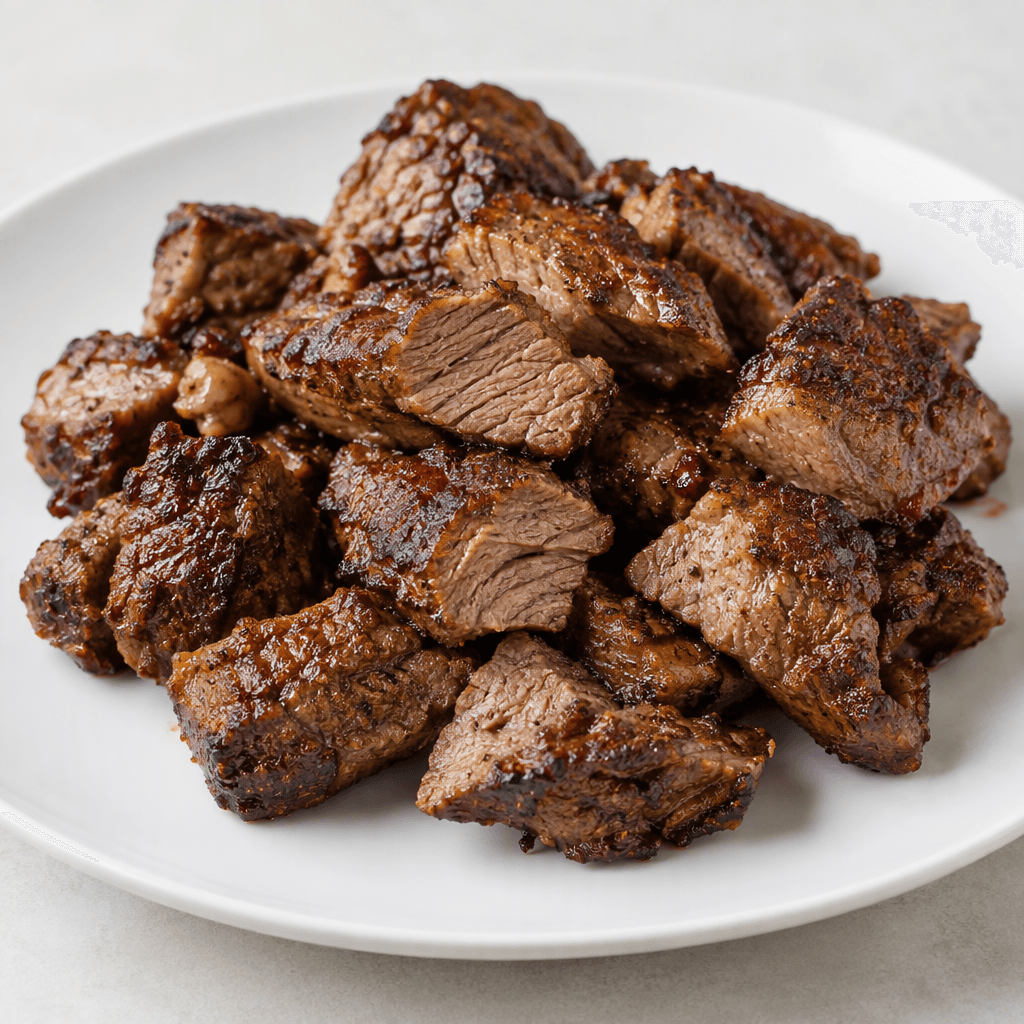
Fried Meat Calories
Rich in protein and iron, meat prepared by frying
CALORIES
GI
POTASSIUM
FIBER
Quick answer
1 piece (medium) of Fried Meat (120 g) has 348 calories. That works out to 290 calories per 100 g. It contains 0.6 g of carbs, 28.2 g of protein, 25.2 g of fat and 0 g of fiber. Its 2.5 µg of B12 covers 105% of the Daily Value. Its glycemic index is 0 (low), so it raises blood sugar slowly.
What is Fried Meat?
Fried Meat is a general preparation rather than one fixed regional recipe: bite-sized pieces of meat, often beef or lamb, are cooked in a hot pan or oil until browned. The exact cut and seasoning vary, and the name describes the cooking style more than a specific dish.
The browned outside and tender middle make it an easy centrepiece for a meal. In Turkey, it may be served with rice, bread or salad; elsewhere, it pairs just as naturally with potatoes, vegetables or a fresh side salad. It is protein-rich, with 23.5 g of protein per 100 g, and also contains 21 g of fat. For a lighter plate, choose a leaner cut, use less oil and serve it with plenty of vegetables.
Fried Meat Nutrition Facts
Selected: 100 g
290
KCAL / 100G
Carbs
0.5g
· 0% DV
Protein
23.5g
· 47% DV
Fat
21g
· 27% DV
Fiber
0g
· 0% DV
DV is the share of the daily value covered, on a 2,000 kcal reference diet.
Calories come from: Carbs 1% · Protein 33% · Fat 66%
Fried Meat Vitamins & Minerals
Vitamins
B12
2.1µg · 88% DV
B3
4.5mg · 28% DV
B6
0.35mg · 21% DV
B2
0.22mg · 17% DV
Minerals
Zinc
5mg · 45% DV
Phosphorus
210mg · 30% DV
Selenium
13µg · 24% DV
Iron
3mg · 17% DV
How Nutritious Is Fried Meat?
Nutrient density
High
How many vitamins, minerals and how much fiber this food carries per calorie. A high score means a lot of nutrition for few calories.
Satiety score
Medium
An EatBetter score computed from fiber, protein and calorie density. A high score means staying full longer on the same calories.
Both scores are calculated per 100 g and do not change with the selected portion. The satiety score is EatBetter's own calculation, not a clinical measure.
Fried Meat Glycemic Index
GLYCEMIC INDEX
GLYCEMIC LOAD
Accounts for portion size — a more realistic measure than GI alone.
How to Burn Off Fried Meat
To burn the 290 calories in 100 g:
🚶
Walking (5 km/h)
🏃
Running (8 km/h)
🚴
Cycling
🏊
Swimming
Times are calculated with the MET equation for a 70 kg adult. Actual burn varies with your weight, age and pace.
Is Fried Meat Processed?
NOVA 3
Processed
1. Unprocessed
2. Minimally Processed
3. Processed
4. Ultra-Processed
NOVA classifies foods into 4 groups by industrial processing. NOVA 1 (unprocessed) is the healthiest.
Does Fried Meat Contain Allergens?
No known major allergens
Which Diets Is Fried Meat Good For?
Vegan
— Not suitable
Vegetarian
— Not suitable
Gluten-Free
✓ Suitable
Dairy-Free
— Not suitable
Mediterranean
✓ Suitable
Paleo
✓ Suitable
Whole30
— Not suitable
DASH
— Not suitable
Keto
✓ Suitable
Low FODMAP
— Not suitable
Fried Meat Fat Profile
SATURATED
8.4g
MONOUNSATURATED
8.8g
POLYUNSATURATED
1.2g
Omega 6:3 ratio 1.9:1
Below the ideal 4:1 — a good omega balance.
Compare Fried Meat
Foods Similar to Fried Meat
Frequently Asked Questions About Fried Meat
How do you make fried meat tender?
To keep fried meat tender, start with a tender cut, pat it dry, and sear small batches in a properly heated pan. Crowding traps steam, while prolonged cooking dries the meat out. Let it rest briefly before cutting or serving.
What is the best cut for fried meat?
Tender cuts such as ribeye, sirloin, or tenderloin work well for fried meat because they cook quickly and stay relatively soft. Leaner or tougher cuts can also be used, but they may need a marinade or a slower cooking method rather than a quick fry.
Why does fried meat turn out tough?
Fried meat often turns tough because it is overcooked, cut with the grain, or cooked in a crowded pan that prevents proper browning. Cut across the grain when serving, cook in batches, and remove the meat once it reaches the doneness you want.
How do you pan-fry meat without making it chewy?
For pan-fried meat that is not chewy, dry the surface and place the pieces in a hot pan without crowding them. Let each side brown before turning, and avoid repeatedly pressing or stirring the meat. The right cooking time depends on the cut and thickness.
Why does fried meat release so much liquid?
Fried meat releases liquid when the pan is not hot enough, the meat is wet, or too many pieces are added at once. Pat the meat dry and cook it in batches so moisture can evaporate and the surface can brown instead of steam.
Should you marinate meat before frying it?
Yes, marinating meat before frying can add flavor and help some lean cuts stay moist. Keep acidic marinades brief for tender cuts, and remove excess marinade before the meat goes into the pan; wet surfaces brown poorly and may splatter.
What oil is best for frying meat?
A neutral oil with a high smoke point, such as canola or refined sunflower oil, is a good choice for frying meat. Butter can burn during a high-heat sear, so add it near the end if you want its flavor.
Should you wash meat before frying it?
No, do not wash raw meat before frying it. Rinsing can spread bacteria from splashes onto the sink and nearby surfaces, and cooking the meat thoroughly is what makes it safe to eat. Pat it dry with paper towels instead.
How do you know when fried meat is safely cooked?
Use a food thermometer to check the thickest part of fried meat; safe doneness depends on whether it is a whole cut or ground meat and on the animal. A browned exterior alone does not confirm that the center has reached a safe temperature.
Can you freeze cooked fried meat?
Yes, cooked fried meat can be frozen in an airtight container or freezer bag once it has cooled promptly. Thaw it in the refrigerator and reheat it gently with a splash of water or stock to help prevent it from drying out.
Have another question about Fried Meat?
Ask the AI nutrition coach — calories, portions, alternatives and more, answered in seconds in the app.

Scan calories with your camera
Instant AI nutrition analysis

Nutrition data compiled from USDA FoodData Central and scientific sources.