

Ready & Packaged Foods
All →Vegetables & Legumes
All →Desserts & Confectionery
All →Meat & Protein
All →Grains & Bakery
All →Beverages
All →Milk & Dairy
All →

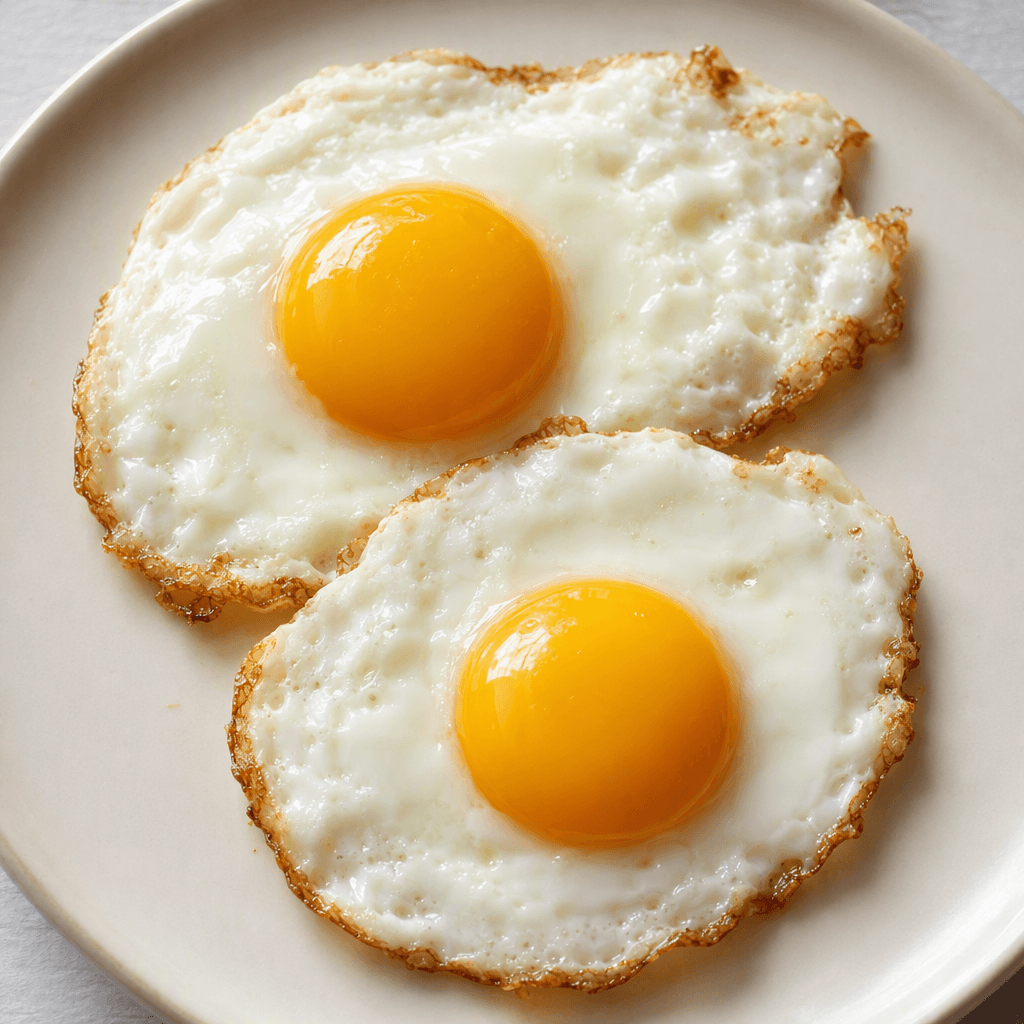
Fried Eggs (Butter) Calories
High-quality protein, rich in vitamin D and healthy fats
In season: Spring · Summer · Autumn · Winter
CALORIES
GI
POTASSIUM
FIBER
Quick answer
100 g of Fried Eggs (Butter) has 190 calories. It contains 1.2 g of carbs, 11.5 g of protein, 15.5 g of fat and 0 g of fiber. Its 20 µg of Biotin covers 67% of the Daily Value. Its glycemic index is 0 (low), so it raises blood sugar slowly.
What is Fried Eggs (Butter)?
Fried eggs with butter are made by cooking eggs in a buttered pan until the whites are set and the yolks reach the desired firmness. They are a familiar breakfast in many places, with small differences in how firmly the eggs are cooked and what is served alongside them.
The whites may turn lightly crisp at the edges while the yolks stay soft and glossy, making toast or bread ideal for dipping. They also pair well with vegetables, beans or potatoes, whether served at breakfast or as a quick meal. Eggs provide high-quality protein, while the butter makes the dish relatively rich in fat. Use a modest amount of butter and add fresh vegetables for a lighter plate.
Fried Eggs (Butter) Nutrition Facts
Selected: 100 g
190
KCAL / 100G
Carbs
1.2g
· 0% DV
Protein
11.5g
· 23% DV
Fat
15.5g
· 20% DV
Fiber
0g
· 0% DV
DV is the share of the daily value covered, on a 2,000 kcal reference diet.
Calories come from: Carbs 3% · Protein 24% · Fat 73%
Fried Eggs (Butter) Vitamins & Minerals
Vitamins
Biotin
20µg · 67% DV
B12
1.1µg · 46% DV
B2
0.35mg · 27% DV
B5
1.2mg · 24% DV
Minerals
Selenium
23µg · 42% DV
Phosphorus
170mg · 24% DV
Iodine
22µg · 15% DV
Zinc
1mg · 9% DV
How Nutritious Is Fried Eggs (Butter)?
Nutrient density
High
How many vitamins, minerals and how much fiber this food carries per calorie. A high score means a lot of nutrition for few calories.
Satiety score
Medium
An EatBetter score computed from fiber, protein and calorie density. A high score means staying full longer on the same calories.
Both scores are calculated per 100 g and do not change with the selected portion. The satiety score is EatBetter's own calculation, not a clinical measure.
Fried Eggs (Butter) Glycemic Index
GLYCEMIC INDEX
GLYCEMIC LOAD
Accounts for portion size — a more realistic measure than GI alone.
How to Burn Off Fried Eggs (Butter)
To burn the 190 calories in 100 g:
🚶
Walking (5 km/h)
🏃
Running (8 km/h)
🚴
Cycling
🏊
Swimming
Times are calculated with the MET equation for a 70 kg adult. Actual burn varies with your weight, age and pace.
Is Fried Eggs (Butter) Processed?
NOVA 2
Minimally Processed
1. Unprocessed
2. Minimally Processed
3. Processed
4. Ultra-Processed
NOVA classifies foods into 4 groups by industrial processing. NOVA 1 (unprocessed) is the healthiest.
Does Fried Eggs (Butter) Contain Allergens?
Contains these allergens:
Which Diets Is Fried Eggs (Butter) Good For?
Vegan
— Not suitable
Vegetarian
— Not suitable
Gluten-Free
✓ Suitable
Dairy-Free
— Not suitable
Mediterranean
✓ Suitable
Paleo
✓ Suitable
Whole30
— Not suitable
DASH
— Not suitable
Keto
✓ Suitable
Low FODMAP
— Not suitable
Fried Eggs (Butter) Fat Profile
SATURATED
7.2g
MONOUNSATURATED
5.5g
POLYUNSATURATED
1.3g
Omega 6:3 ratio 6.1:1
Above the ideal 4:1 (6.1:1).
Compare Fried Eggs (Butter)
Foods Similar to Fried Eggs (Butter)
Frequently Asked Questions About Fried Eggs (Butter)
How do you make butter-fried eggs?
Melt butter in a pan over medium-low heat, then crack in the eggs once it has stopped foaming. Cook until the whites are set and the yolks reach your preferred consistency; serve straight away.
How do you keep the yolks runny when making butter-fried eggs?
Cook butter-fried eggs over low heat and avoid pouring hot butter over the yolks. Take the pan off the heat as soon as the whites are set, since the eggs will continue cooking briefly from the pan's residual heat.
How do you stop butter-fried eggs from sticking to the pan?
Use a clean, well-seasoned or nonstick pan and let it warm before adding enough butter to coat the base. Once you crack in the eggs, leave them undisturbed until the whites begin to set.
Why do the edges of butter-fried eggs turn brown?
The edges of butter-fried eggs brown when the pan is too hot or the butter gets overly hot. For softer whites, lower the heat and add the eggs before the butter smokes or turns dark.
Should you cover the pan when cooking butter-fried eggs?
Covering the pan briefly helps the tops of butter-fried eggs cook without flipping them. Check often: trapped steam can set the yolks quickly, so remove the lid as soon as the whites are cooked to your liking.
Can you cook butter-fried eggs without browning the butter?
Yes. Keep the pan over medium-low heat and add the eggs when the butter has melted and foamed but has not turned brown. Butter browns quickly in a hot pan, which can give the eggs a nutty taste.
What can you add to butter-fried eggs?
Salt and black pepper work well, while chopped herbs, chili flakes, or grated cheese add extra flavor. Add cheese near the end of cooking so it melts over the whites without making the yolks overcook.
What should you serve with butter-fried eggs?
Butter-fried eggs pair well with toast, sautéed vegetables, or breakfast potatoes. Toast is especially useful for dipping into a runny yolk; serve the eggs immediately so the whites stay tender and the yolks keep their texture.
How long do leftover butter-fried eggs keep in the fridge?
Refrigerate leftover butter-fried eggs promptly in a covered container and eat them within a few days. Eggs with runny yolks are less thoroughly cooked, so avoid leaving them at room temperature and be cautious about saving them.
Are runny-yolk butter-fried eggs safe to eat?
Runny-yolk butter-fried eggs carry some risk of Salmonella because the yolk is not fully cooked. People who are pregnant, very young, older, or immunocompromised should choose eggs cooked until both the white and yolk are firm.
Have another question about Fried Eggs (Butter)?
Ask the AI nutrition coach — calories, portions, alternatives and more, answered in seconds in the app.

Scan calories with your camera
Instant AI nutrition analysis

Nutrition data compiled from USDA FoodData Central and scientific sources.