

Ready & Packaged Foods
All →Vegetables & Legumes
All →Desserts & Confectionery
All →Meat & Protein
All →Grains & Bakery
All →Beverages
All →Milk & Dairy
All →

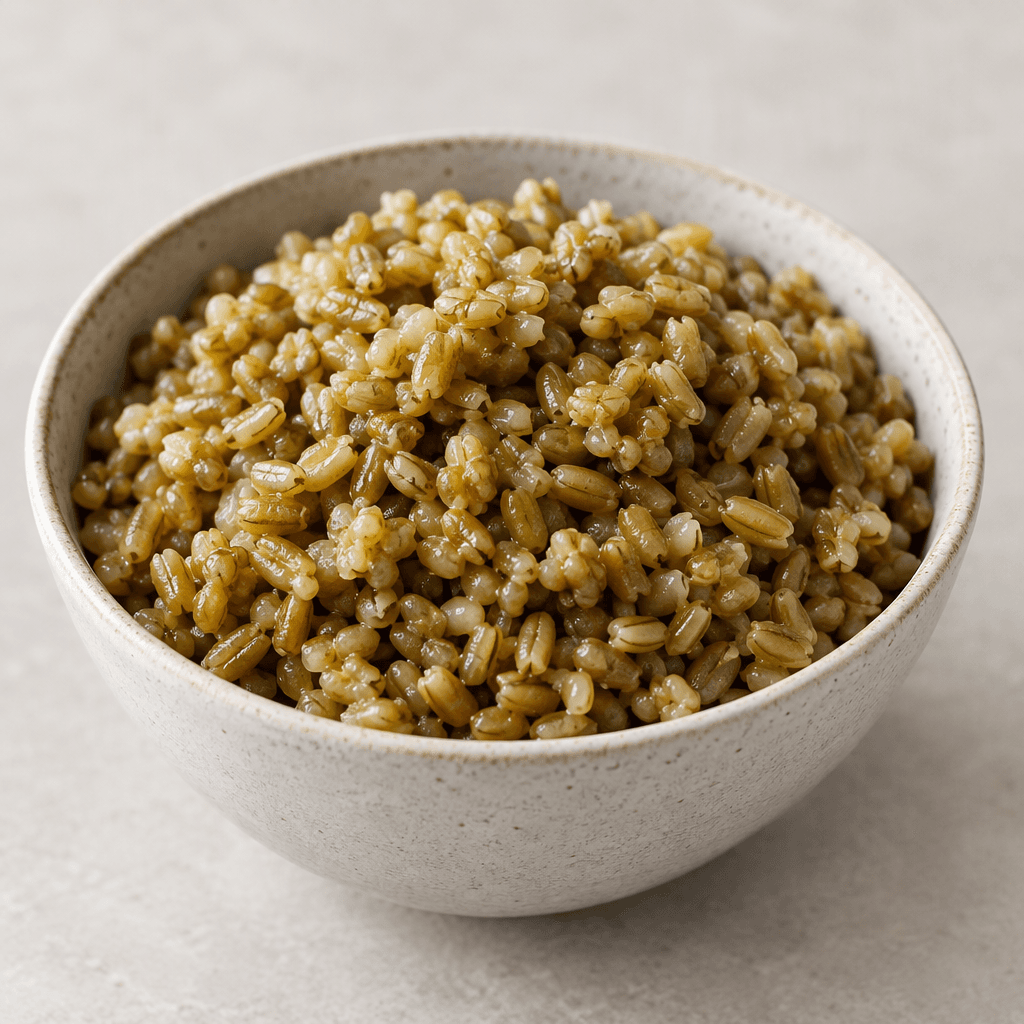
Cooked freekeh Calories
Whole grain, high in fiber
CALORIES
GI
POTASSIUM
FIBER
Quick answer
1 cup (chopped) of Cooked freekeh (160 g) has 190 calories. That works out to 119 calories per 100 g. It contains 35.2 g of carbs, 6.7 g of protein, 1.3 g of fat and 7.2 g of fiber. Its 1 mg of Manganese covers 42% of the Daily Value. Its glycemic index is 43 (low), so it raises blood sugar slowly.
What is Cooked freekeh?
Cooked freekeh is made from young green wheat that is roasted, then cooked until tender. It is a traditional grain in the Levant and is also familiar in southeastern Turkish cooking; its roasting gives it a distinct, gently smoky, nutty character.
The grains stay pleasantly chewy and can be served pilaf-style, stirred into soups or salads, or used as a base for vegetables and meat. As a whole grain, cooked freekeh provides fibre, with 4.5 g per 100 g. For an easy lighter meal, pair it with plenty of vegetables and herbs, or add chickpeas or lentils for a more substantial plant-based bowl.
Cooked freekeh Nutrition Facts
Selected: 100 g
119
KCAL / 100G
Carbs
22g
· 8% DV
Protein
4.2g
· 8% DV
Fat
0.8g
· 1% DV
Fiber
4.5g
· 16% DV
DV is the share of the daily value covered, on a 2,000 kcal reference diet.
Calories come from: Carbs 79% · Protein 15% · Fat 6%
Cooked freekeh Vitamins & Minerals
Vitamins
B3
1.8mg · 11% DV
B1
0.1mg · 8% DV
B5
0.35mg · 7% DV
B6
0.12mg · 7% DV
Minerals
Manganese
1mg · 43% DV
Phosphorus
110mg · 16% DV
Selenium
7µg · 13% DV
Zinc
1mg · 9% DV
How Nutritious Is Cooked freekeh?
Nutrient density
High
How many vitamins, minerals and how much fiber this food carries per calorie. A high score means a lot of nutrition for few calories.
Satiety score
Medium
An EatBetter score computed from fiber, protein and calorie density. A high score means staying full longer on the same calories.
Both scores are calculated per 100 g and do not change with the selected portion. The satiety score is EatBetter's own calculation, not a clinical measure.
Cooked freekeh Glycemic Index
GLYCEMIC INDEX
GLYCEMIC LOAD
Accounts for portion size — a more realistic measure than GI alone.
How to Burn Off Cooked freekeh
To burn the 119 calories in 100 g:
🚶
Walking (5 km/h)
🏃
Running (8 km/h)
🚴
Cycling
🏊
Swimming
Times are calculated with the MET equation for a 70 kg adult. Actual burn varies with your weight, age and pace.
Is Cooked freekeh Processed?
NOVA 2
Minimally Processed
1. Unprocessed
2. Minimally Processed
3. Processed
4. Ultra-Processed
NOVA classifies foods into 4 groups by industrial processing. NOVA 1 (unprocessed) is the healthiest.
Does Cooked freekeh Contain Allergens?
Contains these allergens:
Which Diets Is Cooked freekeh Good For?
Vegan
✓ Suitable
Vegetarian
✓ Suitable
Gluten-Free
— Not suitable
Dairy-Free
— Not suitable
Mediterranean
✓ Suitable
Paleo
— Not suitable
Whole30
— Not suitable
DASH
— Not suitable
Keto
— Not suitable
Low FODMAP
— Not suitable
Cooked freekeh Fat Profile
SATURATED
0.15g
MONOUNSATURATED
0.1g
POLYUNSATURATED
0.35g
Omega 6:3 ratio 10.7:1
Above the ideal 4:1 (10.7:1).
Compare Cooked freekeh
Foods Similar to Cooked freekeh
Frequently Asked Questions About Cooked freekeh
What is cooked freekeh?
Cooked freekeh is young green wheat that has been roasted and then cooked until tender. Its toasted, lightly smoky flavor makes it useful as a grain side, salad base, or filling addition to soups and bowls.
Is cooked freekeh ready to eat?
Yes, cooked freekeh is ready to eat once it is thoroughly cooked and safely stored. Serve it warm or chilled; if it has been refrigerated, reheat it until steaming hot or use it cold in a salad.
How does cooked freekeh differ from cooked bulgur?
Cooked freekeh comes from roasted, immature green wheat, while bulgur is generally made from mature wheat that is cooked, dried, and cracked. Freekeh has a smokier, toastier flavor; bulgur is usually milder and more neutral.
What does cooked freekeh taste like?
Cooked freekeh tastes nutty and toasted, with a noticeable smoky edge. Its chewy grains pair especially well with lemon, fresh herbs, roasted vegetables, warm spices, and savory ingredients such as mushrooms or lentils.
Can cooked freekeh be used in salad?
Yes, cooked freekeh works well in grain salads. Let it cool, then toss it with chopped herbs, cucumber, tomatoes, and a lemon dressing; add the dressing shortly before serving to keep the grains from becoming soggy.
How can I make cooked freekeh taste less smoky?
You can balance cooked freekeh’s smoky taste with bright or creamy ingredients. Stir in lemon juice, fresh herbs, yogurt, or a mild dressing, or combine it with roasted vegetables that have a naturally sweet flavor.
How should cooked freekeh be stored?
Store cooked freekeh in a covered container in the refrigerator after it has cooled. Refrigerate leftovers promptly, and discard them if they develop an off smell, unusual color, or slimy texture.
Can cooked freekeh be frozen?
Yes, cooked freekeh can be frozen. Cool it first, divide it into convenient portions, and seal them in freezer-safe containers; thaw it in the refrigerator and reheat thoroughly before serving.
Do you need to rinse cooked freekeh before eating it?
No, you do not need to rinse cooked freekeh before eating it. Rinsing can make the grains watery and soften their texture; use it straight from the container in a warm dish or chilled salad.
Can cooked freekeh replace rice in a pilaf?
Yes, cooked freekeh can replace rice in a pilaf-style dish, although its chewy texture and smoky flavor will change the result. Fold it into sautéed aromatics and vegetables near the end so it heats through without turning mushy.
Have another question about Cooked freekeh?
Ask the AI nutrition coach — calories, portions, alternatives and more, answered in seconds in the app.

Scan calories with your camera
Instant AI nutrition analysis

Nutrition data compiled from USDA FoodData Central and scientific sources.