

Ready & Packaged Foods
All →Vegetables & Legumes
All →Desserts & Confectionery
All →Meat & Protein
All →Grains & Bakery
All →Beverages
All →Milk & Dairy
All →

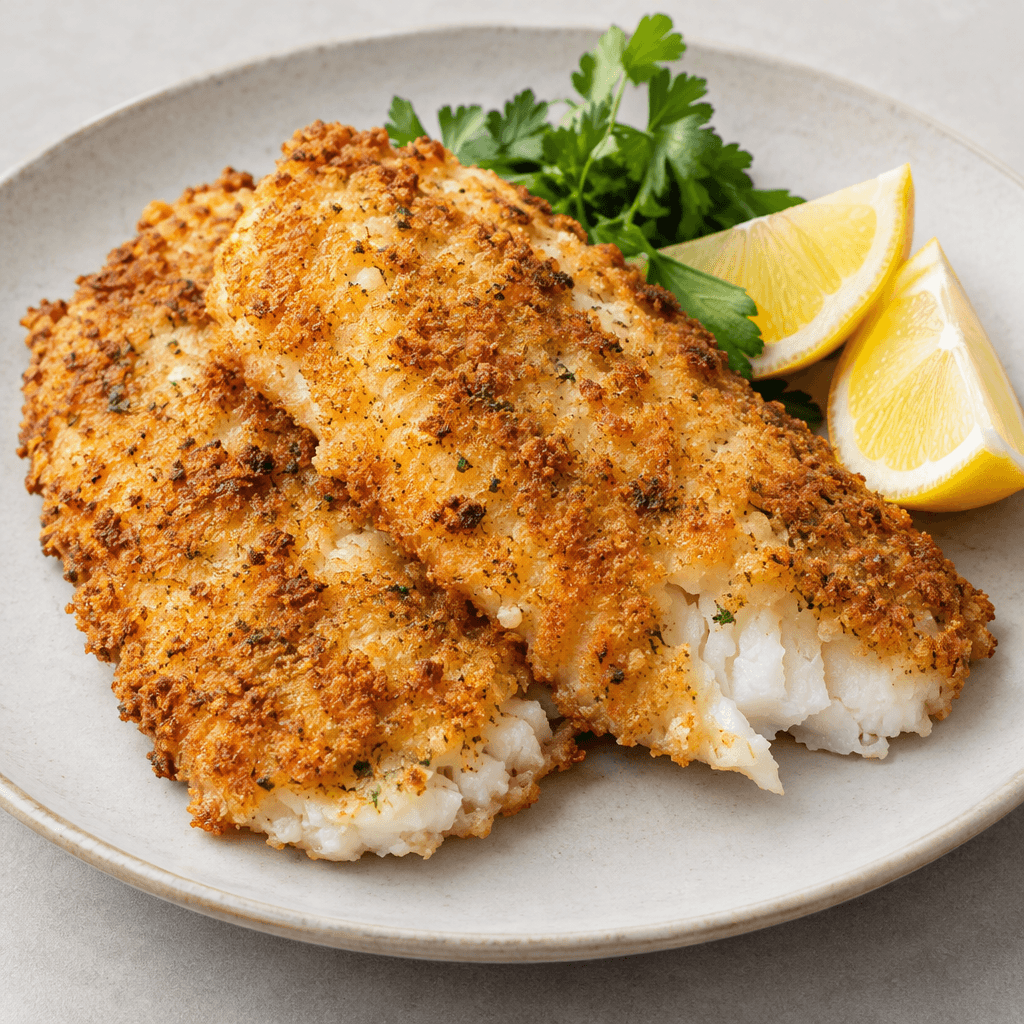
Fried Fish Calories
Protein source, fried, contains omega-3
In season: Spring · Summer · Autumn · Winter
CALORIES
GI
POTASSIUM
FIBER
Quick answer
1 piece (medium) of Fried Fish (120 g) has 264 calories. That works out to 220 calories per 100 g. It contains 8.4 g of carbs, 24 g of protein, 14.4 g of fat and 0.6 g of fiber. Its 1.8 µg of B12 covers 75% of the Daily Value. Its glycemic index is 50 (low), so it raises blood sugar slowly.
What is Fried Fish?
Fried fish is fish cooked in hot oil, sometimes with a light coating of flour, batter or crumbs. There is no single place of origin: it is made in many cuisines, using local catches and different cuts. In the UK, battered fish is famously served with chips, while elsewhere fillets or smaller whole fish may come with rice, vegetables or salad.
A crisp exterior contrasts with moist, flaky flesh; lemon and herbs are common accompaniments. It provides protein—about 20 g per 100 g here—and frying adds fat compared with baking or grilling. Pair it with vegetables or a fresh salad for a balanced plate, or choose a thinner coating if you prefer a lighter result.
Fried Fish Nutrition Facts
Selected: 100 g
220
KCAL / 100G
Carbs
7g
· 3% DV
Protein
20g
· 40% DV
Fat
12g
· 15% DV
Fiber
0.5g
· 2% DV
DV is the share of the daily value covered, on a 2,000 kcal reference diet.
Calories come from: Carbs 13% · Protein 37% · Fat 50%
Fried Fish Vitamins & Minerals
Vitamins
B12
1.5µg · 63% DV
B6
0.25mg · 15% DV
B3
2.1mg · 13% DV
Vitamin D
2.5µg · 13% DV
Minerals
Selenium
25µg · 45% DV
Phosphorus
180mg · 26% DV
Iodine
35µg · 23% DV
Sodium
250mg · 11% DV
How Nutritious Is Fried Fish?
Nutrient density
High
How many vitamins, minerals and how much fiber this food carries per calorie. A high score means a lot of nutrition for few calories.
Satiety score
Medium
An EatBetter score computed from fiber, protein and calorie density. A high score means staying full longer on the same calories.
Both scores are calculated per 100 g and do not change with the selected portion. The satiety score is EatBetter's own calculation, not a clinical measure.
Fried Fish Glycemic Index
GLYCEMIC INDEX
GLYCEMIC LOAD
Accounts for portion size — a more realistic measure than GI alone.
How to Burn Off Fried Fish
To burn the 220 calories in 100 g:
🚶
Walking (5 km/h)
🏃
Running (8 km/h)
🚴
Cycling
🏊
Swimming
Times are calculated with the MET equation for a 70 kg adult. Actual burn varies with your weight, age and pace.
Is Fried Fish Processed?
NOVA 3
Processed
1. Unprocessed
2. Minimally Processed
3. Processed
4. Ultra-Processed
NOVA classifies foods into 4 groups by industrial processing. NOVA 1 (unprocessed) is the healthiest.
Does Fried Fish Contain Allergens?
Contains these allergens:
Which Diets Is Fried Fish Good For?
Vegan
— Not suitable
Vegetarian
— Not suitable
Gluten-Free
✓ Suitable
Dairy-Free
— Not suitable
Mediterranean
✓ Suitable
Paleo
— Not suitable
Whole30
— Not suitable
DASH
— Not suitable
Keto
— Not suitable
Low FODMAP
— Not suitable
Fried Fish Fat Profile
SATURATED
2.5g
MONOUNSATURATED
5.5g
POLYUNSATURATED
2.2g
Omega 6:3 ratio 0.4:1
Below the ideal 4:1 — a good omega balance.
Compare Fried Fish
Foods Similar to Fried Fish
Frequently Asked Questions About Fried Fish
How do you make fried fish crispy?
For crispy fried fish, pat the fish dry and coat it evenly with a thin layer of batter or breading. Fry in hot oil without crowding the pan, then let excess oil drain briefly on a wire rack.
What fish is best for fried fish?
Mild, firm white fish such as cod, haddock, pollock, or catfish works well for fried fish because it holds together during cooking. Thin fillets cook quickly, while thicker pieces are less likely to become dry.
Why does the coating fall off fried fish?
The coating on fried fish often falls off because the fish was wet, the oil was not hot enough, or the pieces were turned too soon. Pat the fish dry, coat it evenly, and let the crust set before flipping.
Can you fry fish from frozen?
It is better to thaw fish before making fried fish, because ice and surface moisture can cause hot oil to splatter and prevent an even crust. Thaw it in the refrigerator, then pat it thoroughly dry before coating.
How do you keep fried fish from getting soggy?
Keep fried fish crisp by draining it on a wire rack rather than stacking pieces or covering them tightly while hot. Serve it soon after cooking; trapped steam softens the coating.
How long does fried fish last in the fridge?
Fried fish keeps in the refrigerator for about 3–4 days when stored promptly in a covered container. Refrigerate leftovers within two hours of cooking, and discard them if they develop an unusual smell or texture.
Can you freeze fried fish?
Yes, you can freeze fried fish, although thawing may soften its coating. Cool it promptly, wrap the pieces well, and reheat them from frozen in an oven or air fryer until hot throughout.
What should you serve with fried fish?
Fried fish pairs well with lemon, a crisp salad, and vegetables. Depending on the style, serve it with fries and tartar sauce, or with rice, slaw, and a tangy sauce to balance the rich coating.
Is fried fish healthy?
Fried fish provides protein and can contain omega-3 fats, but the coating and absorbed cooking oil make it richer than baked or grilled fish. Choose a moderate portion and pair it with vegetables for a balanced meal.
How do you reheat fried fish without making it soggy?
Reheat fried fish in an oven or air fryer so hot air can crisp the coating again. Spread the pieces in a single layer and heat until steaming hot; microwaving tends to leave the crust soft.
Have another question about Fried Fish?
Ask the AI nutrition coach — calories, portions, alternatives and more, answered in seconds in the app.

Scan calories with your camera
Instant AI nutrition analysis

Nutrition data compiled from USDA FoodData Central and scientific sources.