

Ready & Packaged Foods
All →Vegetables & Legumes
All →Desserts & Confectionery
All →Meat & Protein
All →Grains & Bakery
All →Beverages
All →Milk & Dairy
All →

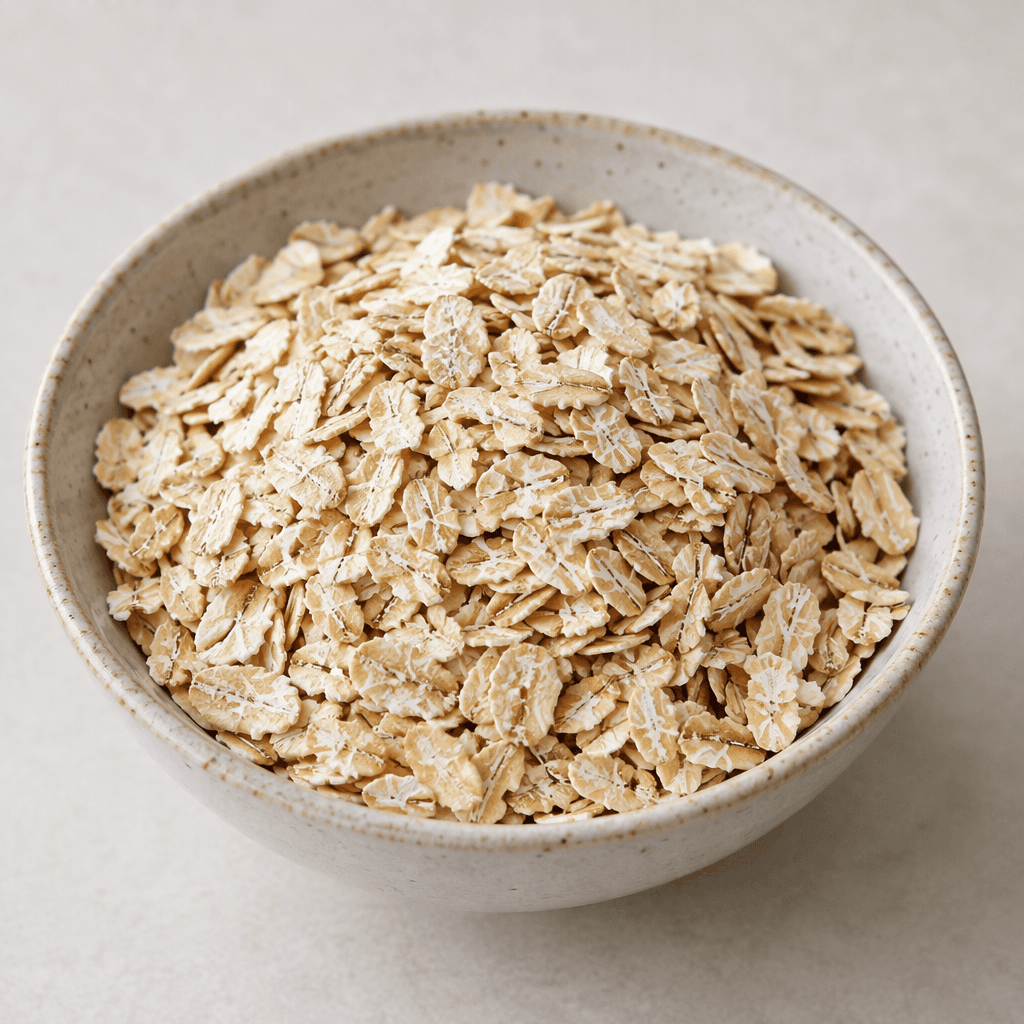
Fine oats Calories
Source of fiber and complex carbs, low fat
In season: Spring · Summer · Autumn · Winter
CALORIES
GI
POTASSIUM
FIBER
Quick answer
1 cup (medium) of Fine oats (80 g) has 296 calories. That works out to 370 calories per 100 g. It contains 54 g of carbs, 10.8 g of protein, 5.2 g of fat and 8 g of fiber. Its 3.9 mg of Manganese covers 170% of the Daily Value. Its glycemic index is 55 (medium), so it raises blood sugar at a moderate pace.
What is Fine oats?
Fine oats are oat groats rolled into thin flakes, so they soften faster than thicker-cut oats. Oats have long been eaten across northern Europe and are now a familiar breakfast grain worldwide, especially in porridge and baked goods.
Their mild, gently nutty flavour works with either sweet toppings such as fruit and cinnamon or savoury additions like eggs and herbs. Cook them on the hob, soak them overnight, or stir them into yoghurt; their fine texture also helps bind muffins and oatcakes. Fine oats provide fibre and complex carbohydrates, making them a satisfying breakfast base. For a lighter bowl, use fruit for sweetness and choose water or an unsweetened milk alternative.
Fine oats Nutrition Facts
Selected: 100 g
370
KCAL / 100G
Carbs
67.5g
· 25% DV
Protein
13.5g
· 27% DV
Fat
6.5g
· 8% DV
Fiber
10g
· 36% DV
DV is the share of the daily value covered, on a 2,000 kcal reference diet.
Calories come from: Carbs 71% · Protein 14% · Fat 15%
Fine oats Vitamins & Minerals
Vitamins
B1
0.46mg · 38% DV
B5
1.1mg · 22% DV
Biotin
6µg · 20% DV
B2
0.15mg · 12% DV
Minerals
Manganese
5mg · 217% DV
Phosphorus
410mg · 59% DV
Selenium
28µg · 51% DV
Magnesium
138mg · 33% DV
How Nutritious Is Fine oats?
Nutrient density
High
How many vitamins, minerals and how much fiber this food carries per calorie. A high score means a lot of nutrition for few calories.
Satiety score
Medium
An EatBetter score computed from fiber, protein and calorie density. A high score means staying full longer on the same calories.
Both scores are calculated per 100 g and do not change with the selected portion. The satiety score is EatBetter's own calculation, not a clinical measure.
Fine oats Glycemic Index
GLYCEMIC INDEX
GLYCEMIC LOAD
Accounts for portion size — a more realistic measure than GI alone.
How to Burn Off Fine oats
To burn the 370 calories in 100 g:
🚶
Walking (5 km/h)
🏃
Running (8 km/h)
🚴
Cycling
🏊
Swimming
Times are calculated with the MET equation for a 70 kg adult. Actual burn varies with your weight, age and pace.
Is Fine oats Processed?
NOVA 2
Minimally Processed
1. Unprocessed
2. Minimally Processed
3. Processed
4. Ultra-Processed
NOVA classifies foods into 4 groups by industrial processing. NOVA 1 (unprocessed) is the healthiest.
Does Fine oats Contain Allergens?
No known major allergens
Which Diets Is Fine oats Good For?
Vegan
✓ Suitable
Vegetarian
✓ Suitable
Gluten-Free
✓ Suitable
Dairy-Free
— Not suitable
Mediterranean
✓ Suitable
Paleo
✓ Suitable
Whole30
— Not suitable
DASH
— Not suitable
Keto
— Not suitable
Low FODMAP
— Not suitable
Fine oats Fat Profile
SATURATED
1.1g
MONOUNSATURATED
2.2g
POLYUNSATURATED
2.6g
Omega 6:3 ratio 20:1
Above the ideal 4:1 (20:1).
Compare Fine oats
Foods Similar to Fine oats
Frequently Asked Questions About Fine oats
How do you cook fine oats on the stovetop?
Simmer fine oats with milk or water, stirring until they soften and thicken. Because the flakes are small, they cook faster than larger rolled oats; take the pan off the heat as soon as the porridge reaches the texture you want.
Can you eat fine oats without cooking them?
Yes, fine oats can be eaten uncooked, for example mixed into yogurt or a smoothie. Their dry flakes soften when they sit in liquid, so soaking them first makes the texture less coarse and easier to eat.
Can you make overnight oats with fine oats?
Yes, stir fine oats into milk, yogurt, or a non-dairy drink and refrigerate them overnight. They absorb liquid quickly and can become quite thick, so loosen the mixture with a splash of liquid before serving if needed.
Are fine oats the same as quick oats?
Not necessarily: “fine oats” describes the small size of the flakes, while quick oats are typically cut or rolled thinner so they cook quickly. Products can overlap, but check the texture and cooking directions rather than assuming the names mean exactly the same thing.
Can fine oats replace flour in pancakes?
Yes, fine oats can replace some or all of the flour in pancakes, though the result will be softer and more oat-like. Let the batter rest briefly so the flakes absorb liquid, then add a little more liquid if it becomes too thick.
Why does porridge made with fine oats turn gluey?
Fine oats can turn gluey when they are stirred heavily or cooked for too long, because their small flakes break down quickly. Cook them gently, stir only as needed, and remove them from the heat once they thicken.
Can you blend fine oats into oat flour?
Yes, blending fine oats produces a finer powder that can work as oat flour in pancakes, muffins, and other recipes. It may not be as smooth as packaged flour, so sift it if your recipe needs a particularly fine texture.
Are fine oats good for weight loss?
Fine oats can make a filling meal because they provide fiber, but eating them does not cause weight loss by itself. Pair them with a source of protein, such as yogurt, and keep sweet toppings modest if you want a more satisfying breakfast.
How should you store fine oats after opening?
Keep fine oats in a tightly sealed container in a cool, dry cupboard, away from steam and direct sunlight. Moisture can spoil their texture and encourage mold, so use a clean, dry scoop and follow the date on the package.
Do fine oats raise blood sugar?
Fine oats contain carbohydrates, so they can raise blood sugar, although their fiber may slow digestion compared with a low-fiber meal. Pairing them with protein or unsweetened yogurt can make breakfast more balanced; people managing diabetes should follow their care plan.
Have another question about Fine oats?
Ask the AI nutrition coach — calories, portions, alternatives and more, answered in seconds in the app.

Scan calories with your camera
Instant AI nutrition analysis

Nutrition data compiled from USDA FoodData Central and scientific sources.