

Ready & Packaged Foods
All →Vegetables & Legumes
All →Desserts & Confectionery
All →Meat & Protein
All →Grains & Bakery
All →Beverages
All →Milk & Dairy
All →

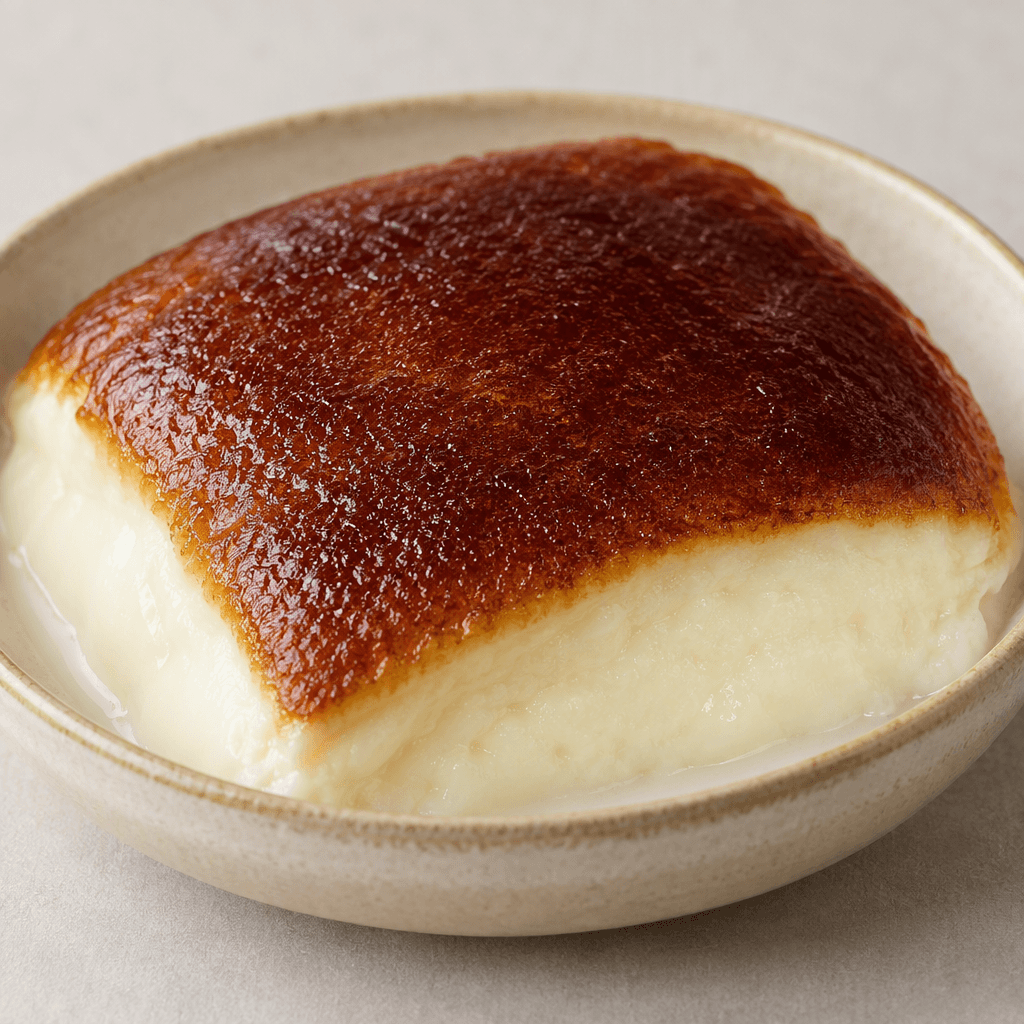
Eker Kazandibi Calories
Turkish milk dessert, caramelized top, low fiber
In season: Spring · Summer · Autumn · Winter
CALORIES
GI
POTASSIUM
FIBER
Quick answer
1 piece (medium) of Eker Kazandibi (120 g) has 168 calories. That works out to 140 calories per 100 g. It contains 28.2 g of carbs, 3.8 g of protein, 4 g of fat and 0.1 g of fiber. Its 102 mg of Phosphorus covers 15% of the Daily Value. Its glycemic index is 65 (medium), so it raises blood sugar at a moderate pace.
What is Eker Kazandibi?
Eker Kazandibi is a ready-made Turkish milk pudding with a browned, lightly caramelised layer formed as the pudding cooks against the bottom of the pan. Its smooth, cool centre contrasts with the toasted sweetness on top. In Turkey it is usually served chilled as a dessert after a meal or alongside tea; elsewhere, enjoy it cold as a small treat, perhaps with coffee.
Made chiefly from milk and sugar, it is a sweet, carbohydrate-focused dessert with very little fibre. A modest portion works well after a meal, and fresh fruit on the side can make for a lighter-feeling dessert.
Eker Kazandibi Nutrition Facts
Selected: 100 g
140
KCAL / 100G
Carbs
23.5g
· 9% DV
Protein
3.2g
· 6% DV
Fat
3.3g
· 4% DV
Fiber
0.1g
· 0% DV
DV is the share of the daily value covered, on a 2,000 kcal reference diet.
Calories come from: Carbs 69% · Protein 9% · Fat 22%
Eker Kazandibi Vitamins & Minerals
Vitamins
B2
0.13mg · 10% DV
B12
0.25µg · 10% DV
B5
0.35mg · 7% DV
Vitamin A
45µg · 5% DV
Minerals
Phosphorus
85mg · 12% DV
Calcium
110mg · 11% DV
Iodine
6µg · 4% DV
Selenium
2µg · 4% DV
How Nutritious Is Eker Kazandibi?
Nutrient density
Low
How many vitamins, minerals and how much fiber this food carries per calorie. A high score means a lot of nutrition for few calories.
Satiety score
Low
An EatBetter score computed from fiber, protein and calorie density. A high score means staying full longer on the same calories.
Both scores are calculated per 100 g and do not change with the selected portion. The satiety score is EatBetter's own calculation, not a clinical measure.
Eker Kazandibi Glycemic Index
GLYCEMIC INDEX
GLYCEMIC LOAD
Accounts for portion size — a more realistic measure than GI alone.
How to Burn Off Eker Kazandibi
To burn the 140 calories in 100 g:
🚶
Walking (5 km/h)
🏃
Running (8 km/h)
🚴
Cycling
🏊
Swimming
Times are calculated with the MET equation for a 70 kg adult. Actual burn varies with your weight, age and pace.
Is Eker Kazandibi Processed?
NOVA 3
Processed
1. Unprocessed
2. Minimally Processed
3. Processed
4. Ultra-Processed
NOVA classifies foods into 4 groups by industrial processing. NOVA 1 (unprocessed) is the healthiest.
Does Eker Kazandibi Contain Allergens?
Contains these allergens:
Which Diets Is Eker Kazandibi Good For?
Vegan
— Not suitable
Vegetarian
✓ Suitable
Gluten-Free
— Not suitable
Dairy-Free
— Not suitable
Mediterranean
✓ Suitable
Paleo
— Not suitable
Whole30
— Not suitable
DASH
— Not suitable
Keto
— Not suitable
Low FODMAP
— Not suitable
Eker Kazandibi Fat Profile
SATURATED
2.1g
MONOUNSATURATED
0.7g
POLYUNSATURATED
0.2g
Omega 6:3 ratio 5:1
Above the ideal 4:1 (5:1).
Compare Eker Kazandibi
Foods Similar to Eker Kazandibi
Frequently Asked Questions About Eker Kazandibi
What is Eker Kazandibi?
Eker Kazandibi is a Turkish milk pudding with a distinctive caramelized, lightly scorched surface. Its soft, creamy base contrasts with the darker top, which gives the dessert its characteristic flavor.
What does Eker Kazandibi taste like?
Eker Kazandibi tastes creamy and milky, with a sweet, toasted-caramel note from its browned surface. The top is more deeply flavored than the soft pudding underneath, rather than tasting uniformly like plain custard.
Why is the top of Eker Kazandibi burnt?
The browned top is intentional: kazandibi is made by caramelizing the pudding against a hot cooking surface. That layer is the dessert’s defining feature, not a sign that the product has spoiled.
What is Eker Kazandibi made of?
Eker Kazandibi has a milk-pudding-style base and a caramelized surface. The exact ingredients can vary by product recipe, so use the ingredient list on your package for a definitive answer about a particular Eker Kazandibi.
Does Eker Kazandibi contain chicken?
Do not assume that Eker Kazandibi contains chicken. Some traditional kazandibi recipes use a tavuk göğsü-style pudding made with finely shredded chicken, but recipes differ; check the package ingredients to confirm this product’s contents.
How is Eker Kazandibi different from sütlaç?
Eker Kazandibi is known for its caramelized underside, while sütlaç is Turkish rice pudding, usually served with a smooth or browned top but without kazandibi’s characteristic scorched layer. Their textures also differ because sütlaç contains rice.
Should Eker Kazandibi be eaten hot or cold?
Eker Kazandibi is best served chilled. Keep it refrigerated, then remove it from the package carefully; letting it stand briefly before serving can soften the texture without warming it through.
How should you store Eker Kazandibi after opening?
Keep opened Eker Kazandibi covered in the refrigerator and follow the storage directions on its package. Avoid leaving it at room temperature for extended periods, and discard it if its smell, appearance, or texture changes noticeably.
Can you freeze Eker Kazandibi?
Freezing Eker Kazandibi is not recommended because the pudding may become watery or grainy after thawing. Refrigerate it instead and eat it within the period specified on the package.
How is Eker Kazandibi traditionally served?
Serve Eker Kazandibi cold with its caramelized side visible. You can enjoy it on its own or pair it with fresh fruit; handle it gently when removing it from its container so the soft pudding keeps its shape.
Have another question about Eker Kazandibi?
Ask the AI nutrition coach — calories, portions, alternatives and more, answered in seconds in the app.

Scan calories with your camera
Instant AI nutrition analysis

Nutrition data compiled from USDA FoodData Central and scientific sources.