

Ready & Packaged Foods
All →Vegetables & Legumes
All →Desserts & Confectionery
All →Meat & Protein
All →Grains & Bakery
All →Beverages
All →Milk & Dairy
All →

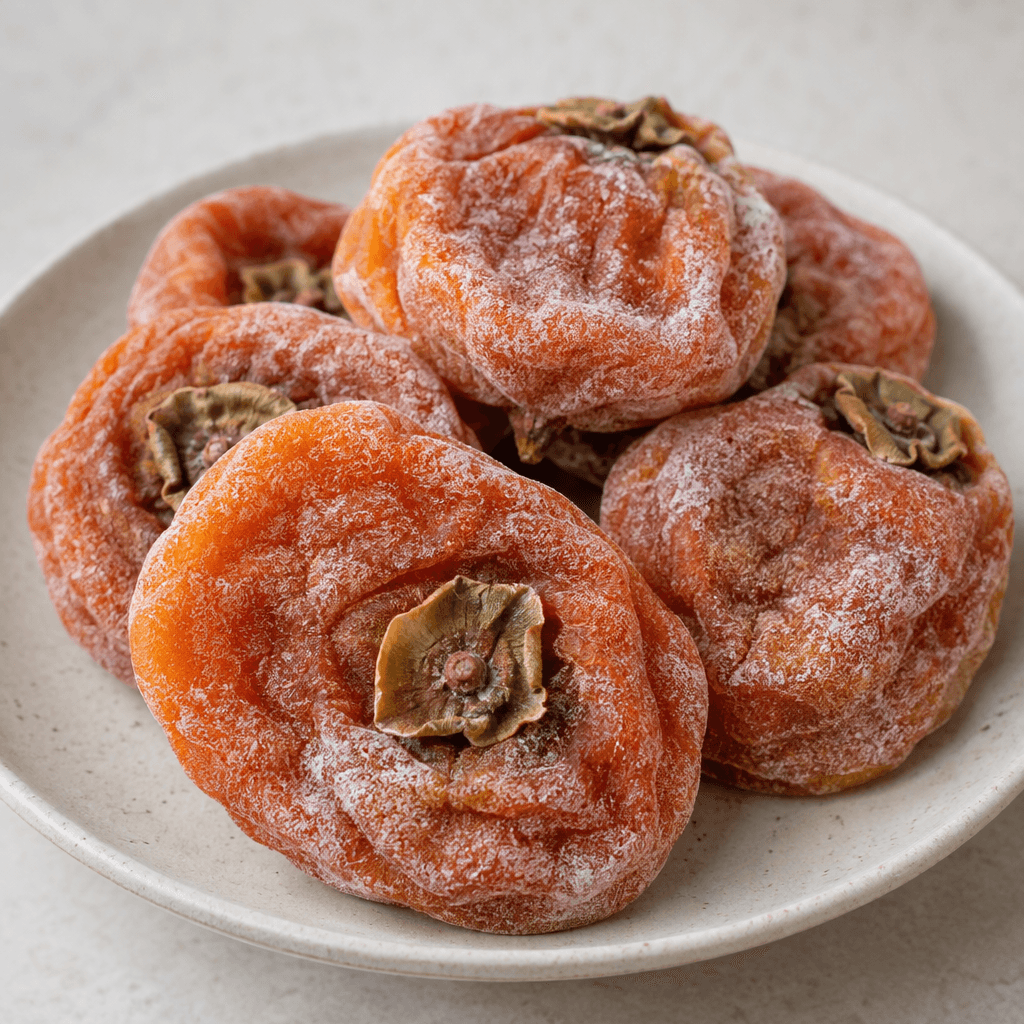
Dried persimmon Calories
Natural sugar, fiber, potassium, antioxidant
In season: Autumn · Winter
CALORIES
GI
POTASSIUM
FIBER
Quick answer
1 piece (medium) of Dried persimmon (35 g) has 96 calories. That works out to 274 calories per 100 g. It contains 25.3 g of carbs, 0.5 g of protein, 0.2 g of fat and 5.1 g of fiber. Its 280.7 mg of Potassium covers 8% of the Daily Value. Its glycemic index is 55 (medium), so it raises blood sugar at a moderate pace.
What is Dried persimmon?
Dried persimmon is made by peeling ripe persimmons and drying them whole, a traditional way to preserve the fruit in East Asia as well as in persimmon-growing parts of Turkey. As moisture leaves, the flesh turns dense and chewy; a pale coating on the surface can form from the fruit’s natural sugars.
Its rich, honey-like sweetness makes it an easy snack, often served with tea or alongside nuts. In Japan and Korea, dried persimmons are also enjoyed as a seasonal treat and used in sweets; elsewhere, they work well chopped into porridge or baked goods. Drying concentrates the fruit, including its fibre: 100 g provides 14.5 g. Pair a piece with unsweetened tea or a few nuts, and keep the portion modest if you prefer a less-sweet snack.
Dried persimmon Nutrition Facts
Selected: 100 g
274
KCAL / 100G
Carbs
72.2g
· 26% DV
Protein
1.4g
· 3% DV
Fat
0.6g
· 1% DV
Fiber
14.5g
· 52% DV
DV is the share of the daily value covered, on a 2,000 kcal reference diet.
Calories come from: Carbs 96% · Protein 2% · Fat 2%
Dried persimmon Vitamins & Minerals
Vitamins
Vitamin A
81µg · 9% DV
B1
0.07mg · 6% DV
B6
0.1mg · 6% DV
Vitamin E
0.7mg · 5% DV
Minerals
Potassium ⭐
802mg · 24% DV
Iron
3mg · 17% DV
Magnesium
34mg · 8% DV
Phosphorus
32mg · 5% DV
How Nutritious Is Dried persimmon?
Nutrient density
High
How many vitamins, minerals and how much fiber this food carries per calorie. A high score means a lot of nutrition for few calories.
Satiety score
Medium
An EatBetter score computed from fiber, protein and calorie density. A high score means staying full longer on the same calories.
Both scores are calculated per 100 g and do not change with the selected portion. The satiety score is EatBetter's own calculation, not a clinical measure.
Dried persimmon Glycemic Index
GLYCEMIC INDEX
GLYCEMIC LOAD
Accounts for portion size — a more realistic measure than GI alone.
How to Burn Off Dried persimmon
To burn the 274 calories in 100 g:
🚶
Walking (5 km/h)
🏃
Running (8 km/h)
🚴
Cycling
🏊
Swimming
Times are calculated with the MET equation for a 70 kg adult. Actual burn varies with your weight, age and pace.
Is Dried persimmon Processed?
NOVA 2
Minimally Processed
1. Unprocessed
2. Minimally Processed
3. Processed
4. Ultra-Processed
NOVA classifies foods into 4 groups by industrial processing. NOVA 1 (unprocessed) is the healthiest.
Does Dried persimmon Contain Allergens?
No known major allergens
Which Diets Is Dried persimmon Good For?
Vegan
✓ Suitable
Vegetarian
✓ Suitable
Gluten-Free
✓ Suitable
Dairy-Free
— Not suitable
Mediterranean
✓ Suitable
Paleo
✓ Suitable
Whole30
— Not suitable
DASH
— Not suitable
Keto
— Not suitable
Low FODMAP
— Not suitable
Dried persimmon Fat Profile
SATURATED
0.03g
MONOUNSATURATED
0.09g
POLYUNSATURATED
0.05g
Omega 6:3 ratio 4:1
Below the ideal 4:1 — a good omega balance.
Compare Dried persimmon
Foods Similar to Dried persimmon
Frequently Asked Questions About Dried persimmon
How do you eat dried persimmons?
Dried persimmons can be eaten whole as a chewy snack or chopped into oatmeal, yogurt, salads, and baked goods. If a fruit feels too firm, soak it briefly in warm water, then drain it before serving.
Why do dried persimmons have a white coating?
A thin, even white coating on dried persimmons is usually sugar that has crystallized on the surface as the fruit dries. It is generally harmless; fuzzy growth, colored spots, or an unpleasant smell are reasons to discard the fruit.
How are dried persimmons made?
Dried persimmons are made by drying ripe fruit, either whole or sliced. Some traditional methods peel and hang whole persimmons to air-dry, while home cooks may use a dehydrator or a low oven; the method affects the final texture.
How should dried persimmons be stored?
Keep dried persimmons in an airtight container in a cool, dry place. Refrigerate them if your kitchen is warm or humid, and keep moisture out of the container to help prevent mold.
Can you eat the skin of a dried persimmon?
Yes, the skin of a dried persimmon is edible if it was left on during drying. If it is tough or unpleasant to chew, briefly soften the fruit in warm water or peel the skin away before eating.
Do dried persimmons need to be washed before eating?
No, dried persimmons do not need to be washed before eating. If you choose to rinse one, wash only the piece you plan to eat and dry it promptly; storing damp fruit can encourage mold.
How can you tell if dried persimmons have gone bad?
Discard dried persimmons that have fuzzy mold, an off or sour smell, or a wet, slimy surface. A thin, dry layer of white sugar crystals is common, but colored or fuzzy patches are not the same thing.
Can you rehydrate dried persimmons?
Yes, soak dried persimmons briefly in warm water to make them softer and easier to chew or blend. Drain them as soon as they reach the texture you want, since a long soak can make them watery.
Are dried persimmons the same as persimmon chips?
No. Dried persimmons are often soft and chewy, especially when dried whole, while persimmon chips are thin slices dried until crisp. The cut and drying method—not a different kind of fruit—usually explains the texture difference.
Can people with diabetes eat dried persimmons?
People with diabetes can include dried persimmons if the portion fits their carbohydrate plan, since drying concentrates the fruit’s natural sugars into a smaller volume. A clinician or dietitian can help account for individual glucose targets and medication.
Have another question about Dried persimmon?
Ask the AI nutrition coach — calories, portions, alternatives and more, answered in seconds in the app.

Scan calories with your camera
Instant AI nutrition analysis

Nutrition data compiled from USDA FoodData Central and scientific sources.