

Ready & Packaged Foods
All →Vegetables & Legumes
All →Desserts & Confectionery
All →Meat & Protein
All →Grains & Bakery
All →Beverages
All →Milk & Dairy
All →

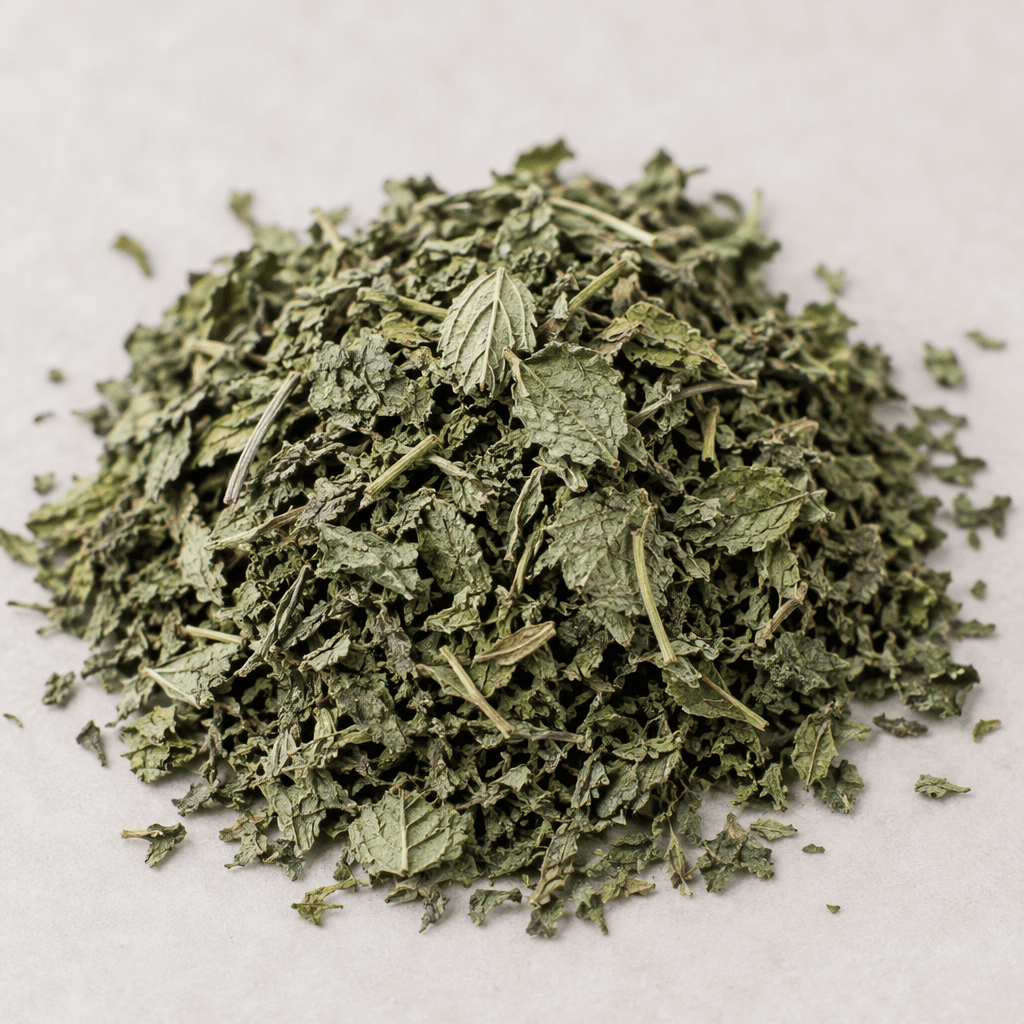
Dried Mint Calories
Intense aroma, antioxidant source, aids digestion
In season: Spring · Summer · Autumn · Winter
CALORIES
GI
POTASSIUM
FIBER
Quick answer
1 tablespoon (medium) of Dried Mint (2 g) has 6 calories. That works out to 285 calories per 100 g. It contains 1 g of carbs, 0.4 g of protein, 0.1 g of fat and 0.6 g of fiber. Its 106 µg of Vitamin A covers 12% of the Daily Value. Its glycemic index is 5 (low), so it raises blood sugar slowly.
What is Dried Mint?
Dried mint is made by drying mint leaves and crumbling them into small flakes. It is widely used across Mediterranean and Middle Eastern cooking, where its cool, penetrating aroma brings a fresh note even when the herb is stirred into warm dishes. The leaves soften as they absorb moisture, while a pinch added near the end keeps their fragrance more pronounced.
Sprinkle it over yogurt, salads, soups, beans or roasted vegetables, or steep it for mint tea; in Turkish cooking, it is also familiar in dishes such as cacık and lentil soup. Dried mint contains fibre, but servings are usually small, so it contributes more aroma than bulk nutrition. Start with a little, then adjust to taste; it pairs especially well with lemon, yogurt and olive oil.
Dried Mint Nutrition Facts
Selected: 100 g
285
KCAL / 100G
Carbs
52g
· 19% DV
Protein
19.8g
· 40% DV
Fat
4.8g
· 6% DV
Fiber
29.8g
· 106% DV
DV is the share of the daily value covered, on a 2,000 kcal reference diet.
Calories come from: Carbs 63% · Protein 24% · Fat 13%
Dried Mint Vitamins & Minerals
Vitamins
Vitamin A
5300µg · 589% DV
Vitamin K
530µg · 442% DV
B2
1.2mg · 92% DV
B3
6.8mg · 43% DV
Minerals
Manganese
12mg · 522% DV
Iron
88mg · 489% DV
Calcium
1480mg · 148% DV
Magnesium
602mg · 143% DV
How Nutritious Is Dried Mint?
Nutrient density
Very high
How many vitamins, minerals and how much fiber this food carries per calorie. A high score means a lot of nutrition for few calories.
Satiety score
High
An EatBetter score computed from fiber, protein and calorie density. A high score means staying full longer on the same calories.
Both scores are calculated per 100 g and do not change with the selected portion. The satiety score is EatBetter's own calculation, not a clinical measure.
Dried Mint Glycemic Index
GLYCEMIC INDEX
GLYCEMIC LOAD
Accounts for portion size — a more realistic measure than GI alone.
How to Burn Off Dried Mint
To burn the 285 calories in 100 g:
🚶
Walking (5 km/h)
🏃
Running (8 km/h)
🚴
Cycling
🏊
Swimming
Times are calculated with the MET equation for a 70 kg adult. Actual burn varies with your weight, age and pace.
Is Dried Mint Processed?
NOVA 2
Minimally Processed
1. Unprocessed
2. Minimally Processed
3. Processed
4. Ultra-Processed
NOVA classifies foods into 4 groups by industrial processing. NOVA 1 (unprocessed) is the healthiest.
Does Dried Mint Contain Allergens?
No known major allergens
Which Diets Is Dried Mint Good For?
Vegan
✓ Suitable
Vegetarian
✓ Suitable
Gluten-Free
✓ Suitable
Dairy-Free
— Not suitable
Mediterranean
✓ Suitable
Paleo
✓ Suitable
Whole30
— Not suitable
DASH
— Not suitable
Keto
✓ Suitable
Low FODMAP
— Not suitable
Dried Mint Fat Profile
SATURATED
2.1g
MONOUNSATURATED
0.6g
POLYUNSATURATED
1.7g
Omega 6:3 ratio 0.7:1
Below the ideal 4:1 — a good omega balance.
Compare Dried Mint
Foods Similar to Dried Mint
Frequently Asked Questions About Dried Mint
What can you cook with dried mint?
Dried mint works well in soups, yogurt sauces, dressings, bean dishes, and marinades. It is especially useful when you want mint flavor without adding fresh leaves. Add a little first, since its concentrated aroma can take over a mild dish.
Can you use dried mint instead of fresh mint?
Yes, dried mint can replace fresh mint, but it has a more concentrated flavor and a softer, crumbled texture. Use less than the amount of fresh mint called for, then taste and adjust the dish.
How do you make dried mint tea?
Steep dried mint in hot water for a few minutes, then strain the leaves. You can drink it on its own or add lemon. Mint tea may aggravate heartburn in some people, so pay attention to how it affects you.
How should you store dried mint?
Keep dried mint in an airtight container in a cool, dry cupboard, away from sunlight and the stove. Moisture and heat weaken its aroma, so use a dry spoon and close the container promptly after each use.
Does dried mint expire?
Dried mint gradually loses its flavor and color, and it should be discarded if it becomes damp, moldy, or musty-smelling. If it looks and smells normal but has little aroma, it is likely stale rather than spoiled.
When should you add dried mint to a recipe?
Add dried mint near the end of cooking when you want its aroma to stay noticeable. For soups or sauces, stir it in shortly before serving; you can also briefly warm it in oil, taking care not to burn it.
Can you put dried mint in yogurt?
Yes, dried mint mixes easily into plain yogurt for a quick sauce or dip. Let it sit briefly so the flavor spreads through the yogurt, then add salt, lemon, or garlic if they suit the dish.
Can you use dried mint in a mojito?
You can use dried mint for mint flavor, but it will not provide the fresh leaves or appearance of a traditional mojito. Steep it in the lime and sugar mixture, then strain before adding the other ingredients.
How do you dry fresh mint at home?
Wash fresh mint, dry the leaves thoroughly, and spread them in a single layer in a clean, well-ventilated place. Once the leaves crumble easily, remove any tough stems and store the mint in an airtight container.
Is dried mint tea good for digestion?
Dried mint tea may feel soothing after a meal, but it is not a proven treatment for digestive problems. Mint can worsen reflux or heartburn for some people, so choose another drink if you notice those symptoms.
Have another question about Dried Mint?
Ask the AI nutrition coach — calories, portions, alternatives and more, answered in seconds in the app.

Scan calories with your camera
Instant AI nutrition analysis

Nutrition data compiled from USDA FoodData Central and scientific sources.