

Ready & Packaged Foods
All →Vegetables & Legumes
All →Desserts & Confectionery
All →Meat & Protein
All →Grains & Bakery
All →Beverages
All →Milk & Dairy
All →

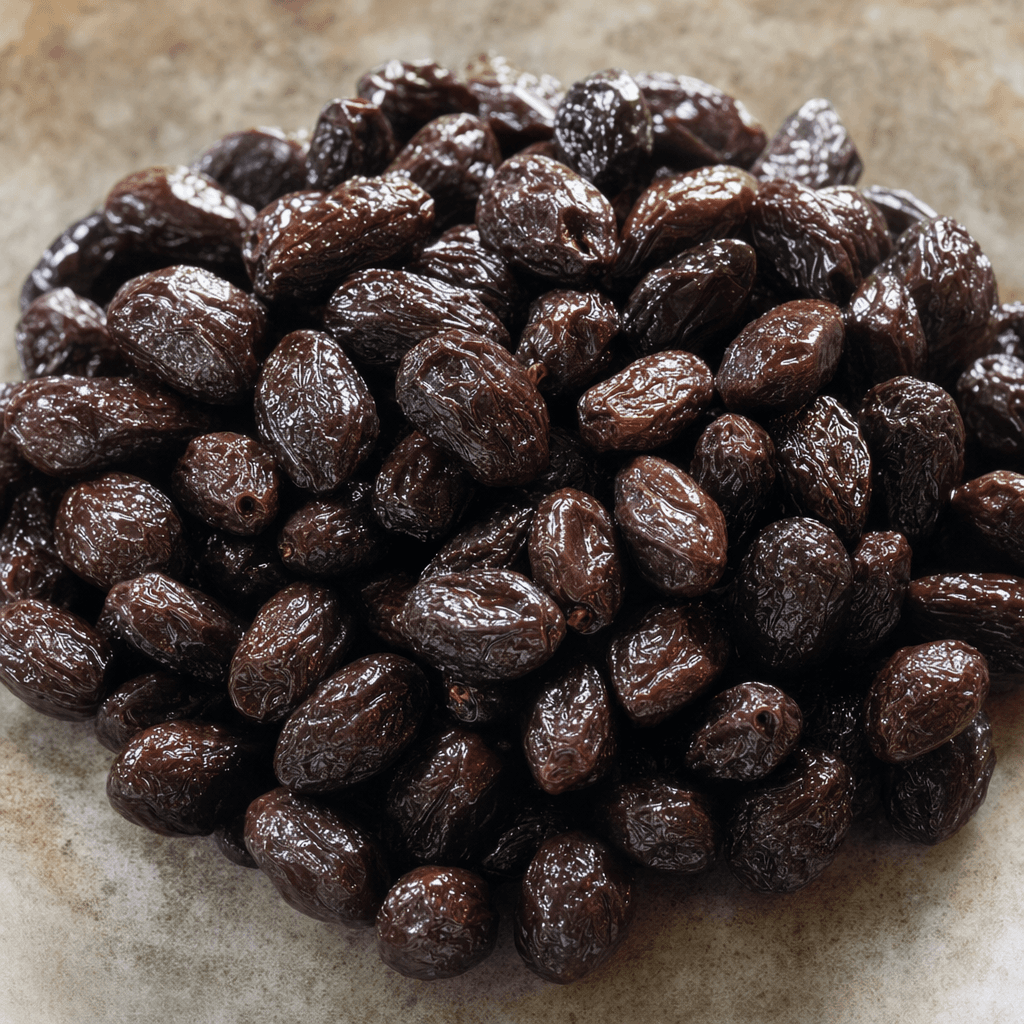
Dried Black Olive Calories
Rich in healthy fats, fiber, vitamin E, and antioxidants. Can be high in salt.
In season: Autumn · Winter
CALORIES
GI
POTASSIUM
FIBER
Quick answer
10 piece (medium) of Dried Black Olive (30 g) has 75 calories. That works out to 250 calories per 100 g. It contains 1.8 g of carbs, 0.7 g of protein, 7.5 g of fat and 1.7 g of fiber. Its 540 mg of Sodium covers 23% of the Daily Value. Its glycemic index is 15 (low), so it raises blood sugar slowly.
What is Dried Black Olive?
Dried black olives are ripe olives cured with salt in baskets, a traditional Turkish method that draws out moisture and gives them their characteristically wrinkled skin. The result is a concentrated, savoury olive with a pleasantly chewy texture; the saltiness can be quite pronounced.
In Turkey, they are a familiar part of breakfast, often served with bread, cheese and fresh vegetables, and they also work well in mezze or salads. They provide mostly fat, along with fibre and vitamin E, but can be high in salt. Pair them with fresh vegetables or unsalted cheese for a more balanced plate, and adjust the portion to suit your taste.
Dried Black Olive Nutrition Facts
Selected: 100 g
250
KCAL / 100G
Carbs
6g
· 2% DV
Protein
2.2g
· 4% DV
Fat
25g
· 32% DV
Fiber
5.5g
· 20% DV
DV is the share of the daily value covered, on a 2,000 kcal reference diet.
Calories come from: Carbs 9% · Protein 3% · Fat 88%
Dried Black Olive Vitamins & Minerals
Vitamins
Vitamin E
3.8mg · 25% DV
B3
0.9mg · 6% DV
B5
0.3mg · 6% DV
Biotin
1.5µg · 5% DV
Minerals
Sodium
1800mg · 78% DV
Iron
3mg · 17% DV
Calcium
75mg · 8% DV
Magnesium
20mg · 5% DV
How Nutritious Is Dried Black Olive?
Nutrient density
High
How many vitamins, minerals and how much fiber this food carries per calorie. A high score means a lot of nutrition for few calories.
Satiety score
Medium
An EatBetter score computed from fiber, protein and calorie density. A high score means staying full longer on the same calories.
Both scores are calculated per 100 g and do not change with the selected portion. The satiety score is EatBetter's own calculation, not a clinical measure.
Dried Black Olive Glycemic Index
GLYCEMIC INDEX
GLYCEMIC LOAD
Accounts for portion size — a more realistic measure than GI alone.
How to Burn Off Dried Black Olive
To burn the 250 calories in 100 g:
🚶
Walking (5 km/h)
🏃
Running (8 km/h)
🚴
Cycling
🏊
Swimming
Times are calculated with the MET equation for a 70 kg adult. Actual burn varies with your weight, age and pace.
Is Dried Black Olive Processed?
NOVA 2
Minimally Processed
1. Unprocessed
2. Minimally Processed
3. Processed
4. Ultra-Processed
NOVA classifies foods into 4 groups by industrial processing. NOVA 1 (unprocessed) is the healthiest.
Does Dried Black Olive Contain Allergens?
No known major allergens
Which Diets Is Dried Black Olive Good For?
Vegan
✓ Suitable
Vegetarian
✓ Suitable
Gluten-Free
✓ Suitable
Dairy-Free
— Not suitable
Mediterranean
✓ Suitable
Paleo
— Not suitable
Whole30
— Not suitable
DASH
— Not suitable
Keto
✓ Suitable
Low FODMAP
— Not suitable
Dried Black Olive Fat Profile
SATURATED
3.3g
MONOUNSATURATED
17.5g
POLYUNSATURATED
1.5g
Omega 6:3 ratio 10.9:1
Above the ideal 4:1 (10.9:1).
Compare Dried Black Olive
Foods Similar to Dried Black Olive
Frequently Asked Questions About Dried Black Olive
How are dried black olives made?
Dried black olives are typically cured with salt, which draws out moisture and reduces their bitterness. The olives become wrinkled and develop a concentrated, salty flavor; the exact curing method can vary by producer and region.
How should you store dried black olives after opening?
Store dried black olives in a clean, tightly closed container in the refrigerator after opening. Use a clean utensil each time, and keep moisture and food debris out of the container to help prevent spoilage.
Why are dried black olives wrinkled?
Dried black olives are wrinkled because salt curing draws moisture from the fruit. That shriveled appearance is normal for this style of olive and does not, by itself, mean the olives have gone bad.
Do you need to rinse dried black olives before eating them?
No, dried black olives do not need rinsing before you eat them. A quick rinse can remove some surface salt if they taste too salty, but dry them afterward and avoid leaving them wet in storage.
How do you remove salt from dried black olives?
Soak dried black olives briefly in water, then drain and taste one to see whether the saltiness has eased. A longer soak can also wash away some of their concentrated flavor, so change the water only as needed.
Can you cook with dried black olives?
Yes, dried black olives work well in pasta, salads, sauces, and baked dishes. Their strong flavor and saltiness can season a recipe, so taste the dish before adding extra salt; remove the pits if needed.
How can you tell if dried black olives have gone bad?
Discard dried black olives if you see mold, notice a slimy coating, or detect an unusual foul smell. Wrinkling and a dark color are normal for dried black olives, so look for changes beyond those expected features.
Are dried black olives healthier than brined black olives?
Neither style is automatically healthier: dried black olives are salt-cured, while brined olives are stored in salty liquid. Their saltiness and flavor vary by product, so choose based on taste and how much salt you want in the meal.
Are dried black olives good for you?
Yes, dried black olives can be part of a balanced diet; they provide unsaturated fats and plant compounds. Their salt content can be substantial, so eating them alongside less-salty foods is a practical way to balance a meal.
Can you freeze dried black olives?
Yes, you can freeze dried black olives in a sealed freezer-safe container, though thawing may soften their texture. They are best used in cooked dishes after freezing, where a change in firmness is less noticeable.
Have another question about Dried Black Olive?
Ask the AI nutrition coach — calories, portions, alternatives and more, answered in seconds in the app.

Scan calories with your camera
Instant AI nutrition analysis

Nutrition data compiled from USDA FoodData Central and scientific sources.