

Ready & Packaged Foods
All →Vegetables & Legumes
All →Desserts & Confectionery
All →Meat & Protein
All →Grains & Bakery
All →Beverages
All →Milk & Dairy
All →

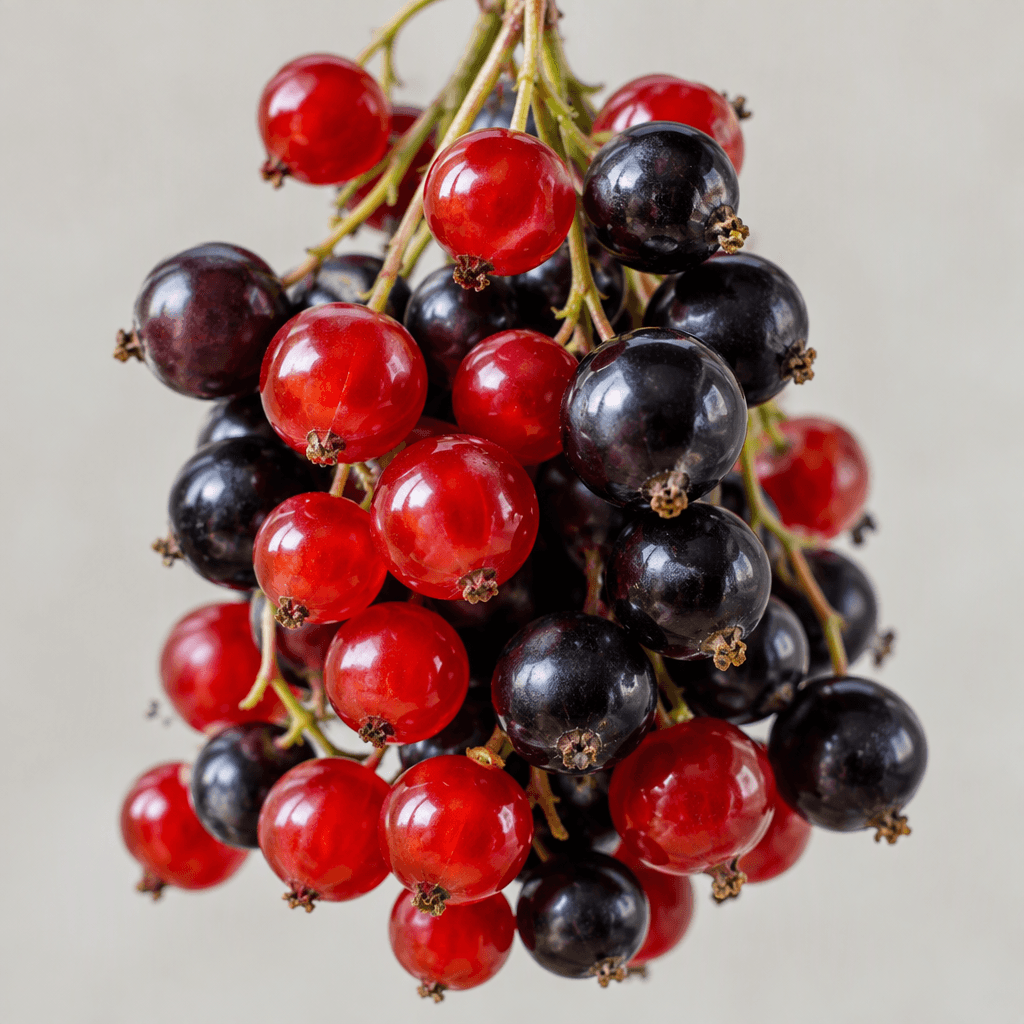
Currants Calories
Dried small grape, sweet and tangy
In season: Summer · Autumn
CALORIES
GI
POTASSIUM
FIBER
Quick answer
2 tablespoon (medium) of Currants (20 g) has 57 calories. That works out to 283 calories per 100 g. It contains 14.8 g of carbs, 0.6 g of protein, 0.1 g of fat and 1.4 g of fiber. Its 0.1 mg of Copper covers 7% of the Daily Value. Its glycemic index is 65 (high), so it raises blood sugar quickly.
What is Currants?
Currants are tiny dried grapes, traditionally associated with the Corinth grape grown in Greece. They have a concentrated sweet-tart flavour and a chewy texture, making them easy to use by the spoonful.
In Greek and wider Mediterranean cooking, currants turn up in baked goods, puddings and savoury dishes; English-speaking cooks also add them to cakes, scones, porridge and rice dishes. A brief soak softens them, while tossing them into a recipe dry keeps their chew. They are mostly carbohydrate, with some fibre, so a small handful can bring sweetness and texture without adding much fat.
Currants Nutrition Facts
Selected: 100 g
283
KCAL / 100G
Carbs
74.1g
· 27% DV
Protein
3.1g
· 6% DV
Fat
0.3g
· 0% DV
Fiber
6.8g
· 24% DV
DV is the share of the daily value covered, on a 2,000 kcal reference diet.
Calories come from: Carbs 95% · Protein 4% · Fat 1%
Currants Vitamins & Minerals
Vitamins
B2
0.18mg · 14% DV
B6
0.23mg · 14% DV
B1
0.11mg · 9% DV
Biotin
2.5µg · 8% DV
Minerals
Phosphorus
95mg · 14% DV
Iron
2mg · 11% DV
Potassium ⭐
320mg · 9% DV
Magnesium
30mg · 7% DV
How Nutritious Is Currants?
Nutrient density
Medium
How many vitamins, minerals and how much fiber this food carries per calorie. A high score means a lot of nutrition for few calories.
Satiety score
Medium
An EatBetter score computed from fiber, protein and calorie density. A high score means staying full longer on the same calories.
Both scores are calculated per 100 g and do not change with the selected portion. The satiety score is EatBetter's own calculation, not a clinical measure.
Currants Glycemic Index
GLYCEMIC INDEX
GLYCEMIC LOAD
Accounts for portion size — a more realistic measure than GI alone.
How to Burn Off Currants
To burn the 283 calories in 100 g:
🚶
Walking (5 km/h)
🏃
Running (8 km/h)
🚴
Cycling
🏊
Swimming
Times are calculated with the MET equation for a 70 kg adult. Actual burn varies with your weight, age and pace.
Is Currants Processed?
NOVA 2
Minimally Processed
1. Unprocessed
2. Minimally Processed
3. Processed
4. Ultra-Processed
NOVA classifies foods into 4 groups by industrial processing. NOVA 1 (unprocessed) is the healthiest.
Does Currants Contain Allergens?
No known major allergens
Which Diets Is Currants Good For?
Vegan
✓ Suitable
Vegetarian
✓ Suitable
Gluten-Free
✓ Suitable
Dairy-Free
— Not suitable
Mediterranean
✓ Suitable
Paleo
✓ Suitable
Whole30
— Not suitable
DASH
— Not suitable
Keto
— Not suitable
Low FODMAP
— Not suitable
Currants Fat Profile
SATURATED
0.1g
MONOUNSATURATED
0.03g
POLYUNSATURATED
0.09g
Omega 6:3 ratio 4:1
Below the ideal 4:1 — a good omega balance.
Compare Currants
Foods Similar to Currants
Frequently Asked Questions About Currants
Are currants the same as raisins?
No. Currants in this food context are tiny dried grapes, often called Zante currants; raisins are usually larger dried grapes from other varieties. They can be swapped in many recipes, but currants distribute more evenly through pilafs and baked goods.
How do you use currants in cooking?
Currants work well in pilafs, stuffings, baked goods, and fruit puddings. Their sweet-tart flavor pairs especially well with warm spices and nuts. Add them directly to a recipe or soak them briefly first if you want a softer texture.
Should you soak currants before baking?
You do not have to soak currants before baking. If they seem very dry, briefly soak them in warm water, then drain and pat them dry so they soften without adding excess moisture to the batter or filling.
Do currants need to be washed before eating?
It is a good idea to rinse currants and pick out any stems or debris before using them. Drain them well, especially before adding them to dough or a pilaf, where extra water can affect the finished texture.
What is the difference between currants and blackcurrants?
Currants sold as dried fruit are tiny dried grapes, while blackcurrants are fresh dark berries from a different plant. The names are similar, but they are not interchangeable in recipes; dried currants are chewy and sweet, while blackcurrants are juicy and tart.
Can you substitute raisins for currants?
Yes, raisins can replace currants in most recipes. They are often larger and sweeter, so chop them for a closer texture and consider using a little less. The finished dish will have a more noticeable raisin flavor.
How should you store currants after opening?
Keep opened currants in an airtight container in a cool, dry place. Protecting them from moisture and heat helps prevent clumping and spoilage, while a sealed container also keeps them from absorbing odors from nearby foods.
Can you freeze currants?
Yes, currants can be frozen in a well-sealed freezer bag or container. You can add them to many recipes while still frozen, or thaw them first and drain away any moisture before using them in a filling or pilaf.
Can currants go bad, and how can you tell?
Yes. Discard currants if you see mold, notice an unusual smell, or find that they have become damp or unusually sticky. Drying can make them firm over time, but mold or a fermented odor means they should not be eaten.
Are currants safe for dogs?
No. Do not give currants to dogs: dried grapes can cause serious kidney injury, and the amount that may be harmful is unpredictable. If a dog eats currants, contact a veterinarian or animal poison service promptly.
Have another question about Currants?
Ask the AI nutrition coach — calories, portions, alternatives and more, answered in seconds in the app.

Scan calories with your camera
Instant AI nutrition analysis

Nutrition data compiled from USDA FoodData Central and scientific sources.