

Ready & Packaged Foods
All →Vegetables & Legumes
All →Desserts & Confectionery
All →Meat & Protein
All →Grains & Bakery
All →Beverages
All →Milk & Dairy
All →

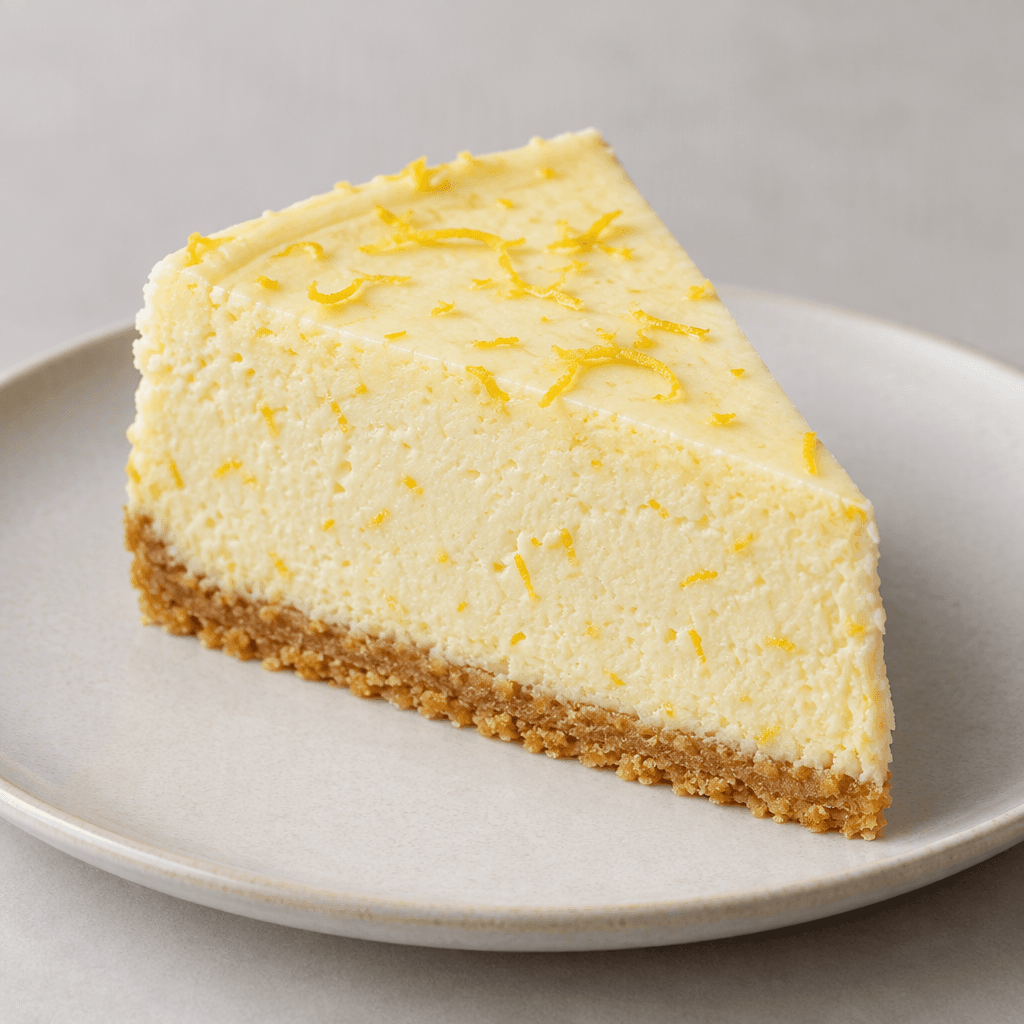
Cream cheese lemon cheesecake Calories
Sweet, energy-dense dairy dessert with lemon flavor
CALORIES · 100 G
GI
POTASSIUM · 100 G
FIBER · 100 G
Quick answer
1 slice (medium) of Cream cheese lemon cheesecake (120 g) has 385 calories. That works out to 321 calories per 100 g. It contains 34.7 g of carbs, 7 g of protein, 24.8 g of fat and 1 g of fiber. Its 198 µg of Vitamin A covers 22% of the Daily Value. Its glycemic index is 48 (medium), so it raises blood sugar at a moderate pace.
Cream cheese lemon cheesecake Nutrition Facts
Selected: 1 slice (medium) · 120 g
385
KCAL / 120G
Carbs
34.7g
· 13% DV
Protein
7g
· 14% DV
Fat
24.8g
· 32% DV
Fiber
1g
· 4% DV
DV is the share of the daily value covered, on a 2,000 kcal reference diet.
Calories come from: Carbs 36% · Protein 7% · Fat 57%
Cream cheese lemon cheesecake nutrition facts table · 1 slice (medium) (120 g)
| Nutrient | Amount | % DV |
|---|---|---|
| Calories | 385 kcal | |
| Total fat | 24.8 g | 32% |
| Saturated fat | 14.16 g | 71% |
| Trans fat | 0.48 g | |
| Sodium | 306 mg | 13% |
| Total carbohydrate | 34.7 g | 13% |
| Fiber | 1 g | 4% |
| Protein | 7 g | 14% |
Calories: Calories measure energy. Average daily need is 2,000 kcal. Excess calories are stored as fat, too few cause weight loss.
Carbs: Your body's primary energy source. The brain runs exclusively on carbs. Daily need: 275g.
Protein: Essential for muscle repair and cell growth. Daily need: 50g. Keeps you full and boosts metabolism.
Fat: Needed for hormone production and vitamin absorption. Daily need: 78g. Limit saturated fats, choose unsaturated.
Fiber: Critical for digestive health and satiety. Daily need: 28g. Stabilizes blood sugar, lowers cholesterol.

Log this food in EatBetter
100,000+ people use it
- Get your daily calorie target
- Snap your meal, log it in seconds
- See every vitamin and mineral

📸 Scan the code to get the app free.

How Many Calories in 1 Slice of Cream cheese lemon cheesecake?
| Serving | Amount | Calories |
|---|---|---|
| 1 slice (medium) | 120 g | 385 kcal |
| 0.25 slice (quarter) | 30 g | 96 kcal |
| 1 piece (small) | 45 g | 144 kcal |
| ½ slice (half) | 60 g | 193 kcal |
| 1 piece (medium) | 70 g | 225 kcal |
| 1 slice (thin) | 80 g | 257 kcal |
| 100 g | 100 g | 321 kcal |
| 1 serving (large) | 150 g | 482 kcal |
| 1 slice (thick) | 160 g | 514 kcal |
Calculated from 321 calories per 100 g.
Frequently Asked Questions About Cream cheese lemon cheesecake
How do you make cream cheese lemon cheesecake?
Cream cheese lemon cheesecake is made with a crumb crust and a lemon-flavoured cream cheese filling. Press the crust firmly into the pan, spread the smooth filling over it, then bake or chill according to the recipe; let it cool and set before slicing.
Can you make cream cheese lemon cheesecake without baking it?
Yes, cream cheese lemon cheesecake can be made without baking. No-bake versions rely on a filling that firms up in the refrigerator, so chill it until fully set before cutting; otherwise, the slices may slump or the filling may smear.
Why does cream cheese lemon cheesecake crack?
Cream cheese lemon cheesecake often cracks when the filling is overmixed, baked too hot, or cooled too quickly. Mix only until smooth, avoid sudden temperature changes, and let a baked cheesecake cool gradually in the switched-off oven with the door slightly open.
Why is my cream cheese lemon cheesecake runny?
Cream cheese lemon cheesecake can turn out runny if it has not baked or chilled long enough, or if too much liquid was added. Let it cool completely and refrigerate it before judging the texture; a no-bake filling needs enough time to firm up.
How long should cream cheese lemon cheesecake chill before serving?
Cream cheese lemon cheesecake should chill for several hours, ideally overnight, so the filling sets and slices cleanly. If it is baked, cool it first before refrigerating; cutting it while warm can make the centre look loose even when it is properly baked.
What topping goes well with cream cheese lemon cheesecake?
Lemon curd, fresh berries, or a little finely grated lemon zest all go well with cream cheese lemon cheesecake. Add wet toppings shortly before serving to keep the crust from becoming soggy, and use a light hand so they do not overwhelm the lemon filling.
How do you keep the crust from crumbling in cream cheese lemon cheesecake?
For cream cheese lemon cheesecake, use fine biscuit or graham-cracker crumbs and mix them thoroughly with the melted butter. Press the mixture firmly and evenly into the pan, then chill or pre-bake the crust before adding the filling, depending on the recipe.
Can cream cheese lemon cheesecake be frozen?
Yes, cream cheese lemon cheesecake can be frozen. Wrap individual slices airtight, thaw them in the refrigerator, and avoid refreezing after thawing. A topping made with fresh fruit or lemon sauce may become softer, so add fresh toppings after thawing.
How long does cream cheese lemon cheesecake last in the fridge?
Keep cream cheese lemon cheesecake covered in the refrigerator and eat it within a few days. Because it contains dairy and eggs, do not leave it at room temperature for an extended period; store cut slices promptly in a clean, sealed container.
Should you use lemon juice or lemon zest in cream cheese lemon cheesecake?
Use both in cream cheese lemon cheesecake if you want a balanced lemon flavour: juice brings tartness, while zest adds fragrant citrus oils. Grate only the yellow outer peel, since the white pith can taste bitter, and add juice gradually so the filling does not become too loose.
Cream cheese lemon cheesecake Vitamins & Minerals
Vitamins
Vitamin A
198µg · 22% DV
B12
0.5µg · 21% DV
B2
0.22mg · 17% DV
Biotin
3.84µg · 13% DV
Minerals
Phosphorus
142mg · 20% DV
Sodium
306mg · 13% DV
Selenium
6.96µg · 13% DV
Calcium
110mg · 11% DV
Potassium ⭐
154mg · 5% DV
Cream cheese lemon cheesecake Glycemic Index
GLYCEMIC INDEX
GLYCEMIC LOAD
Accounts for portion size — a more realistic measure than GI alone.
How to Burn Off Cream cheese lemon cheesecake
To burn the 385 calories in 1 slice (medium) (120 g):
🚶
Walking (5 km/h)
🏃
Running (8 km/h)
🚴
Cycling
🏊
Swimming
Times are calculated with the MET equation for a 70 kg adult. Actual burn varies with your weight, age and pace.
What is Cream cheese lemon cheesecake?
Labneh lemon cheesecake is a cheesecake made with labneh, a smooth strained dairy cheese, rather than relying on conventional cream cheese. It usually has a crumbly biscuit base and a lemon-scented filling; cheesecake in its familiar modern form is especially associated with American baking, while labneh gives this version its own character.
The filling is rich and creamy, with a gentle tang and citrus lift against the sweet base. It is served chilled in slices, often for dessert or with coffee, and fits easily into celebration menus. This is a sweet, energy-dense dairy dessert, so a modest slice with fresh berries or other fruit makes a balanced-feeling pairing.
How Nutritious Is Cream cheese lemon cheesecake?
Nutrient density
Low
How many vitamins, minerals and how much fiber this food carries per calorie. A high score means a lot of nutrition for few calories.
Satiety score
Low
An EatBetter score computed from fiber, protein and calorie density. A high score means staying full longer on the same calories.
Both scores are calculated per 100 g and do not change with the selected portion. The satiety score is EatBetter's own calculation, not a clinical measure.
Is Cream cheese lemon cheesecake Processed?
NOVA 3
Processed
1. Unprocessed
2. Minimally Processed
3. Processed
4. Ultra-Processed
NOVA classifies foods into 4 groups by industrial processing. NOVA 1 (unprocessed) is the healthiest.
Does Cream cheese lemon cheesecake Contain Allergens?
Contains these allergens:
Which Diets Is Cream cheese lemon cheesecake Good For?
Vegan
— Not suitable
Vegetarian
✓ Suitable
Gluten-Free
— Not suitable
Dairy-Free
— Not suitable
Mediterranean
— Not suitable
Paleo
— Not suitable
Whole30
— Not suitable
DASH
— Not suitable
Keto
— Not suitable
Low FODMAP
— Not suitable
Cream cheese lemon cheesecake Fat Profile
SATURATED
14.16g
MONOUNSATURATED
6.72g
POLYUNSATURATED
1.32g
Omega 6:3 ratio 11:1
Above the ideal 4:1 (11:1).
Compare Cream cheese lemon cheesecake
Foods Similar to Cream cheese lemon cheesecake
Have another question about Cream cheese lemon cheesecake?
Ask the AI nutrition coach — calories, portions, alternatives and more, answered in seconds in the app.

Scan calories with your camera
Instant AI nutrition analysis

Nutrition data compiled from USDA FoodData Central and scientific sources.