

Ready & Packaged Foods
All →Vegetables & Legumes
All →Desserts & Confectionery
All →Meat & Protein
All →Grains & Bakery
All →Beverages
All →Milk & Dairy
All →

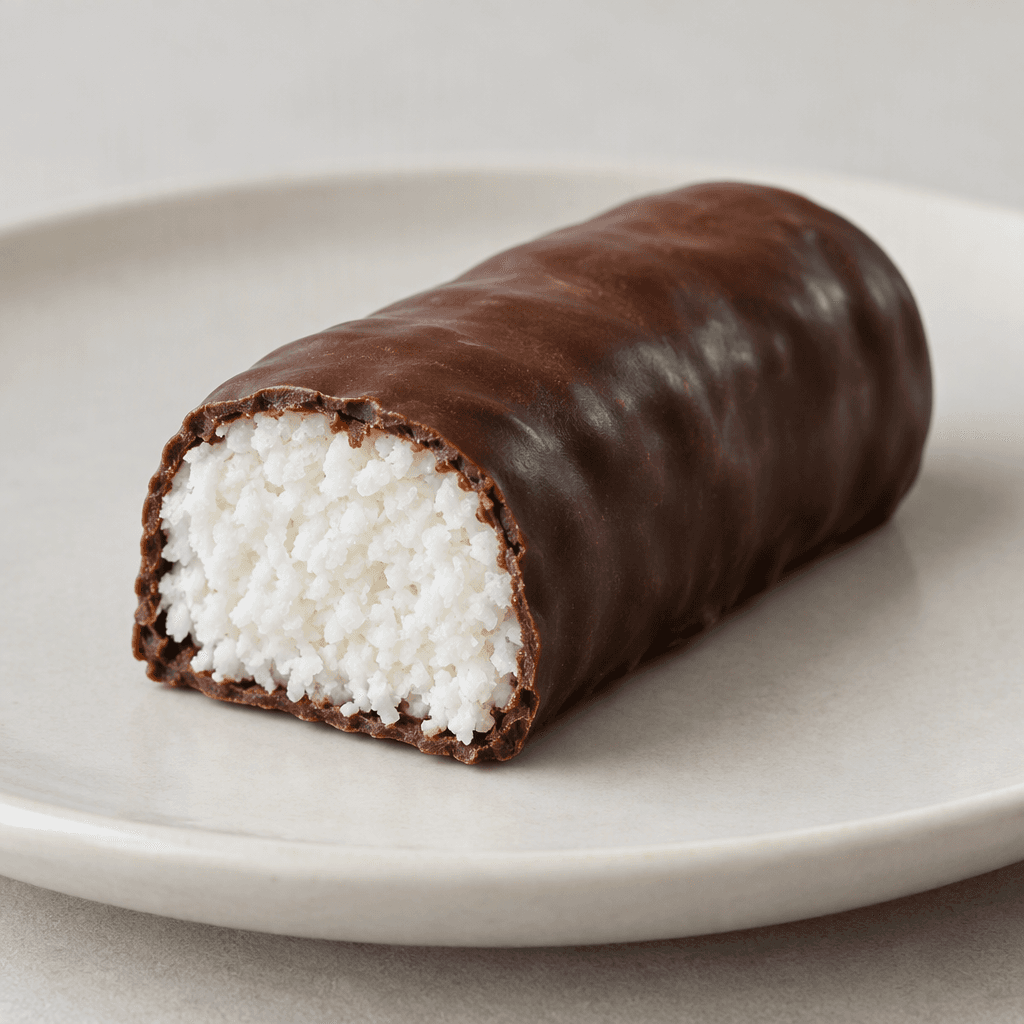
Cocostar Coconut Chocolate Calories
Milk chocolate with coconut filling
CALORIES
GI
POTASSIUM
FIBER
Quick answer
1 piece (medium) of Cocostar Coconut Chocolate (25 g) has 120 calories. That works out to 479 calories per 100 g. It contains 14.9 g of carbs, 1 g of protein, 6.2 g of fat and 1.3 g of fiber. Its 0.1 mg of Copper covers 8% of the Daily Value. Its glycemic index is 48 (medium), so it raises blood sugar at a moderate pace.
What is Cocostar Coconut Chocolate?
Cocostar Coconut Chocolate is a packaged sweet made with a coconut filling covered in milk chocolate. The coconut brings a distinct, sweet aroma and a soft, slightly fibrous texture, while the chocolate coating adds a smooth, creamy bite. It works as a small treat with coffee or tea, or as a quick sweet between meals; serving customs vary, but it is easy to enjoy on its own wherever you are.
It is energy-dense and mostly provides carbohydrate and fat, with relatively little protein. A medium piece is about 25 g, which can help keep a portion modest. For a lighter snack, have one piece with unsweetened tea or coffee rather than pairing it with another sweet.
Cocostar Coconut Chocolate Nutrition Facts
Selected: 100 g
479
KCAL / 100G
Carbs
59.5g
· 22% DV
Protein
3.8g
· 8% DV
Fat
24.8g
· 32% DV
Fiber
5.1g
· 18% DV
DV is the share of the daily value covered, on a 2,000 kcal reference diet.
Calories come from: Carbs 50% · Protein 3% · Fat 47%
Cocostar Coconut Chocolate Vitamins & Minerals
Vitamins
B2
0.12mg · 9% DV
B12
0.22µg · 9% DV
B5
0.18mg · 4% DV
Biotin
1.2µg · 4% DV
Minerals
Manganese
1mg · 43% DV
Phosphorus
119mg · 17% DV
Magnesium
49mg · 12% DV
Iron
2mg · 11% DV
How Nutritious Is Cocostar Coconut Chocolate?
Nutrient density
Low
How many vitamins, minerals and how much fiber this food carries per calorie. A high score means a lot of nutrition for few calories.
Satiety score
Low
An EatBetter score computed from fiber, protein and calorie density. A high score means staying full longer on the same calories.
Both scores are calculated per 100 g and do not change with the selected portion. The satiety score is EatBetter's own calculation, not a clinical measure.
Cocostar Coconut Chocolate Glycemic Index
GLYCEMIC INDEX
GLYCEMIC LOAD
Accounts for portion size — a more realistic measure than GI alone.
How to Burn Off Cocostar Coconut Chocolate
To burn the 479 calories in 100 g:
🚶
Walking (5 km/h)
🏃
Running (8 km/h)
🚴
Cycling
🏊
Swimming
Times are calculated with the MET equation for a 70 kg adult. Actual burn varies with your weight, age and pace.
Is Cocostar Coconut Chocolate Processed?
NOVA 4
Ultra-Processed
1. Unprocessed
2. Minimally Processed
3. Processed
4. Ultra-Processed
NOVA classifies foods into 4 groups by industrial processing. NOVA 1 (unprocessed) is the healthiest.
Does Cocostar Coconut Chocolate Contain Allergens?
Contains these allergens:
Which Diets Is Cocostar Coconut Chocolate Good For?
Vegan
— Not suitable
Vegetarian
✓ Suitable
Gluten-Free
— Not suitable
Dairy-Free
— Not suitable
Mediterranean
— Not suitable
Paleo
— Not suitable
Whole30
— Not suitable
DASH
— Not suitable
Keto
— Not suitable
Low FODMAP
— Not suitable
Cocostar Coconut Chocolate Fat Profile
SATURATED
17.2g
MONOUNSATURATED
4.1g
POLYUNSATURATED
1.3g
Omega 6:3 ratio 23:1
Above the ideal 4:1 (23:1).
Compare Cocostar Coconut Chocolate
Foods Similar to Cocostar Coconut Chocolate
Frequently Asked Questions About Cocostar Coconut Chocolate
What is Cocostar Coconut Chocolate made of?
Cocostar Coconut Chocolate is a confection with a coconut filling covered in milk chocolate. The exact ingredients and their proportions can vary by product version, so check the package if you need details about a particular ingredient.
Is Cocostar Coconut Chocolate the same as Bounty?
No. They are separate branded products, although both pair coconut filling with a chocolate coating. Their recipes, sweetness, and texture may differ, so compare the ingredient lists and product descriptions if you are choosing between them.
How can you make Cocostar Coconut Chocolate at home?
You can make a similar treat by mixing shredded coconut with condensed milk, shaping the mixture into pieces, chilling them, and dipping them in melted milk chocolate. A homemade version will not reproduce Cocostar’s exact recipe or manufacturing method.
How should Cocostar Coconut Chocolate be stored?
Keep Cocostar Coconut Chocolate in a cool, dry place away from direct sunlight and heat. After opening, put any remaining pieces in an airtight container and follow the storage directions on the package.
Can you freeze Cocostar Coconut Chocolate?
Yes, you can freeze Cocostar Coconut Chocolate, but freezing and thawing may affect the chocolate’s appearance or the filling’s texture. Seal the pieces in an airtight container and thaw them slowly in the refrigerator before eating.
Why does Cocostar Coconut Chocolate sometimes develop a white coating?
A white coating usually forms when chocolate fat rises to the surface or moisture causes sugar crystals to form. This is generally a change in appearance and texture; discard the product if it has mold, an unusual smell, or damaged packaging.
Can you use Cocostar Coconut Chocolate in desserts?
Yes. Chop Cocostar Coconut Chocolate and use it as a topping for ice cream, brownies, or other desserts. Add it near the end of baking or over a cooled dessert, since the milk chocolate can soften or melt with heat.
Is Cocostar Coconut Chocolate good for weight loss?
Cocostar Coconut Chocolate is not a weight-loss food, but an occasional small piece can fit into a weight-loss plan. Portion it before eating rather than snacking directly from a larger package, which makes it easier to keep track.
Can people with diabetes eat Cocostar Coconut Chocolate?
People with diabetes can eat Cocostar Coconut Chocolate, but its sugars can raise blood glucose. Portion size and timing should fit their personal meal plan; anyone managing diabetes with medication should ask their clinician or dietitian for individualized guidance.
Is Cocostar Coconut Chocolate suitable for children?
Yes, children can have Cocostar Coconut Chocolate as an occasional sweet. It is not a substitute for a more nourishing snack, and younger children should be given a piece they can safely chew and swallow.
Have another question about Cocostar Coconut Chocolate?
Ask the AI nutrition coach — calories, portions, alternatives and more, answered in seconds in the app.

Scan calories with your camera
Instant AI nutrition analysis

Nutrition data compiled from USDA FoodData Central and scientific sources.