

Ready & Packaged Foods
All →Vegetables & Legumes
All →Desserts & Confectionery
All →Meat & Protein
All →Grains & Bakery
All →Beverages
All →Milk & Dairy
All →

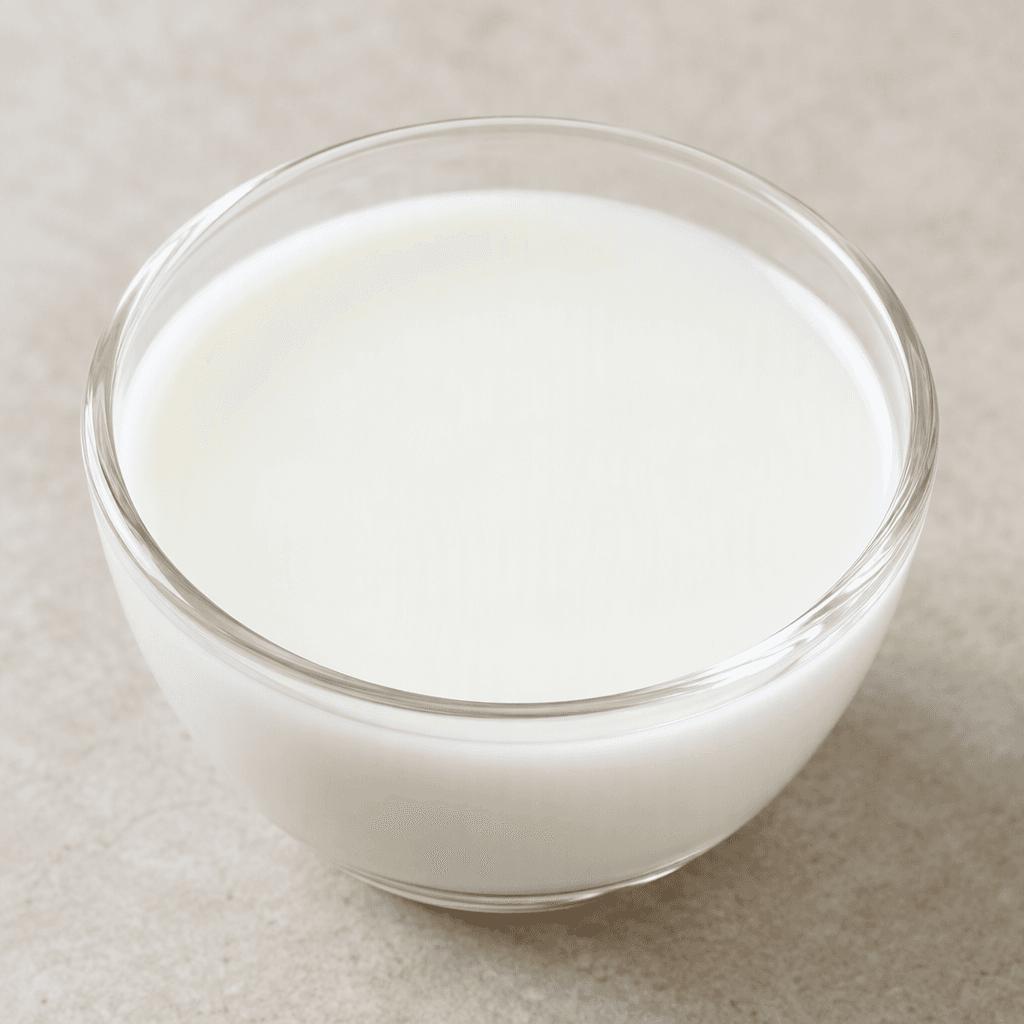
Coconut Milk (Unsweetened) Calories
Plant-based milk alternative, lactose-free, low carb, healthy fats
In season: Summer · Autumn · Winter · Spring
CALORIES
GI
POTASSIUM
FIBER
Quick answer
1 cup (medium) of Coconut Milk (Unsweetened) (240 g) has 58 calories. That works out to 24 calories per 100 g. It contains 2.6 g of carbs, 0.5 g of protein, 5.5 g of fat and 0.5 g of fiber. Its 0.7 mg of Manganese covers 31% of the Daily Value. Its glycemic index is 40 (low), so it raises blood sugar slowly.
What is Coconut Milk (Unsweetened)?
Unsweetened coconut milk is a pourable, plant-based drink made by blending coconut flesh with water. This thinner style is different from the richer canned coconut milk commonly used in cooking. It has a gentle coconut flavour and a smooth, lightly creamy texture. Around the world, it is poured over cereal or porridge, blended into smoothies, or added to coffee; in South and Southeast Asian cooking, richer versions are also used in curries and soups. With little carbohydrate and some fat from coconut, it is not a significant source of protein. Use it wherever you want a mild coconut note, or pair it with coffee, oats and fruit.
Coconut Milk (Unsweetened) Nutrition Facts
Selected: 100 g
24
KCAL / 100G
Carbs
1.1g
· 0% DV
Protein
0.2g
· 0% DV
Fat
2.3g
· 3% DV
Fiber
0.2g
· 1% DV
DV is the share of the daily value covered, on a 2,000 kcal reference diet.
Calories come from: Carbs 17% · Protein 3% · Fat 80%
Coconut Milk (Unsweetened) Vitamins & Minerals
Vitamins
B1
0.01mg · 1% DV
B2
0.01mg · 1% DV
B3
0.1mg · 1% DV
B5
0.05mg · 1% DV
Minerals
Calcium
16mg · 2% DV
Selenium
1µg · 2% DV
Phosphorus
15mg · 2% DV
Magnesium
5mg · 1% DV
How Nutritious Is Coconut Milk (Unsweetened)?
Nutrient density
Low
How many vitamins, minerals and how much fiber this food carries per calorie. A high score means a lot of nutrition for few calories.
Satiety score
Medium
An EatBetter score computed from fiber, protein and calorie density. A high score means staying full longer on the same calories.
Both scores are calculated per 100 g and do not change with the selected portion. The satiety score is EatBetter's own calculation, not a clinical measure.
Coconut Milk (Unsweetened) Glycemic Index
GLYCEMIC INDEX
GLYCEMIC LOAD
Accounts for portion size — a more realistic measure than GI alone.
How to Burn Off Coconut Milk (Unsweetened)
To burn the 24 calories in 100 g:
🚶
Walking (5 km/h)
🏃
Running (8 km/h)
🚴
Cycling
🏊
Swimming
Times are calculated with the MET equation for a 70 kg adult. Actual burn varies with your weight, age and pace.
Is Coconut Milk (Unsweetened) Processed?
NOVA 2
Minimally Processed
1. Unprocessed
2. Minimally Processed
3. Processed
4. Ultra-Processed
NOVA classifies foods into 4 groups by industrial processing. NOVA 1 (unprocessed) is the healthiest.
Does Coconut Milk (Unsweetened) Contain Allergens?
No known major allergens
Which Diets Is Coconut Milk (Unsweetened) Good For?
Vegan
✓ Suitable
Vegetarian
✓ Suitable
Gluten-Free
✓ Suitable
Dairy-Free
— Not suitable
Mediterranean
✓ Suitable
Paleo
✓ Suitable
Whole30
— Not suitable
DASH
— Not suitable
Keto
✓ Suitable
Low FODMAP
— Not suitable
Coconut Milk (Unsweetened) Fat Profile
SATURATED
2.1g
MONOUNSATURATED
0.07g
POLYUNSATURATED
0.04g
Omega 6:3 ratio 3:1
Below the ideal 4:1 — a good omega balance.
Compare Coconut Milk (Unsweetened)
Foods Similar to Coconut Milk (Unsweetened)
Frequently Asked Questions About Coconut Milk (Unsweetened)
What is unsweetened coconut milk?
Unsweetened coconut milk is a coconut-based drink with no added sweetener. Carton versions are usually diluted and pourable, while canned coconut milk is much thicker and richer, so the two may behave differently in recipes.
Is unsweetened coconut milk the same as coconut water?
No. Coconut water is the clear liquid found inside a young coconut; unsweetened coconut milk is made by blending coconut flesh with water. It is opaque, creamier, and has a distinct coconut flavor.
Can you put unsweetened coconut milk in coffee?
Yes, unsweetened coconut milk works in coffee and adds a mild coconut taste. Warm it gently and stir as you pour; some cartons may separate when they meet very hot or acidic coffee.
Can unsweetened coconut milk replace dairy milk in recipes?
Yes, unsweetened coconut milk can replace dairy milk in many smoothies, porridge, soups, and sauces. Its coconut flavor is noticeable, so it suits tropical or savory recipes better than dishes where a neutral taste is essential.
What is the difference between unsweetened coconut milk and canned coconut milk?
Carton unsweetened coconut milk is generally a thinner drink, whereas canned coconut milk is concentrated and creamy, often with a layer of coconut cream. Use the type specified in the recipe to get the intended texture.
Does unsweetened coconut milk curdle when heated?
It can separate or curdle if heated rapidly, boiled, or mixed with acidic ingredients. Warm unsweetened coconut milk over low heat and stir it in gradually; add lemon or lime juice near the end of cooking.
How long does unsweetened coconut milk last after opening?
Keep opened unsweetened coconut milk refrigerated and follow the storage time on its package. If the package gives no clear guidance, use the maker’s instructions; discard it if its smell, appearance, or texture has changed.
Can you freeze unsweetened coconut milk?
Yes, you can freeze unsweetened coconut milk, but thawing may make it separate or grainy. Shake or blend it after thawing, and use it in soups, sauces, or baking rather than relying on its original drinking texture.
How do you make unsweetened coconut milk at home?
Blend unsweetened shredded coconut with warm water, then strain the mixture through a fine cloth or nut-milk bag. Use more coconut for a richer result, and keep the homemade milk covered in the refrigerator.
Can unsweetened coconut milk help with weight loss?
Unsweetened coconut milk does not cause weight loss by itself. Choosing it without added sugar can reduce added-sugar intake, but account for what you mix into it and how much you pour into coffee, cereal, or smoothies.
Have another question about Coconut Milk (Unsweetened)?
Ask the AI nutrition coach — calories, portions, alternatives and more, answered in seconds in the app.

Scan calories with your camera
Instant AI nutrition analysis

Nutrition data compiled from USDA FoodData Central and scientific sources.