

Ready & Packaged Foods
All →Vegetables & Legumes
All →Desserts & Confectionery
All →Meat & Protein
All →Grains & Bakery
All →Beverages
All →Milk & Dairy
All →

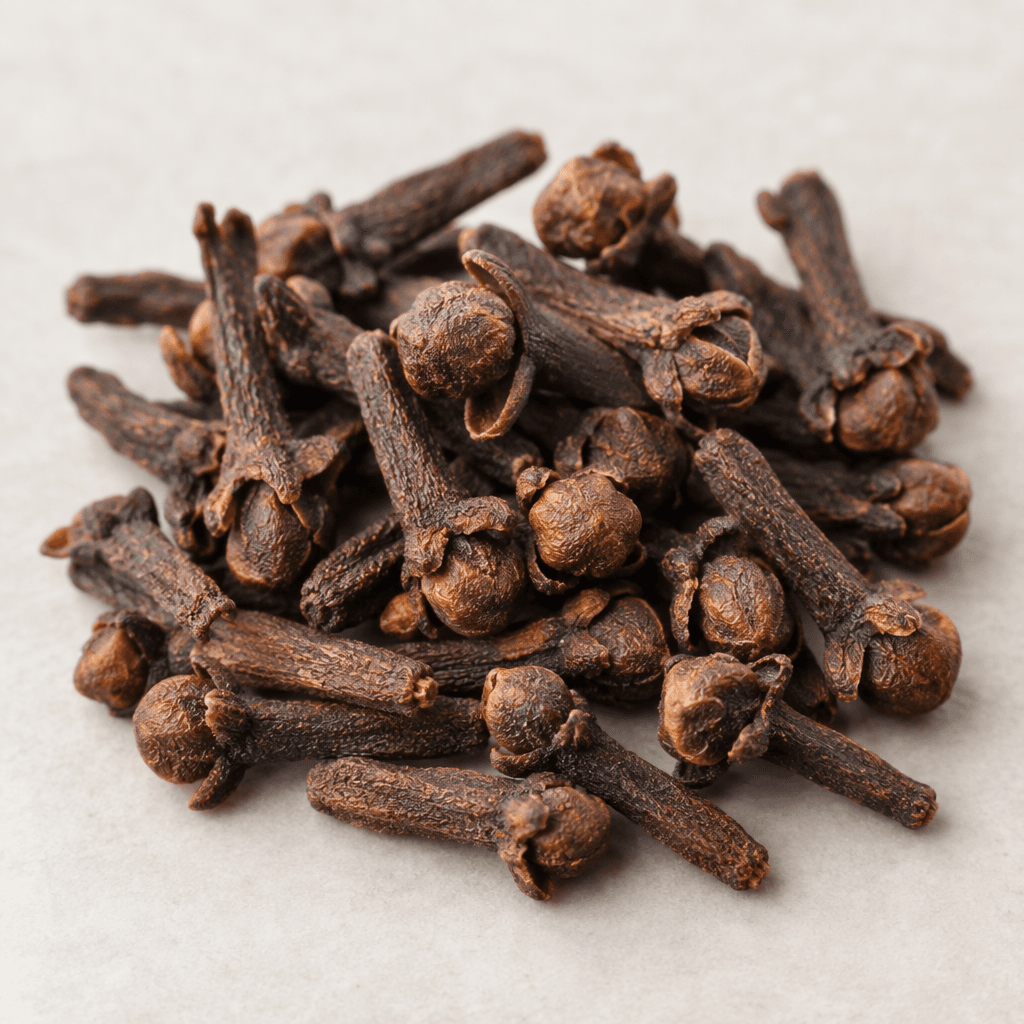
Clove Calories
Intensely aromatic spice, antioxidant source
In season: Autumn · Winter
CALORIES
GI
POTASSIUM
FIBER
Quick answer
1 teaspoon (medium) of Clove (2 g) has 6 calories. That works out to 274 calories per 100 g. It contains 1.4 g of carbs, 0.1 g of protein, 0.3 g of fat and 0.7 g of fiber. Its 1.3 mg of Manganese covers 55% of the Daily Value. Its glycemic index is 35 (low), so it raises blood sugar slowly.
What is Clove?
Clove is the dried flower bud of an evergreen tree native to the Maluku Islands of Indonesia. Sold whole or ground, it has a strong, sweetly pungent aroma and a warm flavour that can become slightly numbing if used generously.
In its region of origin, cloves season dishes and drinks; worldwide, they are familiar in baking, mulled drinks, pickles and spice blends. A little also works well in rice or slow-cooked dishes. Cloves are high in fibre by weight, but recipes generally use only a small amount, so their main contribution is fragrance rather than nourishment. Add a whole clove or a pinch of ground spice to start, then adjust to taste.
Clove Nutrition Facts
Selected: 100 g
274
KCAL / 100G
Carbs
65.5g
· 24% DV
Protein
6g
· 12% DV
Fat
13g
· 17% DV
Fiber
33.9g
· 121% DV
DV is the share of the daily value covered, on a 2,000 kcal reference diet.
Calories come from: Carbs 65% · Protein 6% · Fat 29%
Clove Vitamins & Minerals
Vitamins
Vitamin K
141.8µg · 118% DV
Biotin
12.6µg · 42% DV
B6
0.39mg · 23% DV
B2
0.22mg · 17% DV
Minerals
Manganese
60mg · 2609% DV
Iron
12mg · 67% DV
Calcium
632mg · 63% DV
Magnesium
259mg · 62% DV
How Nutritious Is Clove?
Nutrient density
Very high
How many vitamins, minerals and how much fiber this food carries per calorie. A high score means a lot of nutrition for few calories.
Satiety score
Medium
An EatBetter score computed from fiber, protein and calorie density. A high score means staying full longer on the same calories.
Both scores are calculated per 100 g and do not change with the selected portion. The satiety score is EatBetter's own calculation, not a clinical measure.
Clove Glycemic Index
GLYCEMIC INDEX
GLYCEMIC LOAD
Accounts for portion size — a more realistic measure than GI alone.
How to Burn Off Clove
To burn the 274 calories in 100 g:
🚶
Walking (5 km/h)
🏃
Running (8 km/h)
🚴
Cycling
🏊
Swimming
Times are calculated with the MET equation for a 70 kg adult. Actual burn varies with your weight, age and pace.
Is Clove Processed?
NOVA 2
Minimally Processed
1. Unprocessed
2. Minimally Processed
3. Processed
4. Ultra-Processed
NOVA classifies foods into 4 groups by industrial processing. NOVA 1 (unprocessed) is the healthiest.
Does Clove Contain Allergens?
No known major allergens
Which Diets Is Clove Good For?
Vegan
✓ Suitable
Vegetarian
✓ Suitable
Gluten-Free
✓ Suitable
Dairy-Free
— Not suitable
Mediterranean
✓ Suitable
Paleo
✓ Suitable
Whole30
— Not suitable
DASH
— Not suitable
Keto
✓ Suitable
Low FODMAP
— Not suitable
Clove Fat Profile
SATURATED
3.95g
MONOUNSATURATED
4.01g
POLYUNSATURATED
4.14g
Omega 6:3 ratio 4.6:1
Above the ideal 4:1 (4.6:1).
Compare Clove
Foods Similar to Clove
Frequently Asked Questions About Clove
What is clove, and where does it come from?
Clove is the dried flower bud of the clove tree, native to the Maluku Islands of Indonesia. Its strong, warm aroma comes largely from eugenol, and it is used whole or ground in both sweet and savoury cooking.
What are cloves used for in cooking?
Cloves add a warm, pungent flavour to dishes such as spice cakes, mulled drinks, rice, and braised meats. Add whole cloves during cooking and remove them before serving, or use a small amount of ground clove for an even flavour.
How do you make clove tea?
To make clove tea, steep a few whole cloves in hot water, then strain them out. The flavour gets sharper the longer they steep; ginger, cinnamon, or lemon can be added for a different taste.
Can you chew cloves for bad breath?
Yes, you can chew a whole clove, but its strong flavour may irritate the mouth if you keep it there too long. It can temporarily mask bad breath; it does not treat the dental or gum problems that may cause it.
What is the difference between whole cloves and ground cloves?
Whole cloves keep their aroma longer and can be removed from a dish after cooking. Ground cloves blend into food and release flavour quickly, but their aroma fades faster in storage, so grind whole cloves when you need a fresher taste.
Does clove help with toothache?
Clove is not a substitute for dental care. Eugenol in clove oil has a numbing effect, but applying undiluted oil can irritate or injure the mouth, and tooth pain needs its cause addressed by a dentist.
Can clove oil be swallowed?
No, do not swallow clove oil. It is highly concentrated and can cause serious poisoning, especially in children; keep it away from them and use it only as directed for an appropriate product.
Do cloves help with weight loss?
No, cloves do not cause weight loss on their own. Clove water or tea has not been shown to burn body fat; cloves are best treated as a flavouring rather than a weight-loss remedy.
Can you eat cloves during pregnancy?
Cloves used in ordinary food amounts are different from concentrated clove oil or supplements. Avoid medicinal amounts during pregnancy unless your clinician approves them, because their safety at those doses is not established.
How should you store cloves, and do they go bad?
Store cloves in a tightly closed container in a cool, dry place away from light. They can lose their aroma over time; discard them if they smell musty or show signs of moisture or mould.
Have another question about Clove?
Ask the AI nutrition coach — calories, portions, alternatives and more, answered in seconds in the app.

Scan calories with your camera
Instant AI nutrition analysis

Nutrition data compiled from USDA FoodData Central and scientific sources.