

Ready & Packaged Foods
All →Vegetables & Legumes
All →Desserts & Confectionery
All →Meat & Protein
All →Grains & Bakery
All →Beverages
All →Milk & Dairy
All →

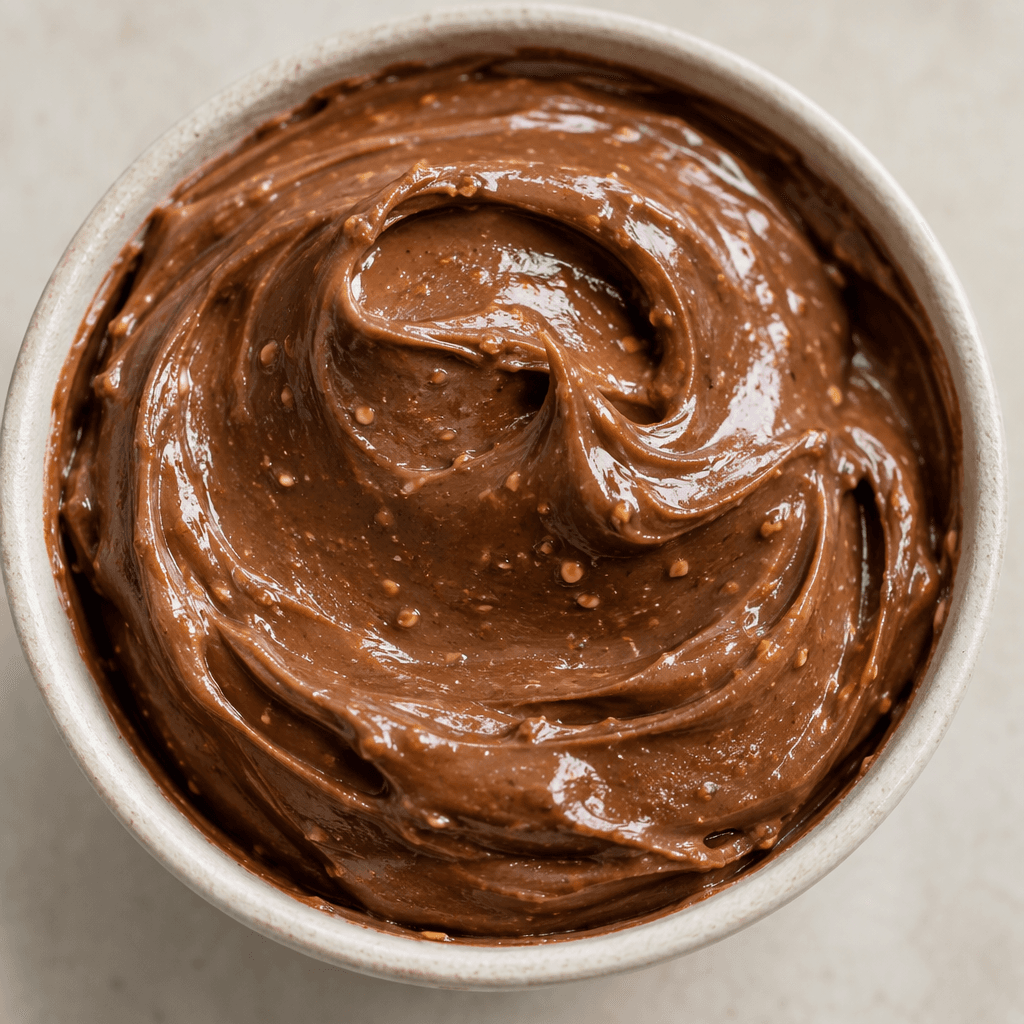
Chocolate Hazelnut Spread Calories
Sweet, energy-dense, hazelnut and cocoa flavored spread
In season: Spring · Summer · Autumn · Winter
CALORIES
GI
POTASSIUM
FIBER
Quick answer
1 tablespoon (medium) of Chocolate Hazelnut Spread (18 g) has 97 calories. That works out to 540 calories per 100 g. It contains 10.4 g of carbs, 1.1 g of protein, 5.7 g of fat and 0.7 g of fiber. Its 0.1 mg of Copper covers 10% of the Daily Value. Its glycemic index is 55 (medium), so it raises blood sugar at a moderate pace.
What is Chocolate Hazelnut Spread?
Chocolate Hazelnut Spread combines ground hazelnuts and cocoa in a sweet, spoonable spread. Hazelnut-and-chocolate combinations have long been popular in parts of Europe, and this style of spread is now a familiar breakfast and snack option in many countries.
Its smooth, thick texture makes it easy to spread on toast, and it is also commonly served with pancakes, waffles or crêpes. It tastes rich and sweet, with roasted hazelnut notes alongside the cocoa. It is energy-dense, so a thin layer can add plenty of flavour; try it with sliced fruit or plain toast for a simple snack.
Chocolate Hazelnut Spread Nutrition Facts
Selected: 100 g
540
KCAL / 100G
Carbs
57.5g
· 21% DV
Protein
6g
· 12% DV
Fat
31.6g
· 41% DV
Fiber
4g
· 14% DV
DV is the share of the daily value covered, on a 2,000 kcal reference diet.
Calories come from: Carbs 43% · Protein 4% · Fat 53%

Log this food in EatBetter
100,000+ people use it
- Get your daily calorie target
- Snap your meal, log it in seconds
- See every vitamin and mineral

📸 Scan the code to get the app free.

Chocolate Hazelnut Spread Vitamins & Minerals
Vitamins
Vitamin E
3.5mg · 23% DV
B2
0.18mg · 14% DV
B1
0.08mg · 7% DV
Biotin
2µg · 7% DV
Minerals
Copper
1mg · 111% DV
Manganese
1mg · 43% DV
Phosphorus
120mg · 17% DV
Magnesium
60mg · 14% DV
Potassium ⭐
370mg · 11% DV
How Nutritious Is Chocolate Hazelnut Spread?
Nutrient density
Low
How many vitamins, minerals and how much fiber this food carries per calorie. A high score means a lot of nutrition for few calories.
Satiety score
Low
An EatBetter score computed from fiber, protein and calorie density. A high score means staying full longer on the same calories.
Both scores are calculated per 100 g and do not change with the selected portion. The satiety score is EatBetter's own calculation, not a clinical measure.
Chocolate Hazelnut Spread Glycemic Index
GLYCEMIC INDEX
GLYCEMIC LOAD
Accounts for portion size — a more realistic measure than GI alone.
How to Burn Off Chocolate Hazelnut Spread
To burn the 540 calories in 100 g:
🚶
Walking (5 km/h)
🏃
Running (8 km/h)
🚴
Cycling
🏊
Swimming
Times are calculated with the MET equation for a 70 kg adult. Actual burn varies with your weight, age and pace.
Is Chocolate Hazelnut Spread Processed?
NOVA 3
Processed
1. Unprocessed
2. Minimally Processed
3. Processed
4. Ultra-Processed
NOVA classifies foods into 4 groups by industrial processing. NOVA 1 (unprocessed) is the healthiest.
Does Chocolate Hazelnut Spread Contain Allergens?
Contains these allergens:
Which Diets Is Chocolate Hazelnut Spread Good For?
Vegan
— Not suitable
Vegetarian
✓ Suitable
Gluten-Free
— Not suitable
Dairy-Free
— Not suitable
Mediterranean
— Not suitable
Paleo
— Not suitable
Whole30
— Not suitable
DASH
— Not suitable
Keto
— Not suitable
Low FODMAP
— Not suitable
Chocolate Hazelnut Spread Fat Profile
SATURATED
10.2g
MONOUNSATURATED
16.5g
POLYUNSATURATED
4g
Omega 6:3 ratio 43.8:1
Above the ideal 4:1 (43.8:1).
Compare Chocolate Hazelnut Spread
Foods Similar to Chocolate Hazelnut Spread
Frequently Asked Questions About Chocolate Hazelnut Spread
How do you make chocolate hazelnut spread at home?
Make chocolate hazelnut spread by blending roasted hazelnuts until smooth, then mixing in cocoa and a sweetener. Add a little oil or milk if needed for a softer texture. Refrigerate homemade spread and use a clean spoon each time.
Is chocolate hazelnut spread healthy?
Chocolate hazelnut spread contains hazelnuts, but many versions are also high in sugar and fat, so it is best thought of as a sweet spread rather than a substitute for plain nuts. Pairing a modest amount with fruit or whole-grain toast can make a more balanced snack.
Does chocolate hazelnut spread need to be refrigerated?
No, chocolate hazelnut spread is generally stored at room temperature, even after opening. Keep it tightly closed in a cool, dry place; refrigeration can make it firm and difficult to spread.
Why is oil separating from chocolate hazelnut spread?
Oil separation in chocolate hazelnut spread is usually natural, as hazelnut oil can rise to the surface. Stir it thoroughly with a clean, dry utensil. Discard the spread if its smell, appearance, or taste suggests it has spoiled.
How long does chocolate hazelnut spread last after opening?
The usable life of chocolate hazelnut spread varies by product and storage conditions, so follow the date and instructions on its jar. Keep the lid closed and avoid introducing water or crumbs with a used utensil.
What can you eat with chocolate hazelnut spread?
Chocolate hazelnut spread goes well on toast, pancakes, waffles, and crepes. You can also pair it with banana or strawberries, stir a little into oatmeal, or use it as a dessert filling; its sweetness makes a thin layer plenty for many snacks.
Can chocolate hazelnut spread be frozen?
Chocolate hazelnut spread can be frozen, but it may become firm or change texture as it thaws, and freezing is rarely necessary. For easier spreading, keep it in a cool cupboard and follow the storage instructions on the jar.
Is chocolate hazelnut spread the same as Nutella?
No. Chocolate hazelnut spread is a general type of food, while Nutella is one brand of it. Other brands and homemade versions can differ in their ingredients, sweetness, flavor, and texture.
Does chocolate hazelnut spread cause weight gain?
It can contribute to weight gain when eaten frequently or in large amounts because it is energy-dense. Using a thin layer rather than repeatedly spooning it from the jar is a practical way to keep portions in check.
Can people with diabetes eat chocolate hazelnut spread?
People with diabetes can eat chocolate hazelnut spread, but its sugar and carbohydrates can affect blood glucose. A doctor or dietitian who knows your treatment plan can help you decide how to fit it into your meals.
Have another question about Chocolate Hazelnut Spread?
Ask the AI nutrition coach — calories, portions, alternatives and more, answered in seconds in the app.

Scan calories with your camera
Instant AI nutrition analysis

Nutrition data compiled from USDA FoodData Central and scientific sources.