

Ready & Packaged Foods
All →Vegetables & Legumes
All →Desserts & Confectionery
All →Meat & Protein
All →Grains & Bakery
All →Beverages
All →Milk & Dairy
All →

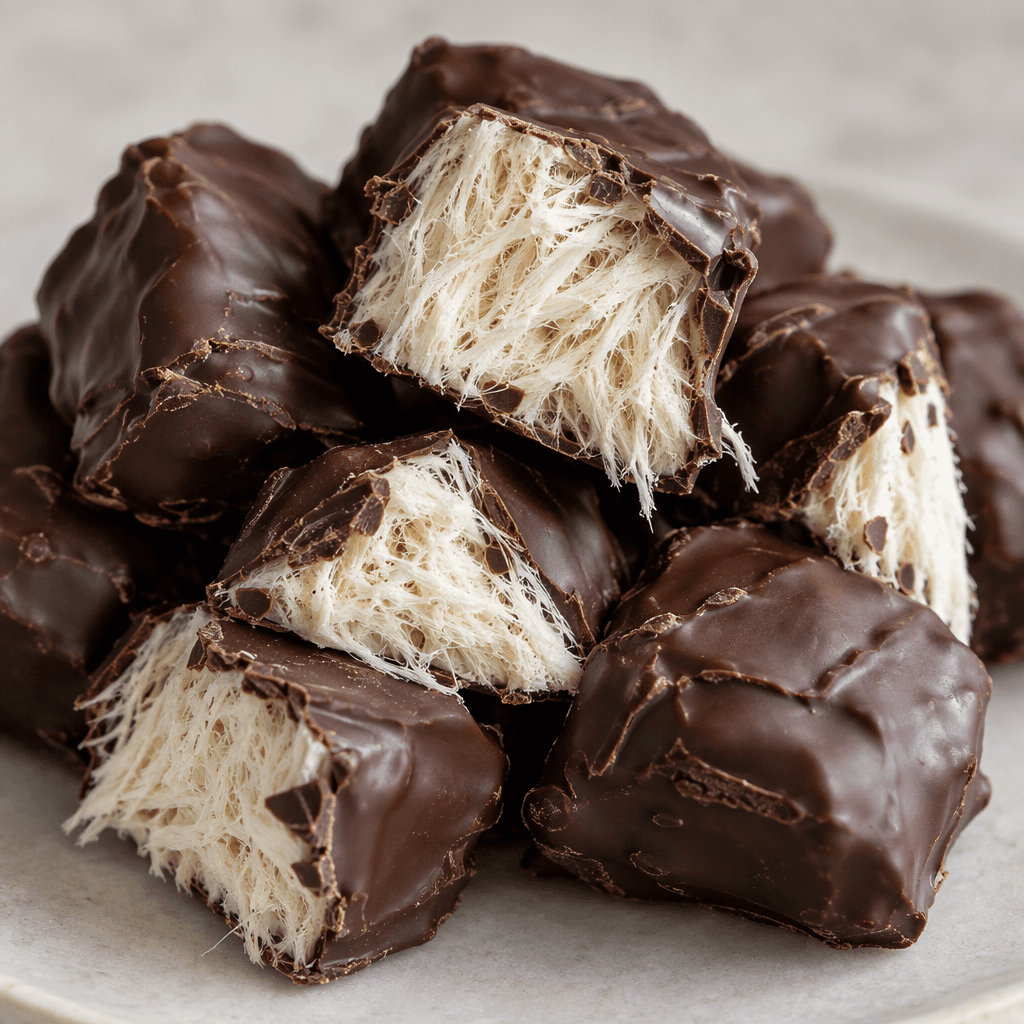
Chocolate-coated çekme helva Calories
Traditional Turkish sweet, enriched with cocoa and sugar, energy-dense
In season: Autumn · Winter
CALORIES
GI
POTASSIUM
FIBER
Quick answer
1 piece (medium) of Chocolate-coated çekme helva (35 g) has 165 calories. That works out to 470 calories per 100 g. It contains 22 g of carbs, 1.6 g of protein, 7.7 g of fat and 0.9 g of fiber. Its 0.1 mg of Copper covers 7% of the Daily Value. Its glycemic index is 65 (high), so it raises blood sugar quickly.
What is Chocolate-coated çekme helva?
Chocolate-coated çekme helva is a traditional Turkish sweet, particularly associated with Kastamonu. Its base is made from roasted flour, fat and sugar, worked into a delicate, pull-apart texture before being covered in chocolate. The interior is light and crumbly, while the coating adds a richer cocoa note.
In Turkey it is usually served as a small treat with tea or coffee, often offered to guests or at celebrations. It is energy-dense, with 470 calories per 100 g, so a modest piece makes a satisfying accompaniment to a hot drink. For a less rich serving, pair it with fresh fruit and share it rather than serving several pieces.
Chocolate-coated çekme helva Nutrition Facts
Selected: 100 g
470
KCAL / 100G
Carbs
63g
· 23% DV
Protein
4.5g
· 9% DV
Fat
22g
· 28% DV
Fiber
2.5g
· 9% DV
DV is the share of the daily value covered, on a 2,000 kcal reference diet.
Calories come from: Carbs 54% · Protein 4% · Fat 42%
Chocolate-coated çekme helva Vitamins & Minerals
Vitamins
B2
0.08mg · 6% DV
B1
0.06mg · 5% DV
Biotin
1.5µg · 5% DV
Vitamin E
0.7mg · 5% DV
Minerals
Iron
2mg · 11% DV
Magnesium
38mg · 9% DV
Zinc
1mg · 9% DV
Phosphorus
62mg · 9% DV
How Nutritious Is Chocolate-coated çekme helva?
Nutrient density
Low
How many vitamins, minerals and how much fiber this food carries per calorie. A high score means a lot of nutrition for few calories.
Satiety score
Low
An EatBetter score computed from fiber, protein and calorie density. A high score means staying full longer on the same calories.
Both scores are calculated per 100 g and do not change with the selected portion. The satiety score is EatBetter's own calculation, not a clinical measure.
Chocolate-coated çekme helva Glycemic Index
GLYCEMIC INDEX
GLYCEMIC LOAD
Accounts for portion size — a more realistic measure than GI alone.
How to Burn Off Chocolate-coated çekme helva
To burn the 470 calories in 100 g:
🚶
Walking (5 km/h)
🏃
Running (8 km/h)
🚴
Cycling
🏊
Swimming
Times are calculated with the MET equation for a 70 kg adult. Actual burn varies with your weight, age and pace.
Is Chocolate-coated çekme helva Processed?
NOVA 3
Processed
1. Unprocessed
2. Minimally Processed
3. Processed
4. Ultra-Processed
NOVA classifies foods into 4 groups by industrial processing. NOVA 1 (unprocessed) is the healthiest.
Does Chocolate-coated çekme helva Contain Allergens?
Contains these allergens:
Which Diets Is Chocolate-coated çekme helva Good For?
Vegan
— Not suitable
Vegetarian
✓ Suitable
Gluten-Free
— Not suitable
Dairy-Free
— Not suitable
Mediterranean
— Not suitable
Paleo
— Not suitable
Whole30
— Not suitable
DASH
— Not suitable
Keto
— Not suitable
Low FODMAP
— Not suitable
Chocolate-coated çekme helva Fat Profile
SATURATED
10.2g
MONOUNSATURATED
7.5g
POLYUNSATURATED
2.2g
Omega 6:3 ratio 36.7:1
Above the ideal 4:1 (36.7:1).
Compare Chocolate-coated çekme helva
Foods Similar to Chocolate-coated çekme helva
Frequently Asked Questions About Chocolate-coated çekme helva
What is chocolate-coated çekme helva?
Chocolate-coated çekme helva is a Turkish sweet made from fibrous, pulled helva covered in chocolate. The helva’s delicate strands give it a light, crumbly texture, while the chocolate adds a firm outer layer and a richer taste.
How is chocolate-coated çekme helva made?
Chocolate-coated çekme helva is made by pulling a cooked helva mixture until it forms fine strands, shaping it into portions, and coating those portions with chocolate. The traditional pulling stage takes skill; factory-made versions are produced through a controlled manufacturing process.
Is chocolate-coated çekme helva the same as pişmaniye?
No, chocolate-coated çekme helva is not the same as pişmaniye, although both have fine, fibrous strands. Their ingredients and preparation methods differ, and çekme helva is commonly formed from a flour-and-fat mixture before its portions are chocolate-coated.
Why does chocolate-coated çekme helva crumble so easily?
Chocolate-coated çekme helva crumbles because its interior is made of delicate strands that separate easily. Cut or break it gently rather than pressing down hard, and serve it at room temperature to keep the chocolate coating from becoming brittle.
How do you eat chocolate-coated çekme helva?
Chocolate-coated çekme helva is usually eaten in small pieces as a sweet treat. You can serve it with tea or coffee; let it come to room temperature if it has been kept somewhere cold, but avoid leaving it in a hot place where the coating may soften.
How should you store chocolate-coated çekme helva after opening?
Store chocolate-coated çekme helva in an airtight container in a cool, dry place away from sunlight. Heat can soften or melt the chocolate, while moisture can affect the helva’s fine texture. Follow the package directions for the opened product.
How long does chocolate-coated çekme helva last?
The shelf life of chocolate-coated çekme helva varies by product and packaging, so use the date printed on the package. After opening, keep it sealed and dry, and discard it if its appearance, smell, or texture changes noticeably.
Can you freeze chocolate-coated çekme helva?
You can freeze chocolate-coated çekme helva, but it is not usually the best way to store it. Condensation during thawing may affect the chocolate and the helva’s texture; a sealed container in a cool, dry place is generally more suitable.
Can you make chocolate-coated çekme helva at home?
Yes, you can make chocolate-coated çekme helva at home, though recreating its fine pulled strands takes practice. For an easier version, dip pieces of ready-made çekme helva in melted chocolate and let the coating set before serving.
Can people with diabetes eat chocolate-coated çekme helva?
People with diabetes should be mindful when eating chocolate-coated çekme helva because its sugar and carbohydrate content can raise blood glucose. The suitable portion depends on an individual’s meal plan, so ask your healthcare professional how it fits your needs.
Have another question about Chocolate-coated çekme helva?
Ask the AI nutrition coach — calories, portions, alternatives and more, answered in seconds in the app.

Scan calories with your camera
Instant AI nutrition analysis

Nutrition data compiled from USDA FoodData Central and scientific sources.