

Ready & Packaged Foods
All →Vegetables & Legumes
All →Desserts & Confectionery
All →Meat & Protein
All →Grains & Bakery
All →Beverages
All →Milk & Dairy
All →

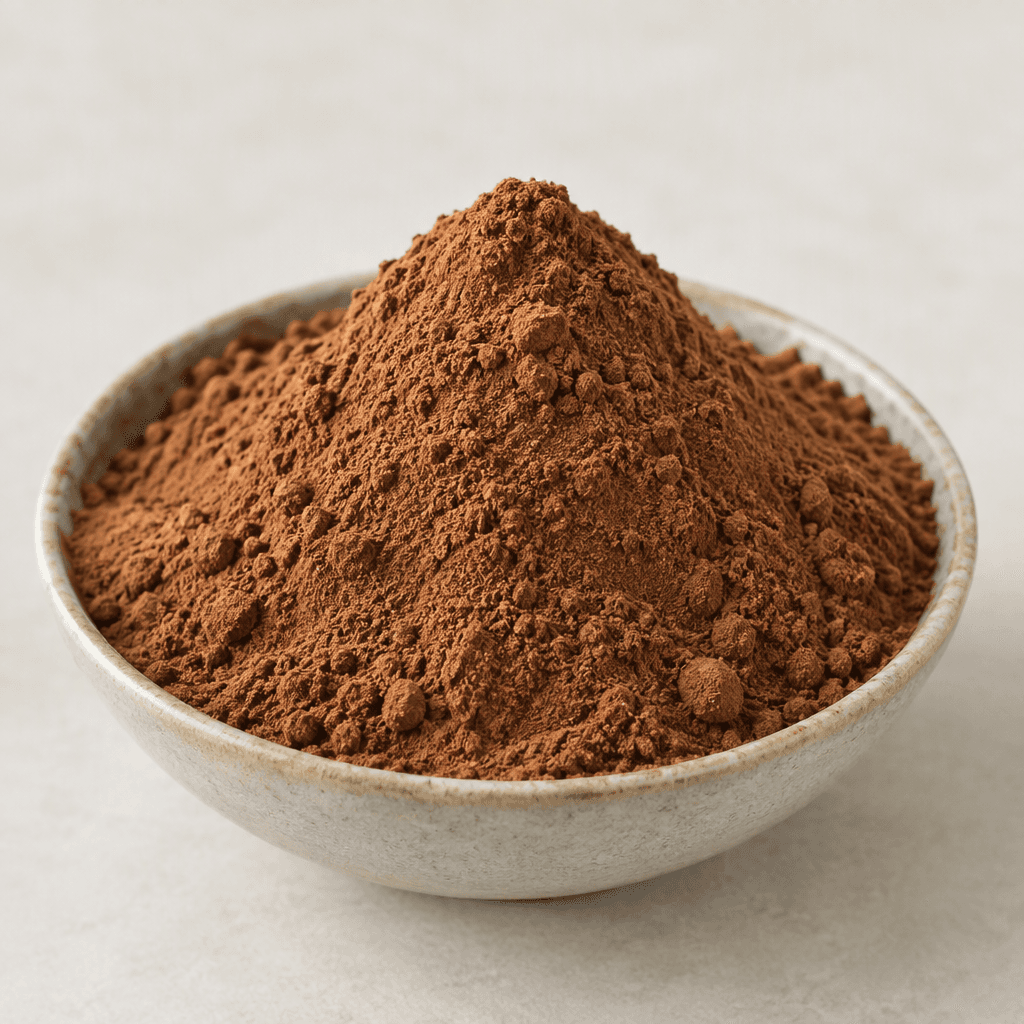
Carob Powder Calories
Natural sweetener, source of fiber and minerals
In season: Autumn · Winter
CALORIES
GI
POTASSIUM
FIBER
Quick answer
1 tablespoon (medium) of Carob Powder (10 g) has 22 calories. That works out to 222 calories per 100 g. It contains 8.9 g of carbs, 0.5 g of protein, 0.1 g of fat and 4 g of fiber. Its glycemic index is 40 (medium), so it raises blood sugar at a moderate pace.
What is Carob Powder?
Carob Powder is made by drying and grinding the sweet pulp of carob pods, the fruit of a Mediterranean tree. Its warm brown colour can bring cocoa to mind, but the flavour is milder, naturally sweet and gently caramel-like.
Around the Mediterranean it is used in drinks and baking; elsewhere, people often stir it into milk, porridge, smoothies or cake batter. It adds sweetness as well as a distinctive roasted-fruit note, though it does not behave exactly like cocoa in every recipe. Carob powder is especially rich in fibre, with very little fat. Try it in a breakfast bowl or homemade snacks, and adjust other sweeteners to taste.
Carob Powder Nutrition Facts
Selected: 100 g
222
KCAL / 100G
Carbs
89g
· 32% DV
Protein
4.6g
· 9% DV
Fat
0.7g
· 1% DV
Fiber
39.8g
· 142% DV
DV is the share of the daily value covered, on a 2,000 kcal reference diet.
Calories come from: Carbs 94% · Protein 5% · Fat 1%
Carob Powder Vitamins & Minerals
Vitamins
B2
0.46mg · 35% DV
B6
0.37mg · 22% DV
B5
0.5mg · 10% DV
Biotin
2.5µg · 8% DV
Minerals
Calcium
348mg · 35% DV
Potassium ⭐
827mg · 24% DV
Iron
3mg · 17% DV
Magnesium
54mg · 13% DV
How Nutritious Is Carob Powder?
Nutrient density
High
How many vitamins, minerals and how much fiber this food carries per calorie. A high score means a lot of nutrition for few calories.
Satiety score
Medium
An EatBetter score computed from fiber, protein and calorie density. A high score means staying full longer on the same calories.
Both scores are calculated per 100 g and do not change with the selected portion. The satiety score is EatBetter's own calculation, not a clinical measure.
Carob Powder Glycemic Index
GLYCEMIC INDEX
GLYCEMIC LOAD
Accounts for portion size — a more realistic measure than GI alone.
How to Burn Off Carob Powder
To burn the 222 calories in 100 g:
🚶
Walking (5 km/h)
🏃
Running (8 km/h)
🚴
Cycling
🏊
Swimming
Times are calculated with the MET equation for a 70 kg adult. Actual burn varies with your weight, age and pace.
Is Carob Powder Processed?
NOVA 2
Minimally Processed
1. Unprocessed
2. Minimally Processed
3. Processed
4. Ultra-Processed
NOVA classifies foods into 4 groups by industrial processing. NOVA 1 (unprocessed) is the healthiest.
Does Carob Powder Contain Allergens?
No known major allergens
Which Diets Is Carob Powder Good For?
Vegan
✓ Suitable
Vegetarian
✓ Suitable
Gluten-Free
✓ Suitable
Dairy-Free
— Not suitable
Mediterranean
✓ Suitable
Paleo
✓ Suitable
Whole30
— Not suitable
DASH
— Not suitable
Keto
✓ Suitable
Low FODMAP
— Not suitable
Carob Powder Fat Profile
SATURATED
0.18g
MONOUNSATURATED
0.11g
POLYUNSATURATED
0.1g
Omega 6:3 ratio 9:1
Above the ideal 4:1 (9:1).
Compare Carob Powder
Foods Similar to Carob Powder
Frequently Asked Questions About Carob Powder
What is Carob Powder made from?
Carob Powder is made by drying and grinding the pods of the carob tree. The resulting powder is naturally brown and mildly sweet; roasting can make its color darker and its flavor more toasted.
Can Carob Powder replace cocoa powder?
Yes, Carob Powder can replace cocoa in many drinks and baked goods. It tastes sweeter and less bitter than cocoa, so you may want to reduce the recipe’s added sugar; the result will not taste exactly like chocolate.
Does Carob Powder contain caffeine?
No, Carob Powder is naturally caffeine-free. Unlike cocoa, it also contains very little theobromine, so it is a common choice for people avoiding those naturally occurring stimulants.
What does Carob Powder taste like?
Carob Powder tastes mildly sweet, earthy, and toasted, with notes that can seem like caramel. It is not as bitter or intensely chocolate-flavored as cocoa, so it gives recipes a gentler flavor.
How do you use Carob Powder?
Use Carob Powder in smoothies, milk, oatmeal, yogurt, and baked goods. Mix it with the other dry ingredients to prevent clumps, or first whisk it into a little warm liquid when making a drink.
How is Carob Powder different from cocoa powder?
Carob Powder comes from carob pods, while cocoa powder comes from cacao beans. Carob is naturally sweeter and caffeine-free; cocoa has a more pronounced chocolate taste and contains caffeine and theobromine.
Can Carob Powder be used as a natural sweetener?
Carob Powder can add sweetness to foods, but it is not a one-for-one replacement for sugar. It also adds its own flavor and dry bulk, so adjust the liquid and texture when changing a baking recipe.
How much Carob Powder should you use instead of cocoa?
Start by replacing cocoa with the same volume of Carob Powder, then taste and adjust the added sweetener. Because carob is sweeter and less bitter, some recipes work better with less sugar than the original.
How should you store Carob Powder?
Keep Carob Powder in a tightly sealed container in a cool, dry cupboard, away from sunlight and moisture. Use a dry spoon to prevent clumping, and follow the package’s best-before date for freshness.
Is Carob Powder good for you?
Carob Powder provides fiber and minerals, and it can add sweetness without caffeine. It is still a carbohydrate-rich ingredient, so use it as part of a meal or recipe rather than treating it as a cure or unlimited health food.
Have another question about Carob Powder?
Ask the AI nutrition coach — calories, portions, alternatives and more, answered in seconds in the app.

Scan calories with your camera
Instant AI nutrition analysis

Nutrition data compiled from USDA FoodData Central and scientific sources.