

Ready & Packaged Foods
All →Vegetables & Legumes
All →Desserts & Confectionery
All →Meat & Protein
All →Grains & Bakery
All →Beverages
All →Milk & Dairy
All →

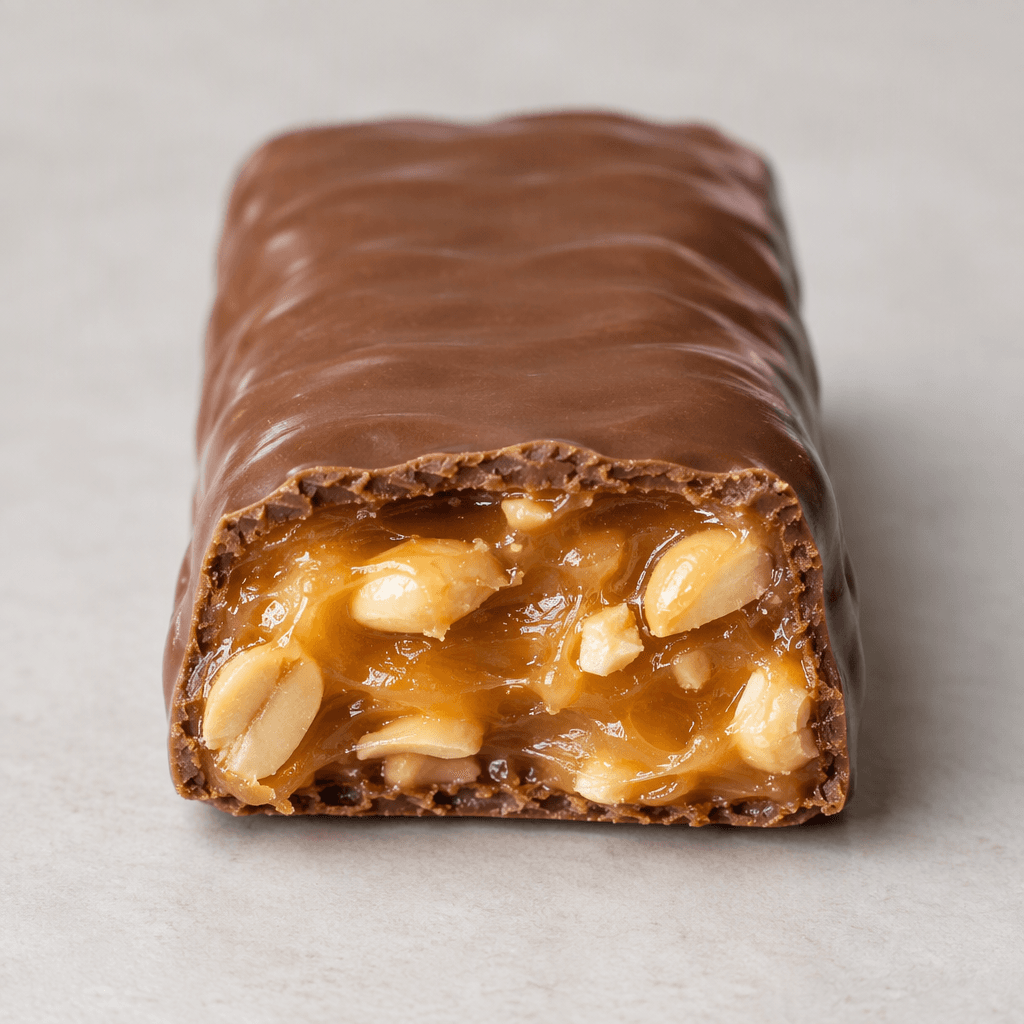
Canga Chocolate Caramel Bar Calories
Chocolate-coated caramel and hazelnut bar
In season: Winter · Spring · Summer · Autumn
CALORIES · 100 G
GI
POTASSIUM · 100 G
FIBER · 100 G
Quick answer
1 piece (medium) of Canga Chocolate Caramel Bar (35 g) has 168 calories. That works out to 480 calories per 100 g. It contains 22 g of carbs, 1.8 g of protein, 7.7 g of fat and 0.9 g of fiber. Its 0.1 mg of Copper covers 8% of the Daily Value. Its glycemic index is 65 (high), so it raises blood sugar quickly.
Canga Chocolate Caramel Bar Nutrition Facts
Selected: 1 piece (medium) · 35 g
168
KCAL / 35G
Carbs
22g
· 8% DV
Protein
1.8g
· 4% DV
Fat
7.7g
· 10% DV
Fiber
0.9g
· 3% DV
DV is the share of the daily value covered, on a 2,000 kcal reference diet.
Calories come from: Carbs 53% · Protein 4% · Fat 43%
Canga Chocolate Caramel Bar nutrition facts table · 1 piece (medium) (35 g)
| Nutrient | Amount | % DV |
|---|---|---|
| Calories | 168 kcal | |
| Total fat | 7.7 g | 10% |
| Saturated fat | 3.68 g | 18% |
| Trans fat | 0.07 g | |
| Sodium | 42 mg | 2% |
| Total carbohydrate | 22 g | 8% |
| Fiber | 0.9 g | 3% |
| Protein | 1.8 g | 4% |
Calories: Calories measure energy. Average daily need is 2,000 kcal. Excess calories are stored as fat, too few cause weight loss.
Carbs: Your body's primary energy source. The brain runs exclusively on carbs. Daily need: 275g.
Protein: Essential for muscle repair and cell growth. Daily need: 50g. Keeps you full and boosts metabolism.
Fat: Needed for hormone production and vitamin absorption. Daily need: 78g. Limit saturated fats, choose unsaturated.
Fiber: Critical for digestive health and satiety. Daily need: 28g. Stabilizes blood sugar, lowers cholesterol.

Log this food in EatBetter
100,000+ people use it
- Get your daily calorie target
- Snap your meal, log it in seconds
- See every vitamin and mineral

📸 Scan the code to get the app free.

How Many Calories in 1 Canga Chocolate Caramel Bar?
| Serving | Amount | Calories |
|---|---|---|
| 1 piece (medium) | 35 g | 168 kcal |
| 1 piece (mini) | 15 g | 72 kcal |
| 1 piece (small) | 20 g | 96 kcal |
| 1 piece (large) | 50 g | 240 kcal |
| 2 piece (double) | 70 g | 336 kcal |
| 1 pack (double) | 70 g | 336 kcal |
| 100 g | 100 g | 480 kcal |
| 1 piece (jumbo) | 100 g | 480 kcal |
| 1 pack (triple) | 105 g | 504 kcal |
Calculated from 480 calories per 100 g.
Frequently Asked Questions About Canga Chocolate Caramel Bar
What is in a Canga Chocolate Caramel Bar?
A Canga Chocolate Caramel Bar is an ultra-processed confectionery bar with a chocolate coating and caramel-and-hazelnut filling. The precise ingredients can vary by product version or market, so the package’s ingredient list is the best source for the current recipe.
Who makes the Canga Chocolate Caramel Bar?
The Canga Chocolate Caramel Bar is associated with Şölen, a Turkish confectionery company. The brand is sold in Turkey and may be available through specialty retailers elsewhere; the manufacturer information on the wrapper identifies the company responsible for a particular pack.
How should you store a Canga Chocolate Caramel Bar?
Store a Canga Chocolate Caramel Bar in a cool, dry place away from direct sunlight, with its wrapper intact. Heat can soften or melt the chocolate, while shifts between cold and warm conditions can affect its surface and texture.
Can you freeze a Canga Chocolate Caramel Bar?
Yes, you can freeze a Canga Chocolate Caramel Bar, but its caramel will become firm and harder to bite. Let it return to room temperature while still wrapped before opening, which helps reduce condensation on the chocolate.
Why does the chocolate on a Canga Chocolate Caramel Bar turn white?
White patches on a Canga Chocolate Caramel Bar usually result from cocoa butter or sugar rising to the chocolate’s surface after temperature or moisture changes. This can affect texture and appearance; by itself, the discoloration does not mean the bar has spoiled.
Is a Canga Chocolate Caramel Bar halal?
You cannot confirm halal certification from the Canga Chocolate Caramel Bar’s name alone. Certification can differ by market and product version, so look for a halal mark on the specific wrapper or current product information from the manufacturer.
Does a Canga Chocolate Caramel Bar contain caffeine?
Yes, a Canga Chocolate Caramel Bar may contain a small amount of naturally occurring caffeine from its chocolate coating. The exact amount is not provided, and it is not usually treated as a significant caffeine source compared with coffee or energy drinks.
Is a Canga Chocolate Caramel Bar good before a workout?
A Canga Chocolate Caramel Bar can provide quick carbohydrate before exercise, but its rich caramel-and-chocolate texture may feel heavy if eaten right before a workout. If you choose it, allow time to digest and use a portion that feels comfortable.
Can people with diabetes eat a Canga Chocolate Caramel Bar?
Some people with diabetes may include a Canga Chocolate Caramel Bar in their meal plan, but its carbohydrates can raise blood glucose. The suitable portion depends on individual treatment and eating plans, so ask your clinician or dietitian for advice tailored to you.
Can children eat a Canga Chocolate Caramel Bar?
Yes, children can eat a Canga Chocolate Caramel Bar as an occasional sweet, but it should not replace meals or become an everyday snack. Its sticky caramel can cling to teeth, so good oral hygiene matters after eating it.
Canga Chocolate Caramel Bar Vitamins & Minerals
Vitamins
B2
0.05mg · 4% DV
B12
0.07µg · 3% DV
Biotin
0.7µg · 2% DV
Vitamin E
0.24mg · 2% DV
Minerals
Copper
0.07mg · 8% DV
Phosphorus
28mg · 4% DV
Calcium
31mg · 3% DV
Manganese
0.07mg · 3% DV
Potassium ⭐
63mg · 2% DV
Sodium
42mg · 2% DV
Canga Chocolate Caramel Bar Glycemic Index
GLYCEMIC INDEX
GLYCEMIC LOAD
Accounts for portion size — a more realistic measure than GI alone.
How to Burn Off Canga Chocolate Caramel Bar
To burn the 168 calories in 1 piece (medium) (35 g):
🚶
Walking (5 km/h)
🏃
Running (8 km/h)
🚴
Cycling
🏊
Swimming
Times are calculated with the MET equation for a 70 kg adult. Actual burn varies with your weight, age and pace.
What is Canga Chocolate Caramel Bar?
Canga Chocolate Caramel Bar is a Turkish packaged confection made with caramel and hazelnut pieces under a chocolate coating. Its flavour brings together sweet, chewy caramel, roasted nuts and chocolate, while the contrasting textures make it more substantial than a plain chocolate bar.
In Turkey, bars like this are commonly enjoyed as a quick snack or with tea; elsewhere, it fits easily into a coffee break or lunchbox treat. It is energy-dense, with most of its energy coming from carbohydrates and fat rather than protein. A smaller portion can be enough when you want something sweet, and unsweetened coffee or tea pairs well with its rich sweetness.
How Nutritious Is Canga Chocolate Caramel Bar?
Nutrient density
Low
How many vitamins, minerals and how much fiber this food carries per calorie. A high score means a lot of nutrition for few calories.
Satiety score
Low
An EatBetter score computed from fiber, protein and calorie density. A high score means staying full longer on the same calories.
Both scores are calculated per 100 g and do not change with the selected portion. The satiety score is EatBetter's own calculation, not a clinical measure.
Is Canga Chocolate Caramel Bar Processed?
NOVA 4
Ultra-Processed
1. Unprocessed
2. Minimally Processed
3. Processed
4. Ultra-Processed
NOVA classifies foods into 4 groups by industrial processing. NOVA 1 (unprocessed) is the healthiest.
Does Canga Chocolate Caramel Bar Contain Allergens?
Contains these allergens:
Which Diets Is Canga Chocolate Caramel Bar Good For?
Vegan
— Not suitable
Vegetarian
✓ Suitable
Gluten-Free
— Not suitable
Dairy-Free
— Not suitable
Mediterranean
— Not suitable
Paleo
— Not suitable
Whole30
— Not suitable
DASH
— Not suitable
Keto
— Not suitable
Low FODMAP
— Not suitable
Canga Chocolate Caramel Bar Fat Profile
SATURATED
3.68g
MONOUNSATURATED
2.52g
POLYUNSATURATED
0.77g
Omega 6:3 ratio 60:1
Above the ideal 4:1 (60:1).
Compare Canga Chocolate Caramel Bar
Foods Similar to Canga Chocolate Caramel Bar
Have another question about Canga Chocolate Caramel Bar?
Ask the AI nutrition coach — calories, portions, alternatives and more, answered in seconds in the app.

Scan calories with your camera
Instant AI nutrition analysis

Nutrition data compiled from USDA FoodData Central and scientific sources.