

Ready & Packaged Foods
All →Vegetables & Legumes
All →Desserts & Confectionery
All →Meat & Protein
All →Grains & Bakery
All →Beverages
All →Milk & Dairy
All →

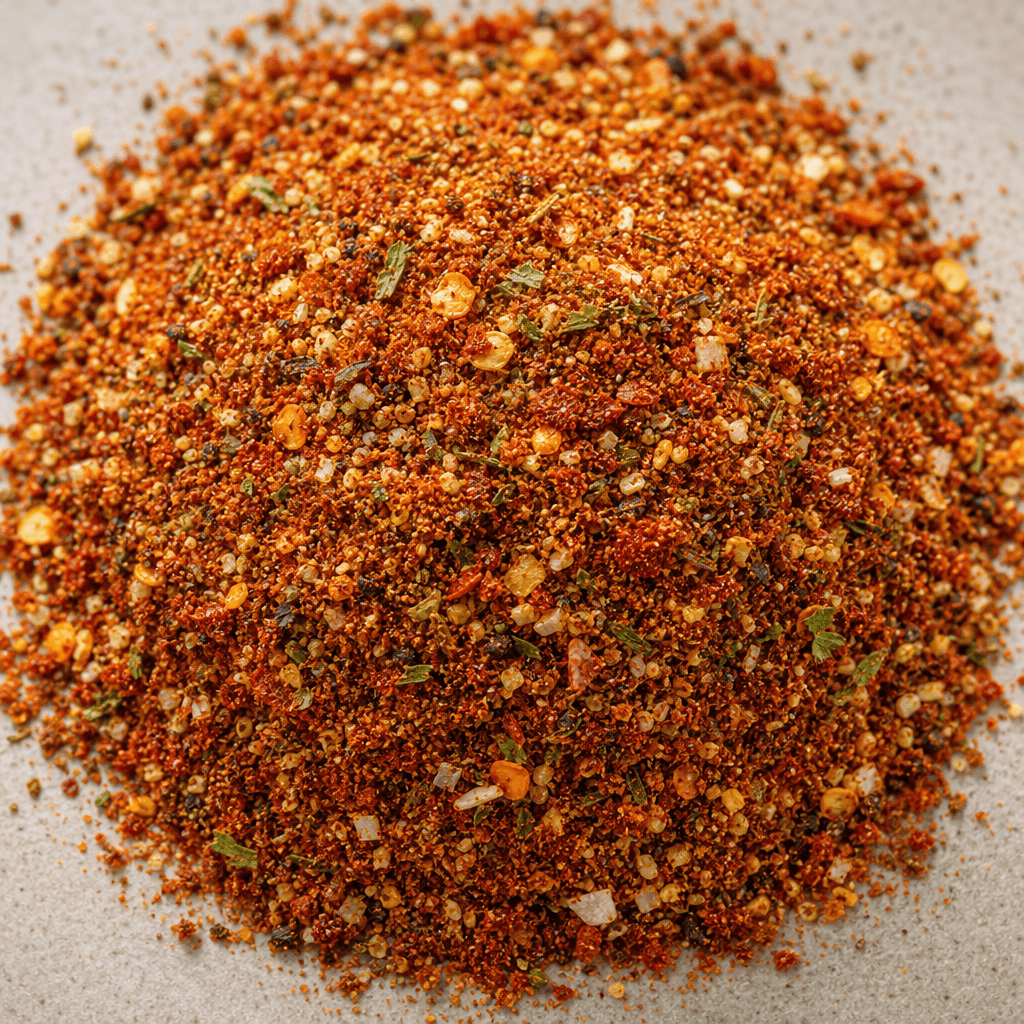
Cajun Seasoning Calories
Spice blend, spicy and aromatic
In season: Spring · Summer · Autumn · Winter
CALORIES
GI
POTASSIUM
FIBER
Quick answer
1 tablespoon (medium) of Cajun Seasoning (8 g) has 21 calories. That works out to 260 calories per 100 g. It contains 3.7 g of carbs, 0.7 g of protein, 0.4 g of fat and 1.5 g of fiber. Its 96 µg of Vitamin A covers 11% of the Daily Value. Its glycemic index is 5 (low), so it raises blood sugar slowly.
What is Cajun Seasoning?
Cajun Seasoning is a bold spice blend associated with Louisiana’s Cajun cooking. Recipes vary, but paprika, pepper, garlic, onion and dried herbs commonly contribute its reddish colour and savoury, warming flavour.
Use it to season chicken, seafood, potatoes or vegetables before roasting or grilling, or stir a little into a stew or marinade. In Louisiana, it is often used to give dishes such as gumbo and blackened fish their characteristic kick; elsewhere, it is an easy way to add similar savoury heat to everyday meals. The blend is flavourful rather than a substantial source of nutrition in the small amounts usually used. Start sparingly, especially if you prefer milder food, and adjust the other seasoning to taste.
Cajun Seasoning Nutrition Facts
Selected: 100 g
260
KCAL / 100G
Carbs
46g
· 17% DV
Protein
8.5g
· 17% DV
Fat
4.5g
· 6% DV
Fiber
19g
· 68% DV
DV is the share of the daily value covered, on a 2,000 kcal reference diet.
Calories come from: Carbs 71% · Protein 13% · Fat 16%
Cajun Seasoning Vitamins & Minerals
Vitamins
Vitamin A
1200µg · 133% DV
B6
0.7mg · 41% DV
Vitamin K
45µg · 38% DV
B2
0.45mg · 35% DV
Minerals
Sodium
3100mg · 135% DV
Manganese
1mg · 43% DV
Iron
7mg · 39% DV
Magnesium
95mg · 23% DV
How Nutritious Is Cajun Seasoning?
Nutrient density
Medium
How many vitamins, minerals and how much fiber this food carries per calorie. A high score means a lot of nutrition for few calories.
Satiety score
Medium
An EatBetter score computed from fiber, protein and calorie density. A high score means staying full longer on the same calories.
Both scores are calculated per 100 g and do not change with the selected portion. The satiety score is EatBetter's own calculation, not a clinical measure.
Cajun Seasoning Glycemic Index
GLYCEMIC INDEX
GLYCEMIC LOAD
Accounts for portion size — a more realistic measure than GI alone.
How to Burn Off Cajun Seasoning
To burn the 260 calories in 100 g:
🚶
Walking (5 km/h)
🏃
Running (8 km/h)
🚴
Cycling
🏊
Swimming
Times are calculated with the MET equation for a 70 kg adult. Actual burn varies with your weight, age and pace.
Is Cajun Seasoning Processed?
NOVA 2
Minimally Processed
1. Unprocessed
2. Minimally Processed
3. Processed
4. Ultra-Processed
NOVA classifies foods into 4 groups by industrial processing. NOVA 1 (unprocessed) is the healthiest.
Does Cajun Seasoning Contain Allergens?
No known major allergens
Which Diets Is Cajun Seasoning Good For?
Vegan
✓ Suitable
Vegetarian
✓ Suitable
Gluten-Free
✓ Suitable
Dairy-Free
— Not suitable
Mediterranean
✓ Suitable
Paleo
✓ Suitable
Whole30
— Not suitable
DASH
— Not suitable
Keto
✓ Suitable
Low FODMAP
— Not suitable
Cajun Seasoning Fat Profile
SATURATED
0.8g
MONOUNSATURATED
1.2g
POLYUNSATURATED
1.7g
Omega 6:3 ratio 3:1
Below the ideal 4:1 — a good omega balance.
Compare Cajun Seasoning
Foods Similar to Cajun Seasoning
Frequently Asked Questions About Cajun Seasoning
What is Cajun seasoning?
Cajun seasoning is a bold spice blend associated with Louisiana Cajun cooking, commonly made with paprika, black pepper, garlic, onion, and herbs. It adds a peppery, savory flavor to dishes such as chicken, seafood, vegetables, and rice.
What is in Cajun seasoning?
Cajun seasoning commonly contains paprika or red pepper, black pepper, garlic, onion, and dried herbs such as thyme or oregano. Recipes differ between brands, and some blends also include salt, cayenne, or other chile peppers.
How do you use Cajun seasoning on chicken?
Coat chicken with Cajun seasoning and a little oil before grilling, roasting, or pan-cooking so the spices cling to the surface. Taste the blend first: if it contains salt, reduce any extra salt in the marinade or recipe.
What is the difference between Cajun seasoning and Creole seasoning?
Cajun seasoning often leans toward a peppery, rustic flavor, while Creole seasoning may emphasize herbs and aromatic ingredients. The distinction is not absolute, though: recipes vary by cook and brand, so compare ingredient lists rather than relying only on the name.
What can I use instead of Cajun seasoning?
For a quick substitute, combine paprika, black pepper, garlic, onion, a little cayenne, and dried herbs such as thyme. Adjust the cayenne and salt to suit the dish, since store-bought Cajun seasoning blends can vary in both.
Is Cajun seasoning spicy?
Cajun seasoning is often mildly to moderately hot, but its heat depends on how much cayenne or other chile pepper the blend contains. Start with a small amount, taste the food, and add more gradually rather than seasoning heavily at once.
Can you put Cajun seasoning on fries?
Yes, Cajun seasoning works well on oven fries and potato wedges. Toss the potatoes with oil and the seasoning before baking so it adheres; if the blend is salty, wait until you taste the finished fries before adding more salt.
How do you make Cajun seasoning at home?
Mix paprika, black pepper, garlic powder, onion powder, dried herbs, and cayenne to make Cajun seasoning at home. You can leave out salt or adjust the chile to your preference, then store the blend in a clean, tightly sealed jar.
Can Cajun seasoning be used on seafood?
Yes, Cajun seasoning is commonly used with shrimp, fish, and other seafood. Apply it lightly before cooking, since its peppery flavor can overpower delicate fish; for shrimp, toss the seasoning with a little oil before sautéing or grilling.
How should you store Cajun seasoning?
Keep Cajun seasoning in a tightly closed container in a cool, dry cupboard, away from steam, heat, and direct sunlight. Use a dry spoon to prevent clumping, and replace the blend when its aroma and flavor have noticeably faded.
Have another question about Cajun Seasoning?
Ask the AI nutrition coach — calories, portions, alternatives and more, answered in seconds in the app.

Scan calories with your camera
Instant AI nutrition analysis

Nutrition data compiled from USDA FoodData Central and scientific sources.