

Ready & Packaged Foods
All →Vegetables & Legumes
All →Desserts & Confectionery
All →Meat & Protein
All →Grains & Bakery
All →Beverages
All →Milk & Dairy
All →

Blackberry Calories
High fiber, vitamin C, antioxidant
In season: Summer · Autumn
CALORIES
GI
POTASSIUM
FIBER
Quick answer
1 cup (medium) of Blackberry (140 g) has 60 calories. That works out to 43 calories per 100 g. It contains 13.4 g of carbs, 2 g of protein, 0.7 g of fat and 7.4 g of fiber. Its 0.8 mg of Manganese covers 37% of the Daily Value. Its glycemic index is 25 (low), so it raises blood sugar slowly.
What is Blackberry?
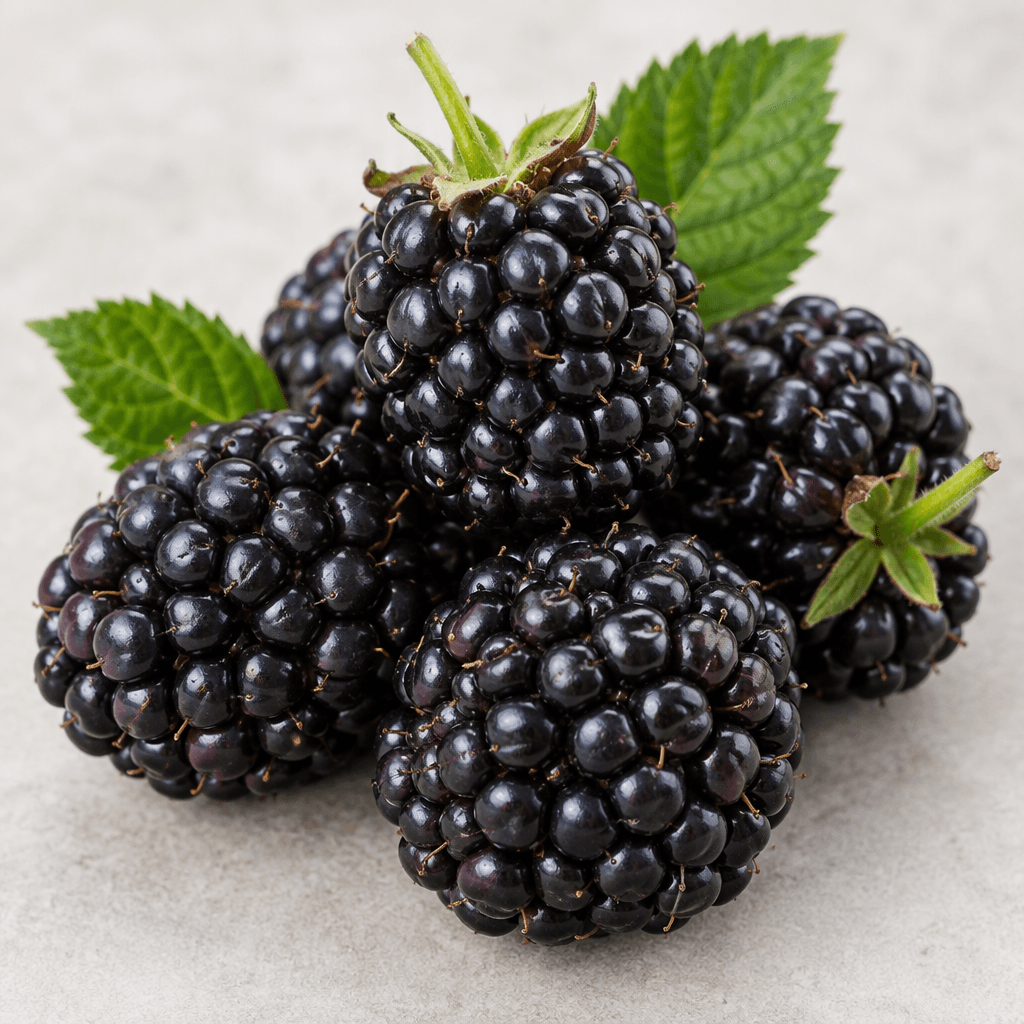
Blackberries grow on brambles and form from many tiny rounded drupelets clustered around a core. Native to temperate regions and now widely cultivated, they turn deep purple-black when ripe. Their soft, juicy flesh tastes sweet with a gentle tartness, while the small seeds give each bite a little texture.
They’re commonly eaten fresh, stirred into yoghurt or porridge, or used in pies, crumbles, jams and smoothies. Blackberries are notably high in fibre, with 5.3 g per 100 g, and bring a fresh, tangy contrast to richer foods. Pair them with plain yoghurt or oats for an easy breakfast, or freeze ripe berries for later use.
Blackberry Nutrition Facts
Selected: 100 g
43
KCAL / 100G
Carbs
9.6g
· 3% DV
Protein
1.4g
· 3% DV
Fat
0.5g
· 1% DV
Fiber
5.3g
· 19% DV
DV is the share of the daily value covered, on a 2,000 kcal reference diet.
Calories come from: Carbs 79% · Protein 12% · Fat 9%
Blackberry Vitamins & Minerals
Vitamins
Vitamin C
21mg · 23% DV
Vitamin K
19.8µg · 17% DV
Vitamin E
1.2mg · 8% DV
B5
0.3mg · 6% DV
Minerals
Manganese
1mg · 43% DV
Zinc
1mg · 9% DV
Iron
1mg · 6% DV
Magnesium
20mg · 5% DV
How Nutritious Is Blackberry?
Nutrient density
Very high
How many vitamins, minerals and how much fiber this food carries per calorie. A high score means a lot of nutrition for few calories.
Satiety score
High
An EatBetter score computed from fiber, protein and calorie density. A high score means staying full longer on the same calories.
Both scores are calculated per 100 g and do not change with the selected portion. The satiety score is EatBetter's own calculation, not a clinical measure.
Blackberry Glycemic Index
GLYCEMIC INDEX
GLYCEMIC LOAD
Accounts for portion size — a more realistic measure than GI alone.
How to Burn Off Blackberry
To burn the 43 calories in 100 g:
🚶
Walking (5 km/h)
🏃
Running (8 km/h)
🚴
Cycling
🏊
Swimming
Times are calculated with the MET equation for a 70 kg adult. Actual burn varies with your weight, age and pace.
Is Blackberry Processed?
NOVA 1
Unprocessed
1. Unprocessed
2. Minimally Processed
3. Processed
4. Ultra-Processed
NOVA classifies foods into 4 groups by industrial processing. NOVA 1 (unprocessed) is the healthiest.
Does Blackberry Contain Allergens?
No known major allergens
Which Diets Is Blackberry Good For?
Vegan
✓ Suitable
Vegetarian
✓ Suitable
Gluten-Free
✓ Suitable
Dairy-Free
— Not suitable
Mediterranean
✓ Suitable
Paleo
✓ Suitable
Whole30
— Not suitable
DASH
— Not suitable
Keto
✓ Suitable
Low FODMAP
— Not suitable
Blackberry Fat Profile
SATURATED
0.01g
MONOUNSATURATED
0.05g
POLYUNSATURATED
0.09g
Omega 6:3 ratio 3:1
Below the ideal 4:1 — a good omega balance.
Compare Blackberry
Foods Similar to Blackberry
Frequently Asked Questions About Blackberry
What are the benefits of eating blackberries?
Blackberries provide fiber and vitamin C, along with dark-colored plant compounds that have antioxidant activity. Their fiber supports regular digestion. Eat them fresh, or add them to yogurt, oatmeal, or a smoothie for an easy way to include the fruit in a meal.
How do you tell if blackberries are ripe?
Ripe blackberries are deep purple-black, plump, and slightly soft, with a fresh rather than sour smell. Avoid berries that are shriveled, leaking, or moldy. When picking them, ripe blackberries usually come off the plant easily with a gentle pull.
How should you store fresh blackberries?
Keep fresh blackberries unwashed in a shallow container in the refrigerator, with a paper towel underneath to absorb moisture. Remove any crushed or moldy berries, and eat the rest within a few days. Wash them just before eating so they do not spoil faster.
Should you wash blackberries before eating them?
Yes, rinse blackberries gently under cool running water just before eating. Their delicate clusters can trap dirt, so turn them carefully rather than rubbing or soaking them for a long time. Drain them well, since moisture can encourage spoilage.
Can you freeze blackberries without them clumping together?
Yes. Rinse blackberries, dry them thoroughly, and freeze them in a single layer on a tray first. Once firm, transfer them to a sealed freezer-safe container or bag. This keeps the berries easier to portion for smoothies, baking, or sauces.
Are blackberry seeds edible?
Yes, blackberry seeds are edible and are part of the fruit. They can make the texture slightly crunchy, but most people eat them without removing them. For a smoother sauce or purée, cook or mash the berries and press them through a fine strainer.
Are blackberries and mulberries the same fruit?
No. Blackberries grow on brambles and are made of many small, rounded drupelets; mulberries grow on trees and are usually more elongated. They can look similar when dark and ripe, but they come from different plants.
Can dogs eat blackberries?
Yes, most dogs can have a few plain, washed blackberries as an occasional treat. Serve them whole only if your dog can chew them safely, or cut them for a small dog. Avoid blackberry jam and desserts, which may contain added sugar or other unsuitable ingredients.
How can you tell if blackberries have gone bad?
Discard blackberries that have visible mold, a fermented or sour smell, leaking juice, or a slimy texture. Mold can spread beyond the spot you see, so do not eat moldy berries. Check the rest in the container and remove crushed or spoiled ones.
Can you eat blackberries raw?
Yes, blackberries are commonly eaten raw after rinsing, and they do not need to be peeled or cooked. Add them to cereal, yogurt, or salads, or eat them on their own. Handle them gently because ripe berries crush easily.
Have another question about Blackberry?
Ask the AI nutrition coach — calories, portions, alternatives and more, answered in seconds in the app.

Scan calories with your camera
Instant AI nutrition analysis

Nutrition data compiled from USDA FoodData Central and scientific sources.