

Ready & Packaged Foods
All →Vegetables & Legumes
All →Desserts & Confectionery
All →Meat & Protein
All →Grains & Bakery
All →Beverages
All →Milk & Dairy
All →

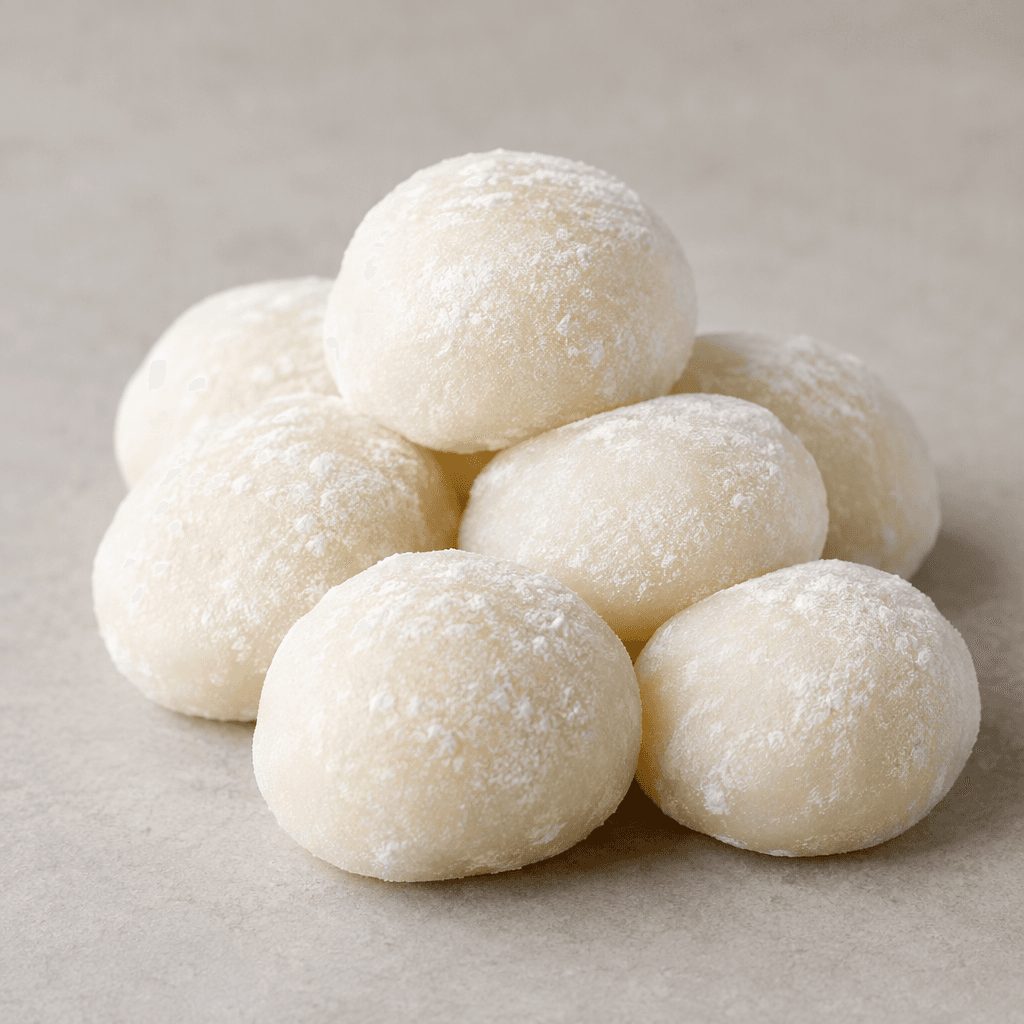
Bitter Mochi Calories
Bitter-flavored rice cake, traditional Japanese sweet
In season: Spring · Summer · Autumn · Winter
CALORIES
GI
POTASSIUM
FIBER
Quick answer
1 piece (medium) of Bitter Mochi (45 g) has 95 calories. That works out to 210 calories per 100 g. It contains 20.7 g of carbs, 1.6 g of protein, 0.3 g of fat and 0.5 g of fiber. Its glycemic index is 85 (high), so it raises blood sugar quickly.
What is Bitter Mochi?
Bitter Mochi is a Japanese rice cake with a bitter-tasting flavour. Mochi is traditionally made from pounded glutinous rice, giving it a soft, chewy and slightly sticky texture; the exact flavouring and sweetness can vary between versions.
In Japan, mochi is often enjoyed as a small sweet or snack with tea. It can also be served as part of a Japanese-style dessert selection or alongside a cup of tea elsewhere. Its nutrition is mainly carbohydrate, with relatively little fat and a modest amount of protein; it provides 46 g of carbohydrate per 100 g. Because the texture is filling and chewy, a single piece makes an easy snack, especially with unsweetened tea.
Bitter Mochi Nutrition Facts
Selected: 100 g
210
KCAL / 100G
Carbs
46g
· 17% DV
Protein
3.5g
· 7% DV
Fat
0.6g
· 1% DV
Fiber
1.2g
· 4% DV
DV is the share of the daily value covered, on a 2,000 kcal reference diet.
Calories come from: Carbs 90% · Protein 7% · Fat 3%
Bitter Mochi Vitamins & Minerals
Vitamins
B1
0.03mg · 3% DV
B3
0.3mg · 2% DV
B5
0.08mg · 2% DV
B6
0.04mg · 2% DV
Minerals
Phosphorus
30mg · 4% DV
Magnesium
10mg · 2% DV
Selenium
1µg · 2% DV
Calcium
7mg · 1% DV
How Nutritious Is Bitter Mochi?
Nutrient density
Low
How many vitamins, minerals and how much fiber this food carries per calorie. A high score means a lot of nutrition for few calories.
Satiety score
Low
An EatBetter score computed from fiber, protein and calorie density. A high score means staying full longer on the same calories.
Both scores are calculated per 100 g and do not change with the selected portion. The satiety score is EatBetter's own calculation, not a clinical measure.
Bitter Mochi Glycemic Index
GLYCEMIC INDEX
GLYCEMIC LOAD
Accounts for portion size — a more realistic measure than GI alone.
How to Burn Off Bitter Mochi
To burn the 210 calories in 100 g:
🚶
Walking (5 km/h)
🏃
Running (8 km/h)
🚴
Cycling
🏊
Swimming
Times are calculated with the MET equation for a 70 kg adult. Actual burn varies with your weight, age and pace.
Is Bitter Mochi Processed?
NOVA 3
Processed
1. Unprocessed
2. Minimally Processed
3. Processed
4. Ultra-Processed
NOVA classifies foods into 4 groups by industrial processing. NOVA 1 (unprocessed) is the healthiest.
Does Bitter Mochi Contain Allergens?
No known major allergens
Which Diets Is Bitter Mochi Good For?
Vegan
✓ Suitable
Vegetarian
✓ Suitable
Gluten-Free
✓ Suitable
Dairy-Free
— Not suitable
Mediterranean
— Not suitable
Paleo
— Not suitable
Whole30
— Not suitable
DASH
— Not suitable
Keto
— Not suitable
Low FODMAP
— Not suitable
Bitter Mochi Fat Profile
SATURATED
0.12g
MONOUNSATURATED
0.14g
POLYUNSATURATED
0.18g
Omega 6:3 ratio 8:1
Above the ideal 4:1 (8:1).
Compare Bitter Mochi
Foods Similar to Bitter Mochi
Frequently Asked Questions About Bitter Mochi
What is bitter mochi?
Bitter mochi is a Japanese-style rice cake with a bitter or bitter-leaning flavor. Mochi is traditionally made from sticky rice or rice flour, but “bitter mochi” does not refer to one universally fixed recipe, so ingredients can vary.
What is bitter mochi made of?
Bitter mochi typically has a chewy rice-based dough and an ingredient that gives it a bitter taste. Fillings and sweeteners vary by recipe or product, so check the ingredient list if you need to know exactly what a particular bitter mochi contains.
How is bitter mochi made?
Bitter mochi is made by preparing a pliable mochi dough from sticky rice or rice flour and adding a bitter-tasting ingredient. There is no single standard recipe for the bitter version, so the method and flavoring depend on the maker.
Is bitter mochi spicy, or does it taste bitter?
Bitter mochi is described as bitter, not necessarily hot or chili-spiced. The name does not guarantee a particular source of bitterness, though, so check the recipe or product ingredients if you are avoiding chili or another specific flavoring.
How is bitter mochi different from regular mochi?
Bitter mochi differs mainly in flavor: regular mochi is usually mild and often served sweet, while bitter mochi has a bitter note. Both can have the familiar soft, chewy rice-cake texture, but their fillings and recipes are not fixed.
Is bitter mochi a traditional Japanese sweet?
Mochi is a traditional Japanese sweet, but bitter mochi is not one single, widely standardized traditional variety. The bitter flavor may come from a particular maker’s recipe or added ingredient, rather than a universal method for making mochi.
How do you serve bitter mochi?
Serve bitter mochi in small pieces, on its own or with unsweetened tea. A plain drink lets its unusual flavor come through, while a sweet filling or accompaniment can balance bitterness if the recipe is especially intense.
How should you store bitter mochi?
Fresh bitter mochi is best eaten on the day it is made; keep leftovers in an airtight container at room temperature for a short time. Refrigeration can make the rice dough firm, so freezing is a better option for longer storage.
Can you freeze bitter mochi?
Yes, you can freeze bitter mochi. Separate the pieces so they do not stick together, seal them in a freezer-safe container, and thaw before serving. The texture may be less soft and springy than freshly made mochi.
Can toddlers eat bitter mochi?
Bitter mochi can be a choking hazard for toddlers because its sticky, chewy texture is difficult to manage. Avoid serving it to young children; older children should eat small pieces while seated and supervised.
Have another question about Bitter Mochi?
Ask the AI nutrition coach — calories, portions, alternatives and more, answered in seconds in the app.

Scan calories with your camera
Instant AI nutrition analysis

Nutrition data compiled from USDA FoodData Central and scientific sources.