

Ready & Packaged Foods
All →Vegetables & Legumes
All →Desserts & Confectionery
All →Meat & Protein
All →Grains & Bakery
All →Beverages
All →Milk & Dairy
All →

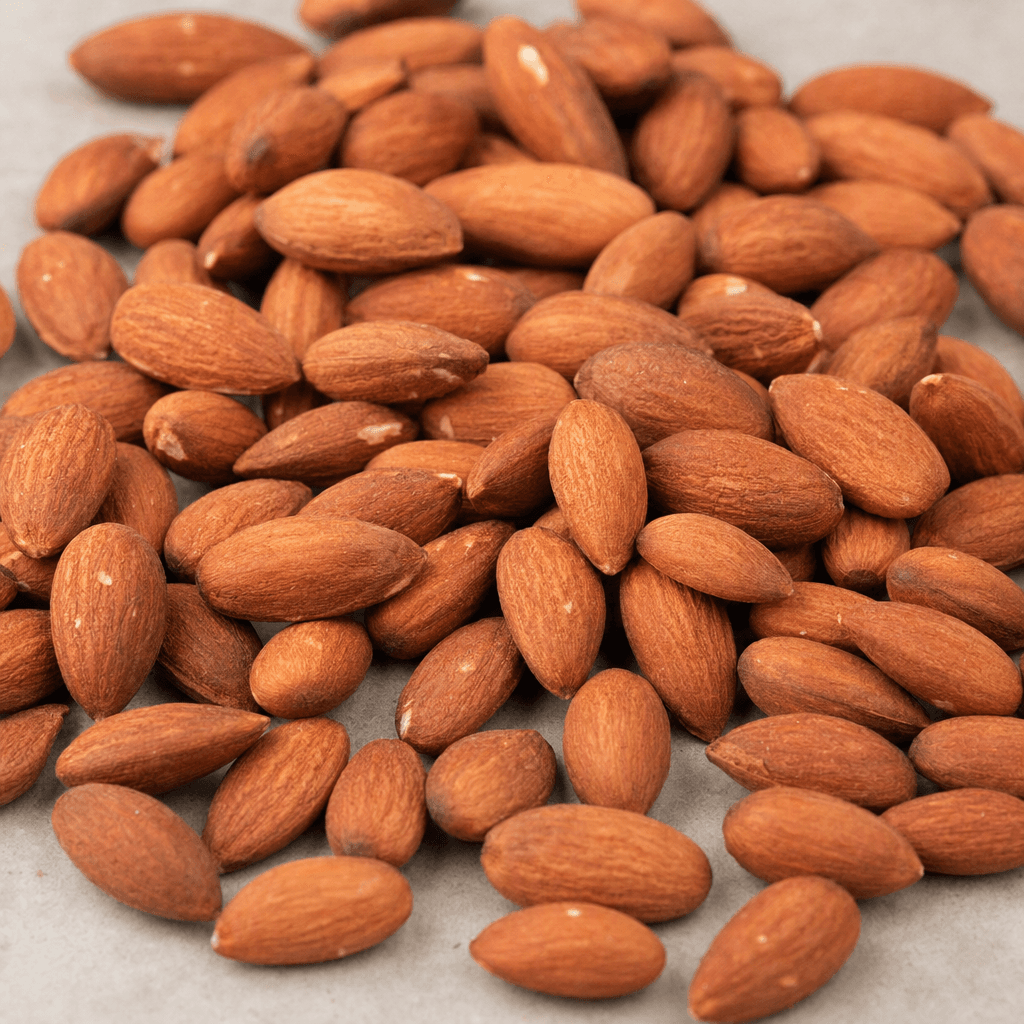
Bitter Almond Calories
High fat and protein, contains cyanide, not eaten raw.
In season: Summer · Autumn
CALORIES
GI
POTASSIUM
FIBER
Quick answer
10 piece (medium) of Bitter Almond (12 g) has 69 calories. That works out to 579 calories per 100 g. It contains 2.6 g of carbs, 2.5 g of protein, 6 g of fat and 1.5 g of fiber. Its 3.1 mg of Vitamin E covers 20% of the Daily Value. Its glycemic index is 15 (low), so it raises blood sugar slowly.
What is Bitter Almond?
Bitter Almond refers to the kernel of a bitter almond variety. It resembles a sweet almond but has a sharper, more pronounced aroma. Raw kernels are not safe to eat: they contain compounds that can release cyanide, so they should not be sampled or used casually at home. In its traditional culinary role, bitter almond is valued chiefly as a flavouring; almond biscuits and marzipan-style sweets may draw on that distinctive note, often through properly prepared ingredients or food-grade flavouring.
It is rich in fat and protein, but it is not an everyday snack like sweet almonds. If you want that flavour, choose a product specifically made for food use and follow its directions rather than using raw kernels.
Bitter Almond Nutrition Facts
Selected: 100 g
579
KCAL / 100G
Carbs
21.6g
· 8% DV
Protein
21.2g
· 42% DV
Fat
49.9g
· 64% DV
Fiber
12.5g
· 45% DV
DV is the share of the daily value covered, on a 2,000 kcal reference diet.
Calories come from: Carbs 14% · Protein 14% · Fat 72%
Bitter Almond Vitamins & Minerals
Vitamins
Vitamin E
25.6mg · 171% DV
B2
1.14mg · 88% DV
B3
3.4mg · 21% DV
B1
0.21mg · 18% DV
Minerals
Copper
1mg · 111% DV
Manganese
2mg · 87% DV
Phosphorus
481mg · 69% DV
Magnesium
270mg · 64% DV
How Nutritious Is Bitter Almond?
Nutrient density
Very high
How many vitamins, minerals and how much fiber this food carries per calorie. A high score means a lot of nutrition for few calories.
Satiety score
High
An EatBetter score computed from fiber, protein and calorie density. A high score means staying full longer on the same calories.
Both scores are calculated per 100 g and do not change with the selected portion. The satiety score is EatBetter's own calculation, not a clinical measure.
Bitter Almond Glycemic Index
GLYCEMIC INDEX
GLYCEMIC LOAD
Accounts for portion size — a more realistic measure than GI alone.
How to Burn Off Bitter Almond
To burn the 579 calories in 100 g:
🚶
Walking (5 km/h)
🏃
Running (8 km/h)
🚴
Cycling
🏊
Swimming
Times are calculated with the MET equation for a 70 kg adult. Actual burn varies with your weight, age and pace.
Is Bitter Almond Processed?
NOVA 1
Unprocessed
1. Unprocessed
2. Minimally Processed
3. Processed
4. Ultra-Processed
NOVA classifies foods into 4 groups by industrial processing. NOVA 1 (unprocessed) is the healthiest.
Does Bitter Almond Contain Allergens?
Contains these allergens:
Which Diets Is Bitter Almond Good For?
Vegan
✓ Suitable
Vegetarian
✓ Suitable
Gluten-Free
✓ Suitable
Dairy-Free
— Not suitable
Mediterranean
✓ Suitable
Paleo
✓ Suitable
Whole30
— Not suitable
DASH
— Not suitable
Keto
✓ Suitable
Low FODMAP
— Not suitable
Bitter Almond Fat Profile
SATURATED
3.8g
MONOUNSATURATED
31.6g
POLYUNSATURATED
12.3g
Compare Bitter Almond
Foods Similar to Bitter Almond
Frequently Asked Questions About Bitter Almond
Are bitter almonds poisonous?
Raw bitter almonds can be poisonous because amygdalin in the kernels can release cyanide during digestion. Their cyanide-producing potential varies, so they should not be eaten raw or treated like ordinary sweet almonds.
What are bitter almonds used for?
Bitter almonds are mainly valued for their strong almond-like aroma in flavorings and some traditional sweets. Commercial products use appropriately processed ingredients; raw bitter almond kernels should not be eaten or added to homemade recipes.
How are bitter almonds different from sweet almonds?
Bitter almonds have a distinctly bitter flavor and contain amygdalin, which can release cyanide during digestion. Sweet almonds are the familiar variety eaten raw or roasted; the two are not interchangeable in a snack bowl.
Can roasting bitter almonds make them safe to eat?
No, roasting does not reliably make bitter almonds safe. The amount of cyanide-producing compounds can vary, and ordinary home heating is not a dependable way to remove the risk.
Is bitter almond extract made from real bitter almonds?
Not necessarily. Many commercial extracts use benzaldehyde-based flavoring, and the source and formulation vary. Extracts made for food are different from raw bitter almond kernels, which should not be used to make flavoring at home.
Does marzipan contain bitter almonds?
Sometimes, but not always. Recipes may use sweet almonds with a small amount of bitter almond flavoring for a stronger aroma; many commercial versions rely on flavoring instead of raw bitter almond kernels.
What does bitter almond taste like?
Bitter almond has a sharp, unmistakably bitter taste with a strong aroma often associated with marzipan. That concentrated scent is why it is used sparingly as a flavor, rather than eaten like a sweet almond.
What should you do if you accidentally eat bitter almonds?
Contact emergency services or a poison center promptly if you swallowed raw bitter almonds, especially if you feel unwell. Symptoms can include nausea, headache, dizziness, or breathing difficulty; do not wait for symptoms or try to induce vomiting.
How should bitter almonds be stored?
Keep bitter almonds in a sealed container in a cool, dry place away from heat and direct sunlight. Storage does not remove the risk from raw kernels, so keeping them fresh does not make them safe to eat.
Is bitter almond oil safe to eat?
Only a product specifically made and processed for food use should be considered edible. Cosmetic bitter almond oil and essential oils are not interchangeable with food products and should not be swallowed.
Have another question about Bitter Almond?
Ask the AI nutrition coach — calories, portions, alternatives and more, answered in seconds in the app.

Scan calories with your camera
Instant AI nutrition analysis

Nutrition data compiled from USDA FoodData Central and scientific sources.