

Ready & Packaged Foods
All →Vegetables & Legumes
All →Desserts & Confectionery
All →Meat & Protein
All →Grains & Bakery
All →Beverages
All →Milk & Dairy
All →

Pea Protein Calories
Plant-based protein source, gluten-free, vegan
CALORIES
GI
POTASSIUM
FIBER
Quick answer
1 slice (medium) of Pea Protein (30 g) has 111 calories. That works out to 370 calories per 100 g. It contains 2.1 g of carbs, 24 g of protein, 1.8 g of fat and 0.9 g of fiber. Its 270 mg of Phosphorus covers 39% of the Daily Value. Its glycemic index is 35 (low), so it raises blood sugar slowly.
What is Pea Protein?
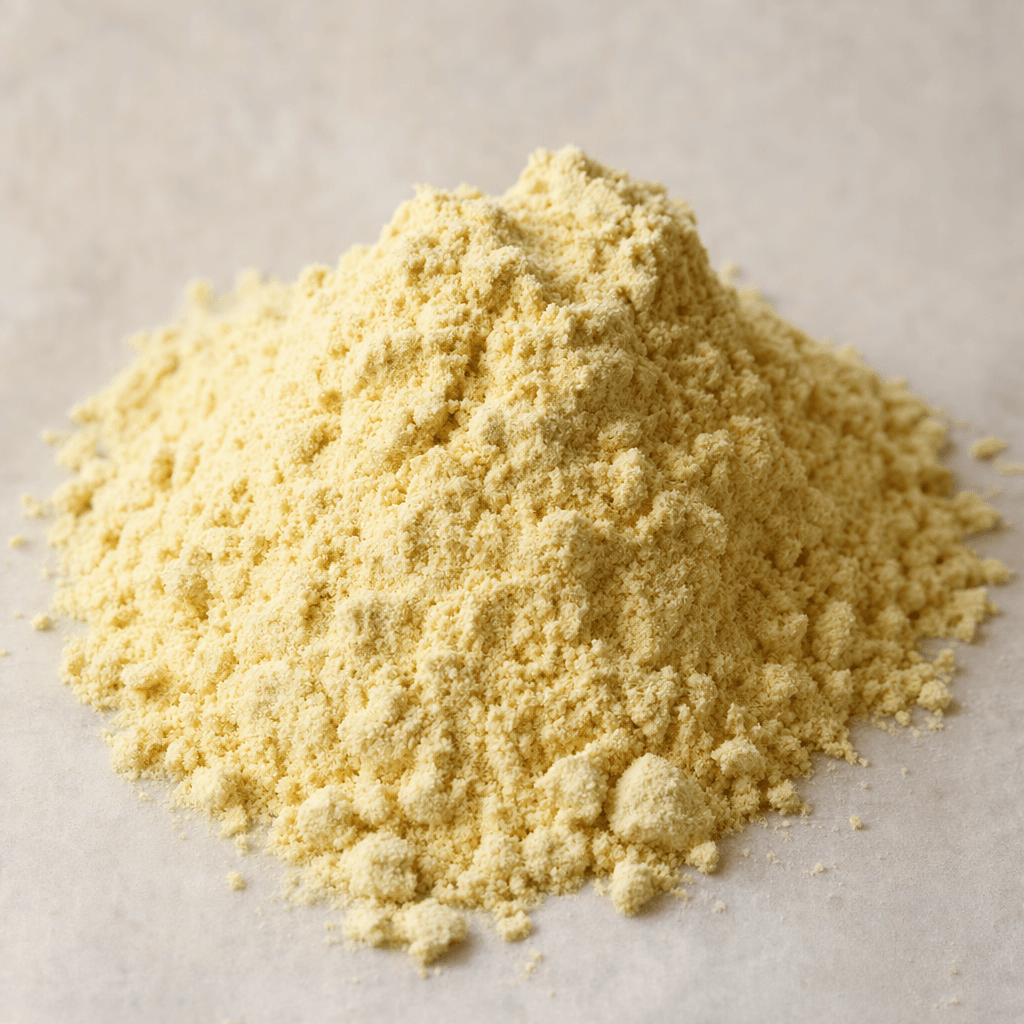
Pea protein is a plant-based powder made by separating protein from peas—usually yellow peas—and drying it into a fine ingredient. It is commonly stirred into drinks or added to foods rather than eaten on its own.
Its flavour is mild but distinctly earthy and pea-like, while the texture can turn slightly gritty if it is not blended well. Around the world, people mix pea protein into smoothies, porridge, soups and baking; it also works in a shake after exercise or as a boost to a quick breakfast. It is protein-dense, with 80 g of protein per 100 g. Pair it with fruit, cocoa or spices to soften the flavour, and use water or an unsweetened drink for a lighter shake.
Pea Protein Nutrition Facts
Selected: 100 g
370
KCAL / 100G
Carbs
7g
· 3% DV
Protein
80g
· 160% DV
Fat
6g
· 8% DV
Fiber
3g
· 11% DV
DV is the share of the daily value covered, on a 2,000 kcal reference diet.
Calories come from: Carbs 7% · Protein 80% · Fat 13%
Pea Protein Vitamins & Minerals
Vitamins
B1
0.8mg · 67% DV
Folate
80µg · 20% DV
B3
2.5mg · 16% DV
B2
0.2mg · 15% DV
Minerals
Phosphorus
900mg · 129% DV
Copper
1mg · 111% DV
Sodium
1000mg · 43% DV
Manganese
1mg · 43% DV
How Nutritious Is Pea Protein?
Nutrient density
High
How many vitamins, minerals and how much fiber this food carries per calorie. A high score means a lot of nutrition for few calories.
Satiety score
Medium
An EatBetter score computed from fiber, protein and calorie density. A high score means staying full longer on the same calories.
Both scores are calculated per 100 g and do not change with the selected portion. The satiety score is EatBetter's own calculation, not a clinical measure.
Pea Protein Glycemic Index
GLYCEMIC INDEX
GLYCEMIC LOAD
Accounts for portion size — a more realistic measure than GI alone.
How to Burn Off Pea Protein
To burn the 370 calories in 100 g:
🚶
Walking (5 km/h)
🏃
Running (8 km/h)
🚴
Cycling
🏊
Swimming
Times are calculated with the MET equation for a 70 kg adult. Actual burn varies with your weight, age and pace.
Is Pea Protein Processed?
NOVA 3
Processed
1. Unprocessed
2. Minimally Processed
3. Processed
4. Ultra-Processed
NOVA classifies foods into 4 groups by industrial processing. NOVA 1 (unprocessed) is the healthiest.
Does Pea Protein Contain Allergens?
No known major allergens
Which Diets Is Pea Protein Good For?
Vegan
✓ Suitable
Vegetarian
✓ Suitable
Gluten-Free
✓ Suitable
Dairy-Free
— Not suitable
Mediterranean
✓ Suitable
Paleo
✓ Suitable
Whole30
— Not suitable
DASH
— Not suitable
Keto
✓ Suitable
Low FODMAP
— Not suitable
Pea Protein Fat Profile
SATURATED
1.2g
MONOUNSATURATED
1.5g
POLYUNSATURATED
3.2g
Omega 6:3 ratio 12.5:1
Above the ideal 4:1 (12.5:1).
Compare Pea Protein
Foods Similar to Pea Protein
Frequently Asked Questions About Pea Protein
What is Pea Protein made from?
Pea Protein is made from yellow peas, which are milled and processed to separate and dry their protein-rich portion. It is sold as a powder and may have a mildly earthy, pea-like flavor.
How do you mix Pea Protein without lumps?
Pea Protein mixes more smoothly when you first stir it into a small amount of liquid to make a paste, then add the rest. A shaker bottle or blender also helps, especially with cold drinks.
Is Pea Protein as good as whey for building muscle?
Pea Protein can support muscle growth when paired with resistance training and enough total protein. Whey is also effective, but Pea Protein provides a dairy-free option with a different amino acid profile.
Does Pea Protein contain all essential amino acids?
Yes, Pea Protein contains all nine essential amino acids, though it is relatively low in methionine compared with some other protein sources. Eating varied foods, including grains or nuts, helps provide a broader amino acid mix.
Can you bake with Pea Protein powder?
Yes, Pea Protein can be added to baked goods such as muffins and pancakes. Replace only part of the flour, since using too much can make the result dry, dense, or crumbly.
Why does Pea Protein taste earthy?
Pea Protein can taste earthy or slightly grassy because it is made from peas and is often sold with little flavoring. Blending it with cocoa, fruit, or vanilla can make the flavor less noticeable.
Does Pea Protein cause bloating or gas?
It can cause bloating or gas in some people, particularly if they are sensitive to peas or certain carbohydrates left in the powder. Starting with a smaller amount may help you see how your digestion responds.
Can Pea Protein replace meat in a meal?
Pea Protein can add protein to a meat-free meal, but it does not replace everything meat provides, such as iron and vitamin B12. Pair it with vegetables, grains, or other foods to make the meal more varied.
Is Pea Protein safe for people with a peanut allergy?
Usually, a peanut allergy does not automatically mean an allergy to peas, since they are different legumes. However, people with known legume allergies can react to more than one type, so follow your clinician’s advice.
Can you put Pea Protein in coffee?
Yes, you can add Pea Protein to coffee, but it may clump or turn grainy in very hot liquid. Mix it first with a little cool milk or water, then stir that mixture into the coffee.
Have another question about Pea Protein?
Ask the AI nutrition coach — calories, portions, alternatives and more, answered in seconds in the app.

Scan calories with your camera
Instant AI nutrition analysis

Nutrition data compiled from USDA FoodData Central and scientific sources.