

Ready & Packaged Foods
All →Vegetables & Legumes
All →Desserts & Confectionery
All →Meat & Protein
All →Grains & Bakery
All →Beverages
All →Milk & Dairy
All →

Bar Calories
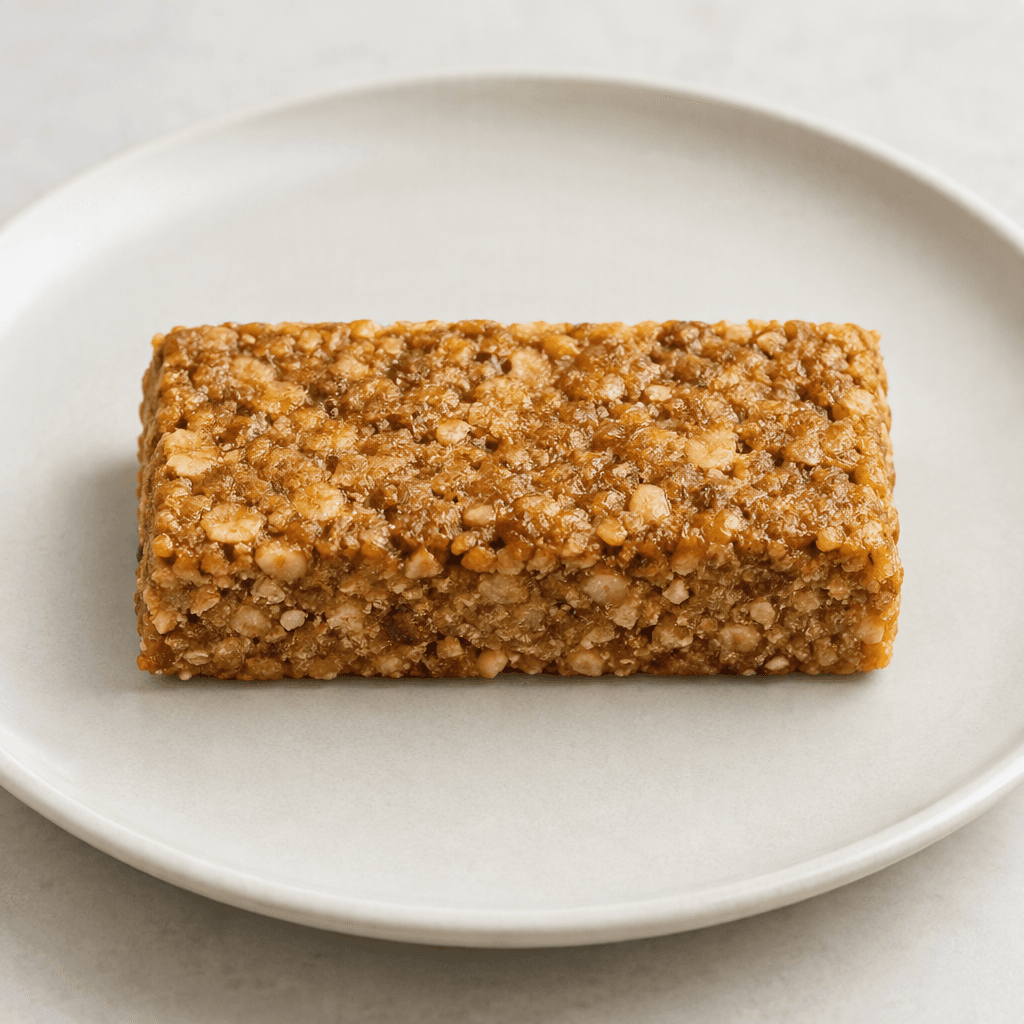
Snack bar, typically cereal, chocolate, or energy bar
CALORIES
GI
POTASSIUM
FIBER
Quick answer
1 piece (medium) of Bar (40 g) has 160 calories. That works out to 400 calories per 100 g. It contains 24 g of carbs, 2.8 g of protein, 6 g of fat and 1.6 g of fiber. Its 0.2 mg of B2 covers 12% of the Daily Value. Its glycemic index is 65 (high), so it raises blood sugar quickly.
What is Bar?
A bar is a compact, ready-to-eat snack that may be made with cereal, chocolate or ingredients marketed for energy. Recipes vary widely: some centre on oats or other grains, while others are chocolate-coated or include dried fruit and nuts. It is usually sold as an individual portion, so it is easy to carry and eat without preparation.
The flavour and texture depend on the type, ranging from chewy and grainy to soft, sweet and chocolatey. People commonly have one between meals, pack it for a commute or hike, or keep it on hand for a quick snack. It is relatively carbohydrate-rich, with more modest protein, though the balance varies by recipe. Pairing a smaller bar with fresh fruit can make for a lighter snack.
Bar Nutrition Facts
Selected: 100 g
400
KCAL / 100G
Carbs
60g
· 22% DV
Protein
7g
· 14% DV
Fat
15g
· 19% DV
Fiber
4g
· 14% DV
DV is the share of the daily value covered, on a 2,000 kcal reference diet.
Calories come from: Carbs 60% · Protein 7% · Fat 33%
Bar Vitamins & Minerals
Vitamins
B2
0.4mg · 31% DV
B1
0.3mg · 25% DV
B3
3mg · 19% DV
B6
0.3mg · 18% DV
Minerals
Phosphorus
120mg · 17% DV
Iron
2mg · 11% DV
Magnesium
40mg · 10% DV
Zinc
1mg · 9% DV
How Nutritious Is Bar?
Nutrient density
Low
How many vitamins, minerals and how much fiber this food carries per calorie. A high score means a lot of nutrition for few calories.
Satiety score
Low
An EatBetter score computed from fiber, protein and calorie density. A high score means staying full longer on the same calories.
Both scores are calculated per 100 g and do not change with the selected portion. The satiety score is EatBetter's own calculation, not a clinical measure.
Bar Glycemic Index
GLYCEMIC INDEX
GLYCEMIC LOAD
Accounts for portion size — a more realistic measure than GI alone.
How to Burn Off Bar
To burn the 400 calories in 100 g:
🚶
Walking (5 km/h)
🏃
Running (8 km/h)
🚴
Cycling
🏊
Swimming
Times are calculated with the MET equation for a 70 kg adult. Actual burn varies with your weight, age and pace.
Is Bar Processed?
NOVA 4
Ultra-Processed
1. Unprocessed
2. Minimally Processed
3. Processed
4. Ultra-Processed
NOVA classifies foods into 4 groups by industrial processing. NOVA 1 (unprocessed) is the healthiest.
Does Bar Contain Allergens?
Contains these allergens:
Which Diets Is Bar Good For?
Vegan
— Not suitable
Vegetarian
— Not suitable
Gluten-Free
— Not suitable
Dairy-Free
— Not suitable
Mediterranean
— Not suitable
Paleo
— Not suitable
Whole30
— Not suitable
DASH
— Not suitable
Keto
— Not suitable
Low FODMAP
— Not suitable
Bar Fat Profile
SATURATED
6g
MONOUNSATURATED
5g
POLYUNSATURATED
3g
Omega 6:3 ratio 50:1
Above the ideal 4:1 (50:1).
Compare Bar
Foods Similar to Bar
Frequently Asked Questions About Bar
Are snack bars healthy?
Some snack bars can be a convenient snack, but cereal, chocolate, and energy bars vary widely in ingredients and purpose. For a more filling snack, pair a bar with something like fruit or yogurt rather than assuming every bar is a balanced choice.
Can an energy bar replace a meal?
An energy bar can be useful when you need portable food, but most bars alone do not provide the variety of a full meal. Pair one with fruit, yogurt, or another substantial food if you need it to keep you going longer.
What is the difference between a cereal bar and an energy bar?
A cereal bar is generally made with grains such as oats, while an energy bar is marketed for convenient fuel around exercise or other activity. The names are not strict standards, so bars within either category can differ substantially.
Should you eat a snack bar before or after a workout?
You can eat a snack bar before or after a workout. Before exercise, a portable bar can be a convenient source of food; afterward, pairing it with a protein-rich food can make for a more substantial recovery snack.
Can a snack bar help with weight loss?
A snack bar does not cause weight loss on its own. It may be convenient as a planned snack, but its portion and how it fits into your eating habits matter; labels such as “energy” or “cereal” do not make a bar a weight-loss food.
Can you eat a snack bar for breakfast?
Yes, you can eat a snack bar for breakfast when you need something portable, but a bar alone may not keep you satisfied for long. Add yogurt, milk, or fruit to make breakfast more substantial and varied.
Are protein bars and energy bars the same thing?
No, protein bars and energy bars are not necessarily the same. Protein bars are marketed around their protein content, while energy bars are intended as convenient fuel; either type may serve different purposes depending on its ingredients.
How do you make snack bars at home?
You can make snack bars by combining oats with mashed dried fruit, nut butter, or seeds, pressing the mixture firmly into a pan, and chilling it until set. Cut it into bars; baking the mixture instead can give it a crunchier texture.
How should you store snack bars after opening?
Wrap an opened snack bar tightly and keep it in a cool, dry place to limit drying out or moisture exposure. Keep chocolate-coated bars away from heat, since they can melt and become messy.
Are snack bars safe for children?
Snack bars can be offered to children, but hard, sticky, or chunky bars may pose a choking risk for young children. Choose a texture suitable for the child’s age and supervise them while they eat.
Have another question about Bar?
Ask the AI nutrition coach — calories, portions, alternatives and more, answered in seconds in the app.

Scan calories with your camera
Instant AI nutrition analysis

Nutrition data compiled from USDA FoodData Central and scientific sources.