

Ready & Packaged Foods
All →Vegetables & Legumes
All →Desserts & Confectionery
All →Meat & Protein
All →Grains & Bakery
All →Beverages
All →Milk & Dairy
All →

Balsamic Vinegar Calories
Rich flavor, low calorie, used in salads and dressings
In season: Spring · Summer · Autumn · Winter
CALORIES
GI
POTASSIUM
FIBER
Quick answer
1 tablespoon (medium) of Balsamic Vinegar (15 g) has 13 calories. That works out to 88 calories per 100 g. It contains 2.6 g of carbs, 0.1 g of protein, 0 g of fat and 0 g of fiber. Its glycemic index is 5 (low), so it raises blood sugar slowly.
What is Balsamic Vinegar?
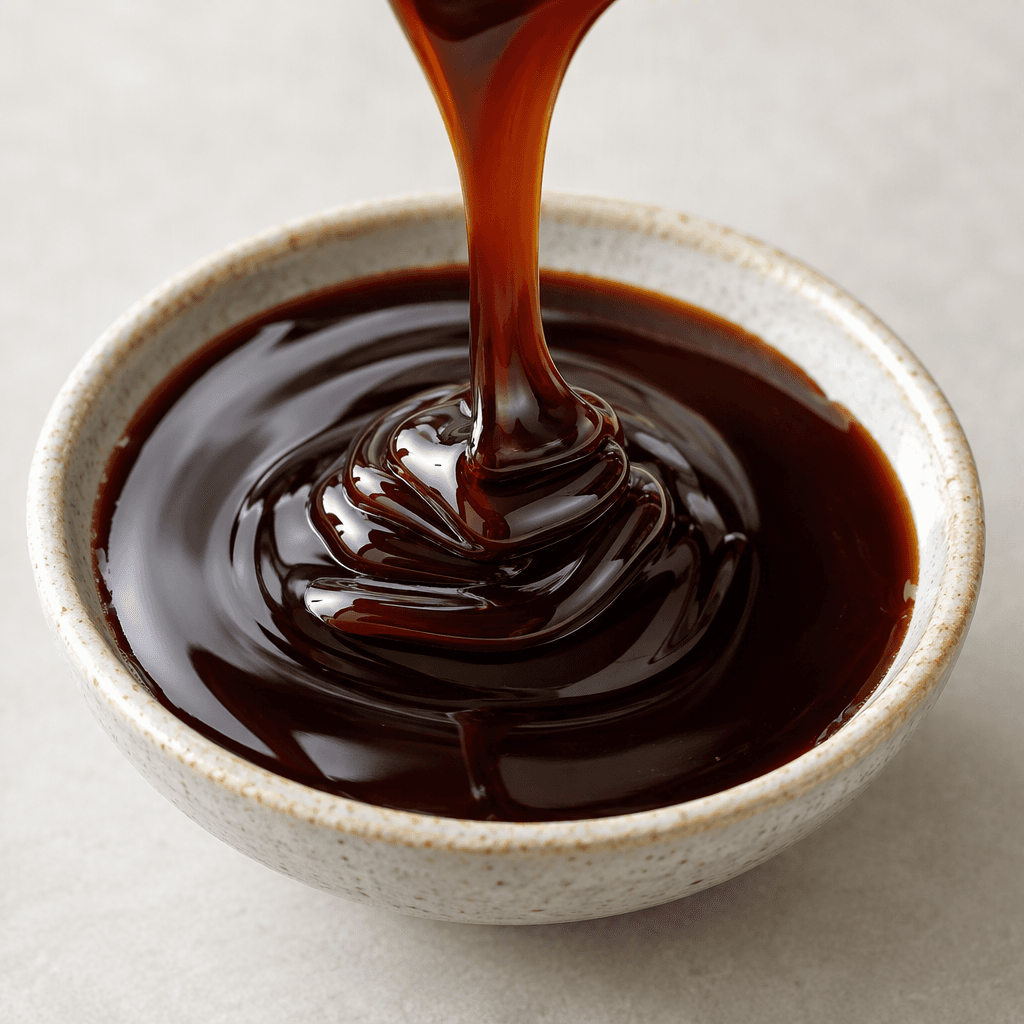
Balsamic Vinegar is a dark, aromatic vinegar from Italy, traditionally made by slowly concentrating and ageing grape must. Many everyday versions also contain wine vinegar, so their sweetness, acidity and thickness can vary.
Its mellow sweet-tart flavour works especially well in salad dressings, marinades and drizzles over roasted vegetables, grilled meat or cheese. In Italian cooking, it is often paired with olive oil; elsewhere, a little can lift a simple salad or a plate of tomatoes and mozzarella. It brings plenty of flavour for a modest amount, though it is not calorie-free. For a lighter dressing, mix it with lemon juice and use olive oil sparingly.
Balsamic Vinegar Nutrition Facts
Selected: 100 g
88
KCAL / 100G
Carbs
17g
· 6% DV
Protein
0.5g
· 1% DV
Fat
0g
· 0% DV
Fiber
0g
· 0% DV
DV is the share of the daily value covered, on a 2,000 kcal reference diet.
Calories come from: Carbs 97% · Protein 3% · Fat 0%
Balsamic Vinegar Vitamins & Minerals
Vitamins
B1
0.01mg · 1% DV
B2
0.01mg · 1% DV
B6
0.01mg · 1% DV
Folate
2µg · 1% DV
Minerals
Calcium
27mg · 3% DV
Magnesium
12mg · 3% DV
Phosphorus
19mg · 3% DV
Potassium ⭐
90mg · 3% DV
How Nutritious Is Balsamic Vinegar?
Nutrient density
Low
How many vitamins, minerals and how much fiber this food carries per calorie. A high score means a lot of nutrition for few calories.
Satiety score
Low
An EatBetter score computed from fiber, protein and calorie density. A high score means staying full longer on the same calories.
Both scores are calculated per 100 g and do not change with the selected portion. The satiety score is EatBetter's own calculation, not a clinical measure.
Balsamic Vinegar Glycemic Index
GLYCEMIC INDEX
GLYCEMIC LOAD
Accounts for portion size — a more realistic measure than GI alone.
How to Burn Off Balsamic Vinegar
To burn the 88 calories in 100 g:
🚶
Walking (5 km/h)
🏃
Running (8 km/h)
🚴
Cycling
🏊
Swimming
Times are calculated with the MET equation for a 70 kg adult. Actual burn varies with your weight, age and pace.
Is Balsamic Vinegar Processed?
NOVA 3
Processed
1. Unprocessed
2. Minimally Processed
3. Processed
4. Ultra-Processed
NOVA classifies foods into 4 groups by industrial processing. NOVA 1 (unprocessed) is the healthiest.
Does Balsamic Vinegar Contain Allergens?
No known major allergens
Which Diets Is Balsamic Vinegar Good For?
Vegan
✓ Suitable
Vegetarian
✓ Suitable
Gluten-Free
✓ Suitable
Dairy-Free
— Not suitable
Mediterranean
✓ Suitable
Paleo
— Not suitable
Whole30
— Not suitable
DASH
— Not suitable
Keto
✓ Suitable
Low FODMAP
— Not suitable
Balsamic Vinegar Fat Profile
SATURATED
0g
MONOUNSATURATED
0g
POLYUNSATURATED
0g
Compare Balsamic Vinegar
Foods Similar to Balsamic Vinegar
Frequently Asked Questions About Balsamic Vinegar
What is balsamic vinegar made from?
Balsamic vinegar is made from grape must, the juice and pulp of crushed grapes. It is fermented and aged, giving it a darker color and a sweeter, more concentrated flavor than many everyday vinegars.
How is traditional balsamic vinegar made?
Traditional balsamic vinegar is made by slowly cooking grape must, fermenting it, and aging it in a succession of wooden barrels. The long aging process concentrates its flavor; many commercial balsamic vinegars are made more quickly and use different methods.
What is the difference between balsamic vinegar and red wine vinegar?
Balsamic vinegar is typically darker, sweeter, and more syrupy, while red wine vinegar is sharper and lighter-bodied. Balsamic is made from grape must; red wine vinegar is made by fermenting red wine.
How do you use balsamic vinegar in a salad?
Drizzle a little balsamic vinegar over the salad or whisk it with olive oil for a dressing. It pairs especially well with tomatoes, leafy greens, and cheese; its concentrated flavor can overpower delicate ingredients if you use too much.
Can you substitute balsamic vinegar for red wine vinegar?
Yes, but use balsamic vinegar sparingly because it is sweeter and more intensely flavored. It works best in dressings and marinades where a sweet note fits; red wine vinegar is a closer match when you want a sharper, less sweet result.
Should balsamic vinegar be refrigerated after opening?
No, balsamic vinegar does not need refrigeration after opening. Keep the bottle tightly closed in a cool, dark cupboard, away from heat and sunlight, to preserve its flavor.
Does balsamic vinegar go bad?
Balsamic vinegar keeps well for a long time because of its acidity, though its flavor may gradually fade. Discard it if you see mold or notice an unusual, unpleasant odor, and keep the cap clean and tightly closed.
What is the difference between balsamic vinegar and balsamic glaze?
Balsamic glaze is a thicker, usually sweeter reduction of balsamic vinegar, and some versions contain added sugar or thickeners. Use vinegar for dressings and cooking; glaze is commonly drizzled over finished dishes.
Can balsamic vinegar be used as a marinade?
Yes, balsamic vinegar works in marinades for chicken, beef, and vegetables. Its acidity and sweetness add flavor, but the sugars can darken or burn over high heat, so wipe off excess marinade before grilling.
Can you cook with balsamic vinegar?
Yes, balsamic vinegar can be cooked into sauces, roasted vegetables, and pan dishes. Heating concentrates its flavor and thickens it, so add it near the end of cooking when you want to preserve its tangy sweetness.
Have another question about Balsamic Vinegar?
Ask the AI nutrition coach — calories, portions, alternatives and more, answered in seconds in the app.

Scan calories with your camera
Instant AI nutrition analysis

Nutrition data compiled from USDA FoodData Central and scientific sources.