

Ready & Packaged Foods
All →Vegetables & Legumes
All →Desserts & Confectionery
All →Meat & Protein
All →Grains & Bakery
All →Beverages
All →Milk & Dairy
All →

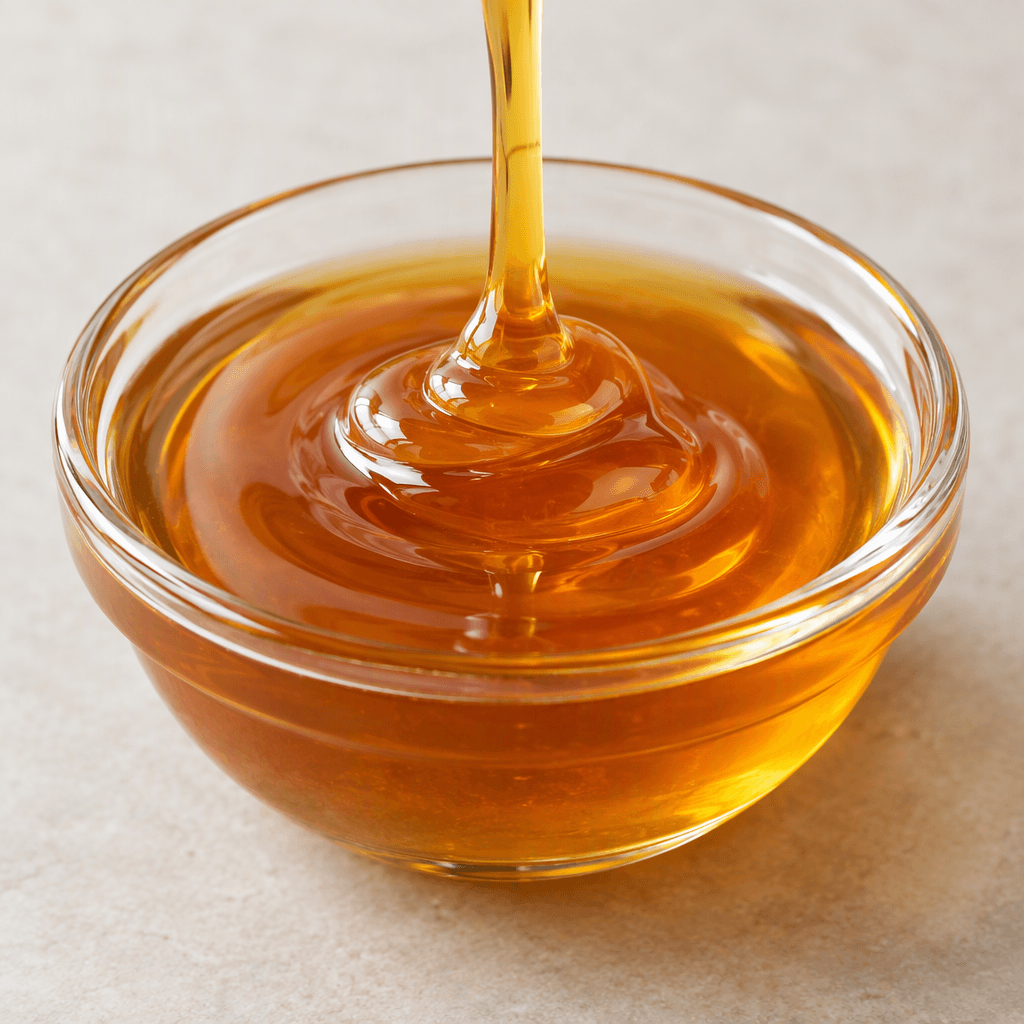
Apple Concentrate Calories
High natural sugar, source of vitamin C, fruit flavor
In season: Autumn
CALORIES
GI
POTASSIUM
FIBER
Quick answer
2 tablespoon (medium) of Apple Concentrate (40 g) has 92 calories. That works out to 230 calories per 100 g. It contains 23.2 g of carbs, 0.1 g of protein, 0 g of fat and 0.5 g of fiber. Its glycemic index is 65 (high), so it raises blood sugar quickly.
What is Apple Concentrate?
Apple concentrate is made by removing much of the water from apple juice, leaving a thick, pourable syrup with a strong, sweet-tart apple flavour. It can be stirred into drinks, yoghurt or porridge, and is often used to sweeten baking, sauces and smoothies. In many kitchens, it is a handy way to add fruit flavour without adding pieces of fresh apple.
Its nutritional profile is mainly carbohydrate, with very little protein or fat; 100 g provides 58 g of carbohydrate. The flavour is concentrated, so start with a small amount and adjust to taste. You can loosen it with water for a drink or use it in place of some of the sugar in a recipe.
Apple Concentrate Nutrition Facts
Selected: 100 g
230
KCAL / 100G
Carbs
58g
· 21% DV
Protein
0.2g
· 0% DV
Fat
0.1g
· 0% DV
Fiber
1.2g
· 4% DV
DV is the share of the daily value covered, on a 2,000 kcal reference diet.
Calories come from: Carbs 99% · Protein 0% · Fat 1%
Apple Concentrate Vitamins & Minerals
Vitamins
Vitamin C
8mg · 9% DV
B2
0.02mg · 2% DV
B6
0.03mg · 2% DV
Vitamin K
2µg · 2% DV
Minerals
Potassium ⭐
120mg · 4% DV
Phosphorus
12mg · 2% DV
Calcium
10mg · 1% DV
Magnesium
5mg · 1% DV
How Nutritious Is Apple Concentrate?
Nutrient density
Medium
How many vitamins, minerals and how much fiber this food carries per calorie. A high score means a lot of nutrition for few calories.
Satiety score
Low
An EatBetter score computed from fiber, protein and calorie density. A high score means staying full longer on the same calories.
Both scores are calculated per 100 g and do not change with the selected portion. The satiety score is EatBetter's own calculation, not a clinical measure.
Apple Concentrate Glycemic Index
GLYCEMIC INDEX
GLYCEMIC LOAD
Accounts for portion size — a more realistic measure than GI alone.
How to Burn Off Apple Concentrate
To burn the 230 calories in 100 g:
🚶
Walking (5 km/h)
🏃
Running (8 km/h)
🚴
Cycling
🏊
Swimming
Times are calculated with the MET equation for a 70 kg adult. Actual burn varies with your weight, age and pace.
Is Apple Concentrate Processed?
NOVA 3
Processed
1. Unprocessed
2. Minimally Processed
3. Processed
4. Ultra-Processed
NOVA classifies foods into 4 groups by industrial processing. NOVA 1 (unprocessed) is the healthiest.
Does Apple Concentrate Contain Allergens?
No known major allergens
Which Diets Is Apple Concentrate Good For?
Vegan
✓ Suitable
Vegetarian
✓ Suitable
Gluten-Free
✓ Suitable
Dairy-Free
— Not suitable
Mediterranean
✓ Suitable
Paleo
✓ Suitable
Whole30
— Not suitable
DASH
— Not suitable
Keto
— Not suitable
Low FODMAP
— Not suitable
Apple Concentrate Fat Profile
SATURATED
0.01g
MONOUNSATURATED
0.01g
POLYUNSATURATED
0.01g
Compare Apple Concentrate
Foods Similar to Apple Concentrate
Frequently Asked Questions About Apple Concentrate
What is apple concentrate?
Apple concentrate is a dense apple product made by removing much of the water from apple juice. Its concentrated sweetness and flavor make it useful in drinks, sauces, and recipes, but it is not the same as eating a whole apple.
How is apple concentrate made?
Apple concentrate is made by pressing apples for juice and then removing some of the water, commonly through evaporation. This processing creates a thicker, more concentrated product than ordinary apple juice.
Is apple concentrate the same as apple juice?
No. Apple concentrate has had much of its water removed, while ready-to-drink apple juice is more diluted. Concentrate can be used in recipes as-is or mixed with water to make a drink.
How do you use apple concentrate?
Use apple concentrate to add apple flavor and sweetness to drinks, sauces, marinades, or baked goods. Start with a small amount because its flavor is strong, and account for the extra liquid when adding it to a recipe.
Can you dilute apple concentrate to make apple juice?
Yes, you can mix apple concentrate with water to make an apple drink. The right amount of water varies by product and taste, so follow the package directions if available and adjust gradually.
Can apple concentrate replace sugar in baking?
Apple concentrate can replace some of the sugar in certain baking recipes, but it also adds liquid and apple flavor. Reduce other liquids as needed, and expect the result to be less neutral in taste than one made with sugar.
Does apple concentrate contain added sugar?
Not necessarily. Apple concentrate is naturally sweet because it is made from apples, but some products may include added sweeteners or other ingredients. Check the ingredient list if you need to know whether a particular product has added sugar.
How should you store apple concentrate after opening?
Keep opened apple concentrate tightly sealed in the refrigerator and use a clean spoon when serving it. Follow the product’s storage directions, and discard it if its smell, appearance, or texture changes noticeably.
Is apple concentrate suitable for people with diabetes?
Apple concentrate is rich in sugars and can raise blood glucose, so portion size and the rest of the meal matter. If you have diabetes, ask your doctor or dietitian how it fits your individual eating plan.
Can babies have apple concentrate?
Apple concentrate is not needed in a baby’s diet and can introduce a very sweet taste. For babies starting solids, offer age-appropriate whole fruit instead; avoid fruit juice for infants under 12 months.
Have another question about Apple Concentrate?
Ask the AI nutrition coach — calories, portions, alternatives and more, answered in seconds in the app.

Scan calories with your camera
Instant AI nutrition analysis

Nutrition data compiled from USDA FoodData Central and scientific sources.