

Ready & Packaged Foods
All →Vegetables & Legumes
All →Desserts & Confectionery
All →Meat & Protein
All →Grains & Bakery
All →Beverages
All →Milk & Dairy
All →

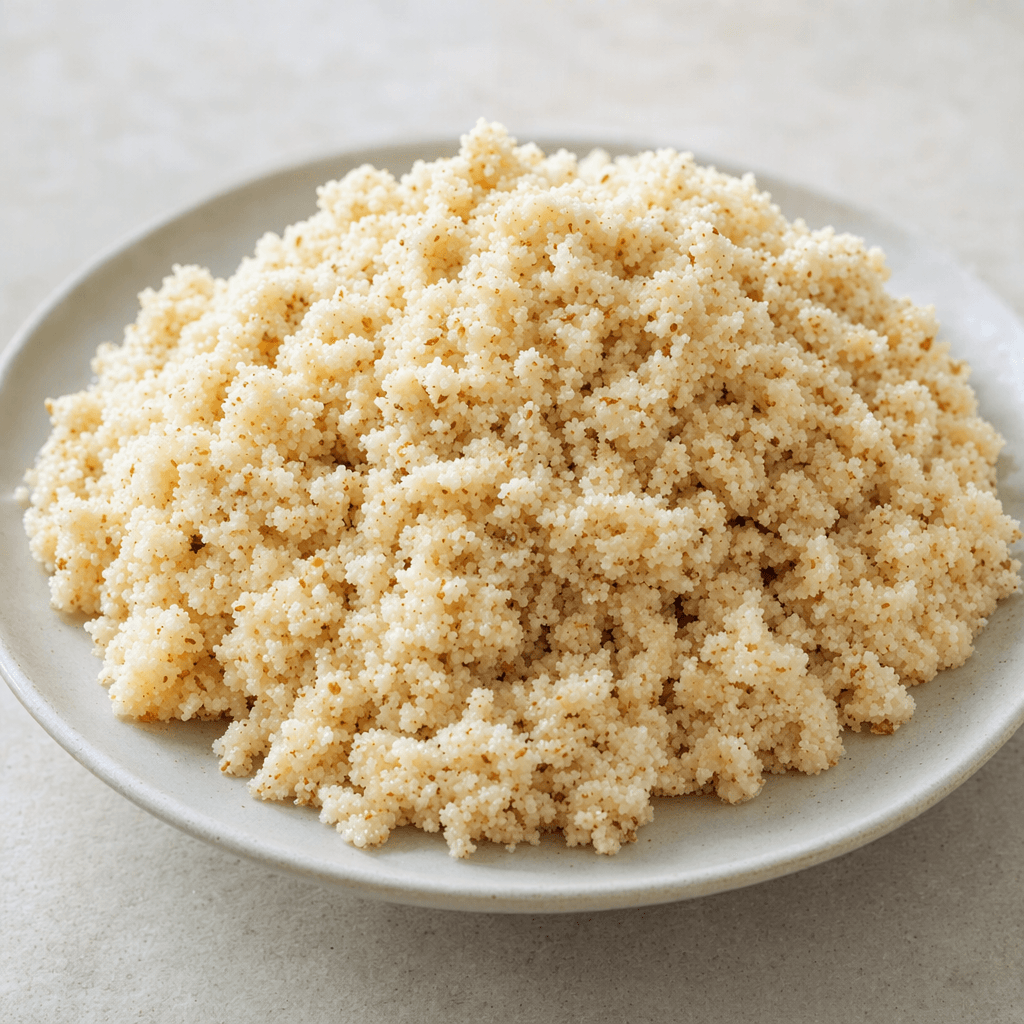
Almond pulp Calories
Byproduct of almond milk making, high in fiber, low in fat and protein
In season: Spring · Summer · Autumn · Winter
CALORIES
GI
POTASSIUM
FIBER
Quick answer
2 tablespoon (medium) of Almond pulp (20 g) has 24 calories. That works out to 120 calories per 100 g. It contains 1.4 g of carbs, 0.9 g of protein, 1.4 g of fat and 1.3 g of fiber. Its 0.1 mg of Manganese covers 5% of the Daily Value. Its glycemic index is 10 (low), so it raises blood sugar slowly.
What is Almond pulp?
Almond pulp is the finely ground, moist material left behind when almonds are blended with water and strained to make almond milk. Its mild, nutty flavour and soft, crumbly texture make it useful well beyond the milk-making process.
It can be stirred into porridge, yoghurt or smoothies, or added to muffins, biscuits and quick breads. In places where homemade nut milk is common, it is a handy way to use the whole almond; elsewhere, it works much like a moist baking ingredient. Almond pulp is notable for its fibre, with 6.5 g per 100 g. If you bake with it, drain or gently squeeze out excess liquid first, and adjust the recipe’s other wet ingredients to suit.
Almond pulp Nutrition Facts
Selected: 100 g
120
KCAL / 100G
Carbs
7g
· 3% DV
Protein
4.5g
· 9% DV
Fat
7g
· 9% DV
Fiber
6.5g
· 23% DV
DV is the share of the daily value covered, on a 2,000 kcal reference diet.
Calories come from: Carbs 26% · Protein 17% · Fat 57%
Almond pulp Vitamins & Minerals
Vitamins
Vitamin E
2.5mg · 17% DV
Biotin
2µg · 7% DV
B2
0.08mg · 6% DV
B1
0.05mg · 4% DV
Minerals
Manganese
1mg · 43% DV
Magnesium
60mg · 14% DV
Phosphorus
95mg · 14% DV
Calcium
90mg · 9% DV
How Nutritious Is Almond pulp?
Nutrient density
Medium
How many vitamins, minerals and how much fiber this food carries per calorie. A high score means a lot of nutrition for few calories.
Satiety score
High
An EatBetter score computed from fiber, protein and calorie density. A high score means staying full longer on the same calories.
Both scores are calculated per 100 g and do not change with the selected portion. The satiety score is EatBetter's own calculation, not a clinical measure.
Almond pulp Glycemic Index
GLYCEMIC INDEX
GLYCEMIC LOAD
Accounts for portion size — a more realistic measure than GI alone.
How to Burn Off Almond pulp
To burn the 120 calories in 100 g:
🚶
Walking (5 km/h)
🏃
Running (8 km/h)
🚴
Cycling
🏊
Swimming
Times are calculated with the MET equation for a 70 kg adult. Actual burn varies with your weight, age and pace.
Is Almond pulp Processed?
NOVA 2
Minimally Processed
1. Unprocessed
2. Minimally Processed
3. Processed
4. Ultra-Processed
NOVA classifies foods into 4 groups by industrial processing. NOVA 1 (unprocessed) is the healthiest.
Does Almond pulp Contain Allergens?
Contains these allergens:
Which Diets Is Almond pulp Good For?
Vegan
✓ Suitable
Vegetarian
✓ Suitable
Gluten-Free
✓ Suitable
Dairy-Free
— Not suitable
Mediterranean
✓ Suitable
Paleo
✓ Suitable
Whole30
— Not suitable
DASH
— Not suitable
Keto
— Not suitable
Low FODMAP
— Not suitable
Almond pulp Fat Profile
SATURATED
0.5g
MONOUNSATURATED
4.2g
POLYUNSATURATED
1.9g
Omega 6:3 ratio 180:1
Above the ideal 4:1 (180:1).
Compare Almond pulp
Foods Similar to Almond pulp
Frequently Asked Questions About Almond pulp
What can you do with almond pulp?
Use almond pulp in cookies, crackers, granola, porridge, or energy bites. It adds moisture as well as texture, so reduce other liquid in a recipe or dry the pulp first when a drier mixture is needed.
Can you eat almond pulp?
Yes, almond pulp is edible; it is the ground almond solids left after straining homemade almond milk. Use fresh pulp in a recipe or store it promptly, since the moisture in freshly made pulp makes it spoil faster than dry almonds.
How do you dry almond pulp?
Spread almond pulp in a thin layer on a baking tray and dry it in a low oven, stirring occasionally, until no longer damp. Let it cool completely before storing it in an airtight container to prevent trapped moisture.
How long does almond pulp last in the fridge?
Fresh almond pulp keeps only briefly in the fridge because it is moist. Put it in a clean, sealed container and use it promptly; discard it if it develops an off smell, visible mold, or an unusual color.
Can you freeze almond pulp?
Yes, almond pulp freezes well. Divide it into recipe-sized portions, seal them in a freezer-safe container or bag, and thaw a portion in the fridge when needed. Avoid refreezing pulp after it has thawed.
Can almond pulp replace almond flour?
Wet almond pulp is not a one-for-one substitute for almond flour because it contains more moisture and less fat. Drying and grinding it makes it more flour-like, but baked goods may still turn out denser or less rich.
How do you make cookies with almond pulp?
Add almond pulp to cookie dough along with your usual ingredients, adjusting the other liquids if the pulp is wet. Mix until the dough holds together, then bake as your recipe directs; dried pulp can make the cookies crumblier.
Why is my almond pulp gritty?
Almond pulp can feel gritty because it contains the fibrous almond solids that remain after straining almond milk. For a finer texture, strain the milk through a finer cloth next time or grind the pulp before adding it to a recipe.
Can you use almond pulp in smoothies?
Yes, almond pulp can go into smoothies. It adds body and a mild almond flavor, and fresh, moist pulp blends more easily than dried pulp. Add a little at a time so the drink does not become too thick.
Can almond pulp be composted?
Yes, almond pulp can be composted. Mix it through other compost materials rather than leaving it in a thick clump, which can restrict airflow. Composting is a useful option when you have more pulp than you can cook with.
Have another question about Almond pulp?
Ask the AI nutrition coach — calories, portions, alternatives and more, answered in seconds in the app.

Scan calories with your camera
Instant AI nutrition analysis

Nutrition data compiled from USDA FoodData Central and scientific sources.