


Low-Calorie Foods That Keep You Full
Discover low-calorie foods that provide volume, fiber or protein, plus practical ways to build more filling meals without relying on tiny portions.
EatBetter · October 1, 2026 · 6 min read
Contents
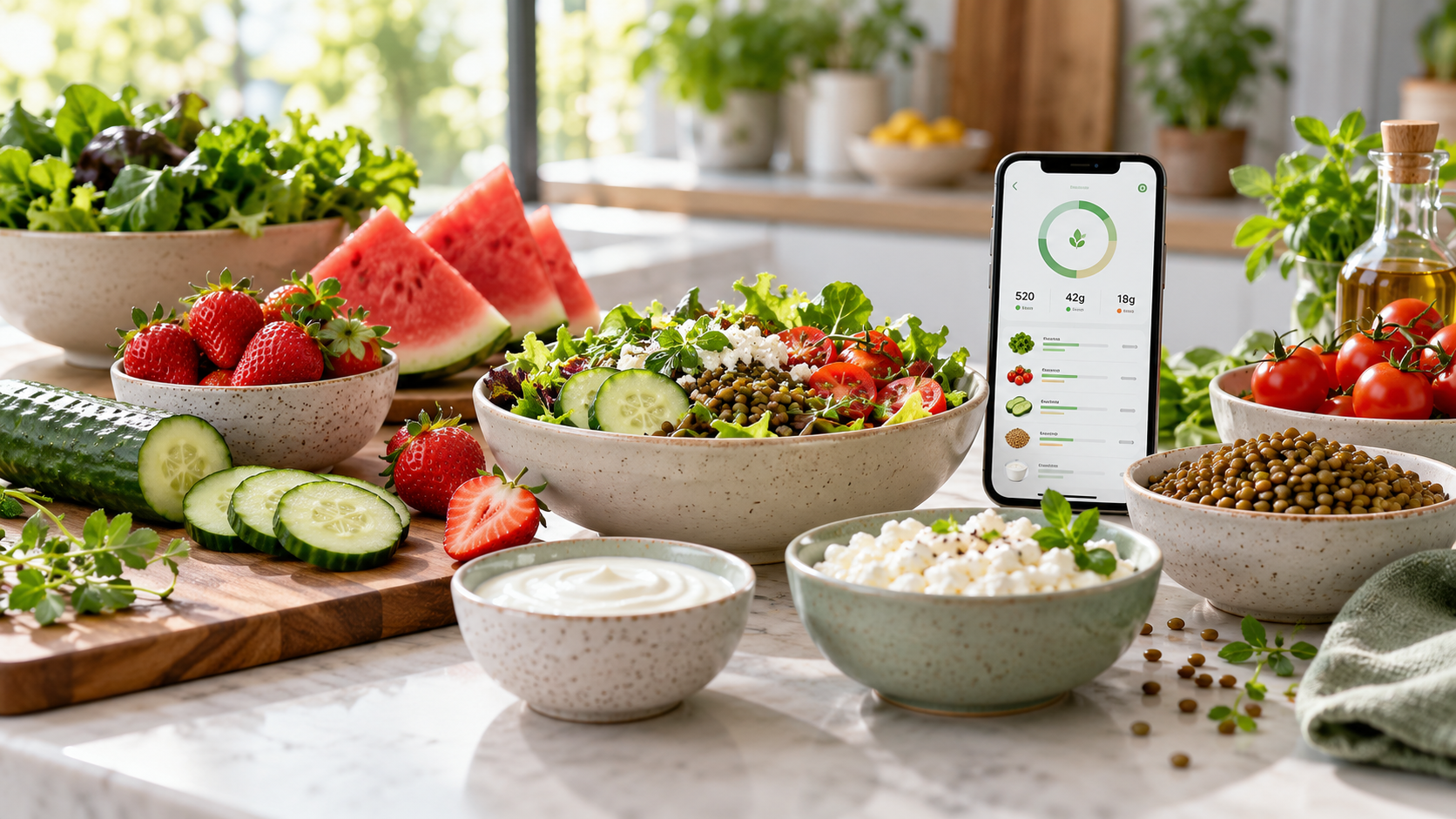
Low-calorie eating does not have to mean eating tiny portions. Foods that contain more water, fiber or protein can help create meals with more volume and nutritional value for fewer calories.
Quick answer: Vegetables, many fruits, low-fat dairy foods, lean proteins and legumes can all fit into a lower-calorie eating pattern. The most useful approach is to compare calories, protein, fiber and portion size together rather than choosing foods only because the calorie number is low.
Calorie Calculator
Work out your daily calorie need in a minute.
Calculate →
What makes a food filling without a lot of calories?
A food can feel more substantial for several reasons.
Water content
Foods such as cucumber, watermelon and strawberries contain a large amount of water. That increases food volume without adding many calories.
Fiber
Fiber adds bulk and can slow digestion. Fruits, vegetables and legumes can help increase fiber intake while also providing vitamins and minerals.
Protein
Protein-rich foods can make a meal more satisfying for some people. Lean protein sources can provide meaningful protein without a large calorie load.
Portion volume
Two foods can have the same number of calories while taking up very different amounts of space on the plate.
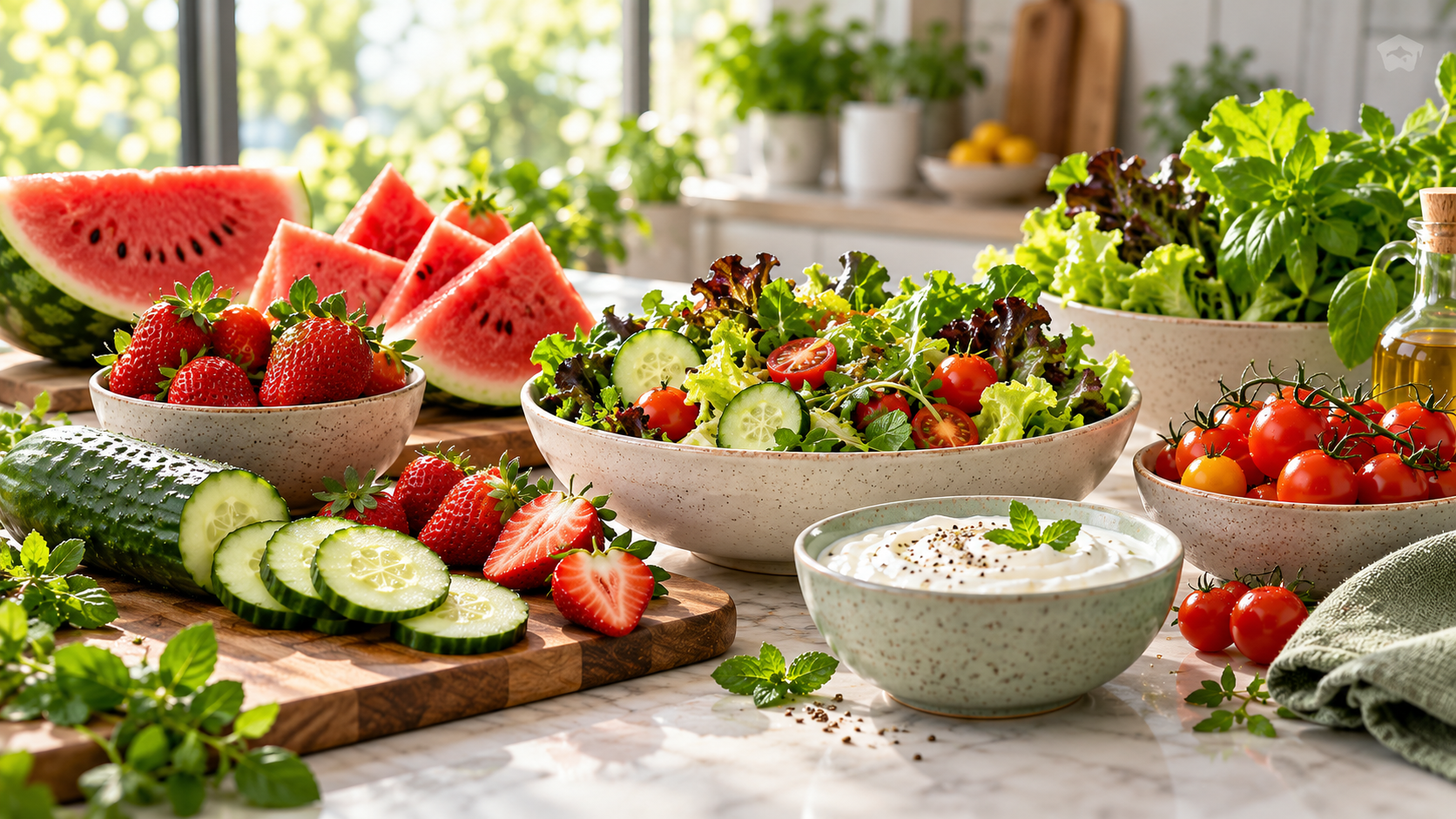
CDC guidance notes that fruits and vegetables can help reduce the calories in a meal without reducing the amount of food you eat because they contain water and fiber.
Low-calorie foods worth comparing
The values below are examples from EatBetter per 100 g. Exact values can differ by variety, preparation and brand.
| Food | Approx. kcal / 100 g | Why it may be useful |
|---|---|---|
| Cucumber | 15 kcal | High water content and large volume |
| Watermelon | 30 kcal | High water content and naturally sweet |
| Strawberries | 32 kcal | Fruit with fiber and high volume |
| Apple | 52 kcal | Portable whole fruit with fiber |
| Plain yogurt | 61 kcal | Adds protein and calcium |
| Low-fat cottage cheese | 80 kcal | More protein per calorie than many cheeses |
| Green lentils, boiled | 116 kcal | Fiber plus plant protein |
| Edamame | 121 kcal | Fiber and plant protein |
Cucumber
Vegetables & Legumes · 15 kcal / 100g
View →
Strawberry
Natural & Other Foods · 32 kcal / 100g
View →
Plain Yogurt
Milk & Dairy · 61 kcal / 100g
View →
1. Cucumber
Cucumber is one of the lowest-calorie foods in the EatBetter database at about 15 kcal per 100 g.
It works well in:
- salads
- yogurt-based bowls
- sandwiches
- snack plates
- cold soups
Cucumber alone is not especially high in protein or fiber, so it is often more filling when paired with something such as yogurt, cottage cheese, eggs or legumes.
2. Strawberries
Strawberries provide about 32 kcal per 100 g on EatBetter and also provide fiber and vitamin C.
They can add volume and sweetness to:
- yogurt bowls
- oatmeal
- cottage cheese
- fruit salads
Strawberry
Natural & Other Foods · 32 kcal / 100g
View →
A larger portion of whole strawberries can provide substantially more volume than a small portion of a calorie-dense dessert, although the foods are not nutritionally interchangeable.
3. Apples
Apples provide about 52 kcal per 100 g and contain fiber.
Apple
Natural & Other Foods · 52 kcal / 100g
View →
Whole fruit is generally more filling than juice because the intact fruit contains fiber and requires more chewing.
Try pairing an apple with a protein-containing food if you want a more substantial snack.
4. Plain yogurt
Plain yogurt provides about 61 kcal per 100 g in the EatBetter database.
Plain Yogurt
Milk & Dairy · 61 kcal / 100g
View →
The exact calorie and protein content varies considerably between:
- non-fat yogurt
- low-fat yogurt
- full-fat yogurt
- Greek-style yogurt
- sweetened yogurt
Always compare the product and portion you actually eat.
5. Low-fat cottage cheese
Low-fat cottage cheese can provide a useful balance of protein and calories.
Cottage Cheese (Low Fat)
Milk & Dairy · 80 kcal / 100g
View →
EatBetter lists approximately 80 kcal and 11 g of protein per 100 g for its low-fat cottage cheese entry.
It can be paired with:
- cucumber and tomatoes
- fruit
- whole-grain crackers
- herbs and pepper
6. Green lentils
Boiled green lentils contain both fiber and plant protein.
Green Lentils (Boiled)
Vegetables & Legumes · 116 kcal / 100g
View →
Per 100 g, EatBetter lists roughly:
- 116 kcal
- 9 g protein
- 7.9 g fiber
That combination makes lentils useful in salads, soups, bowls and vegetable-based meals.
7. Edamame
Edamame provides more calories than watery vegetables, but it also supplies protein and fiber.
Edamame
Vegetables & Legumes · 121 kcal / 100g
View →
That means it can still work well in a filling meal or snack, especially when portion size is considered.
8. Lean protein foods
Foods such as chicken breast, turkey and tuna are not extremely low in calories compared with vegetables, but they provide much more protein.
Chicken Breast
Meat & Protein · 110 kcal / 100g
View →
Tuna
Fish · 132 kcal / 100g
View →
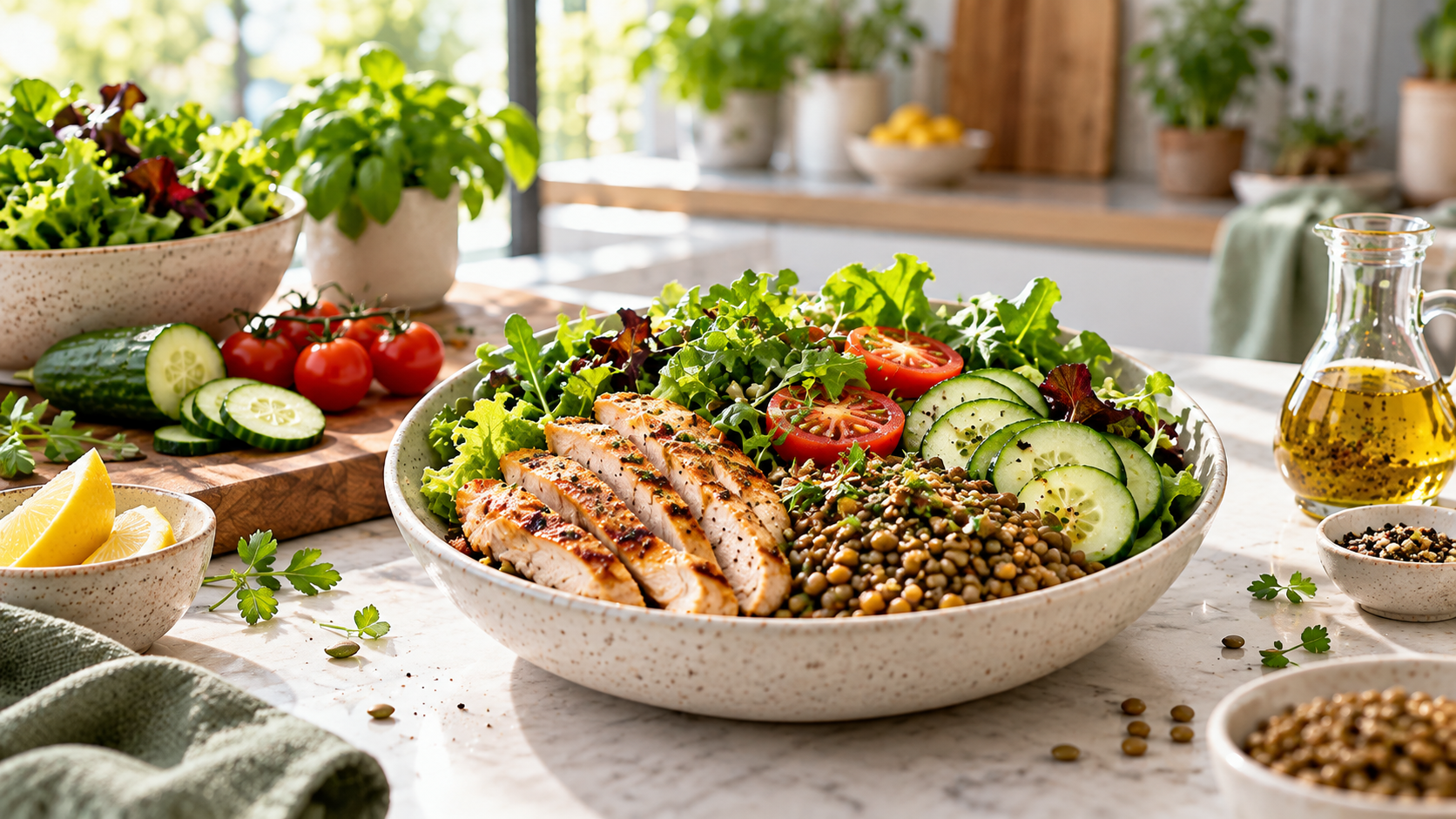
A practical lower-calorie meal often works better when it combines:
lean protein + vegetables + a fiber-containing carbohydrate + a measured fat source
instead of trying to build the entire meal from very low-calorie vegetables.
A simple high-volume meal formula
Try using this structure:
- Start with vegetables. Use greens, cucumber, tomatoes, broccoli or similar foods to create volume.
- Add a protein source. Chicken, tuna, eggs, yogurt, cottage cheese, tofu or lentils can work.
- Add a fiber-containing carbohydrate if needed. Lentils, beans, whole grains, fruit or potatoes can fit.
- Measure energy-dense extras. Oils, nuts, cheese, avocado and sauces can quickly increase the total calories.
EatBetter tip: A food does not have to be extremely low in calories to be useful. A slightly higher-calorie food that provides protein or fiber may make the overall meal easier to sustain.
Stop guessing your portions 📲
Photograph your meal and let EatBetter break down calories and macros in seconds.


Low calorie does not automatically mean healthy
A food can be low in calories while providing little nutritional value.
Likewise, foods such as nuts, seeds, olive oil and avocado are relatively calorie-dense but can still be part of a balanced eating pattern.
Do not judge food quality from calories alone.
EatBetter food pages let you compare:
- calories
- protein
- carbohydrates
- fat
- fiber
- micronutrients
- portion sizes
Explore related EatBetter pages
Sources
- CDC — Tips for Increasing Vegetables and Fruits in Your Diet: https://www.cdc.gov/healthy-weight-growth/healthy-eating/fruits-vegetables.html
- CDC — About Water and Healthier Drinks: https://www.cdc.gov/healthy-weight-growth/water-healthy-drinks/index.html
- EatBetter — Food Guide: https://www.eatbetter.app/en
Frequently asked questions
What foods are very low in calories?
Many non-starchy vegetables and water-rich fruits are low in calories. Cucumber, leafy greens, tomatoes, watermelon and strawberries are common examples.
What low-calorie foods are most filling?
Foods that combine volume with protein or fiber may feel more satisfying. Examples include lentils, low-fat cottage cheese, plain yogurt, vegetables paired with protein and whole fruit.
Can I eat unlimited low-calorie foods?
No food needs to be treated as unlimited. Portion size, digestive tolerance, overall nutrition and your total eating pattern still matter.
Are low-calorie foods necessary for weight loss?
No specific food is required. Weight loss depends on a sustained energy deficit over time, while food selection influences nutrition, hunger and how practical the eating pattern feels.
Are fruits too high in sugar for a low-calorie diet?
Whole fruits can fit into a lower-calorie eating pattern. They provide water, fiber, vitamins and minerals. Portion and overall intake matter more than avoiding fruit because it contains natural sugar.
