


How to Count Calories Without Overcomplicating It
Learn how to count calories accurately without making food tracking complicated, from portions and labels to meals and EatBetter tools.
EatBetter · September 23, 2026 · 6 min read
Contents
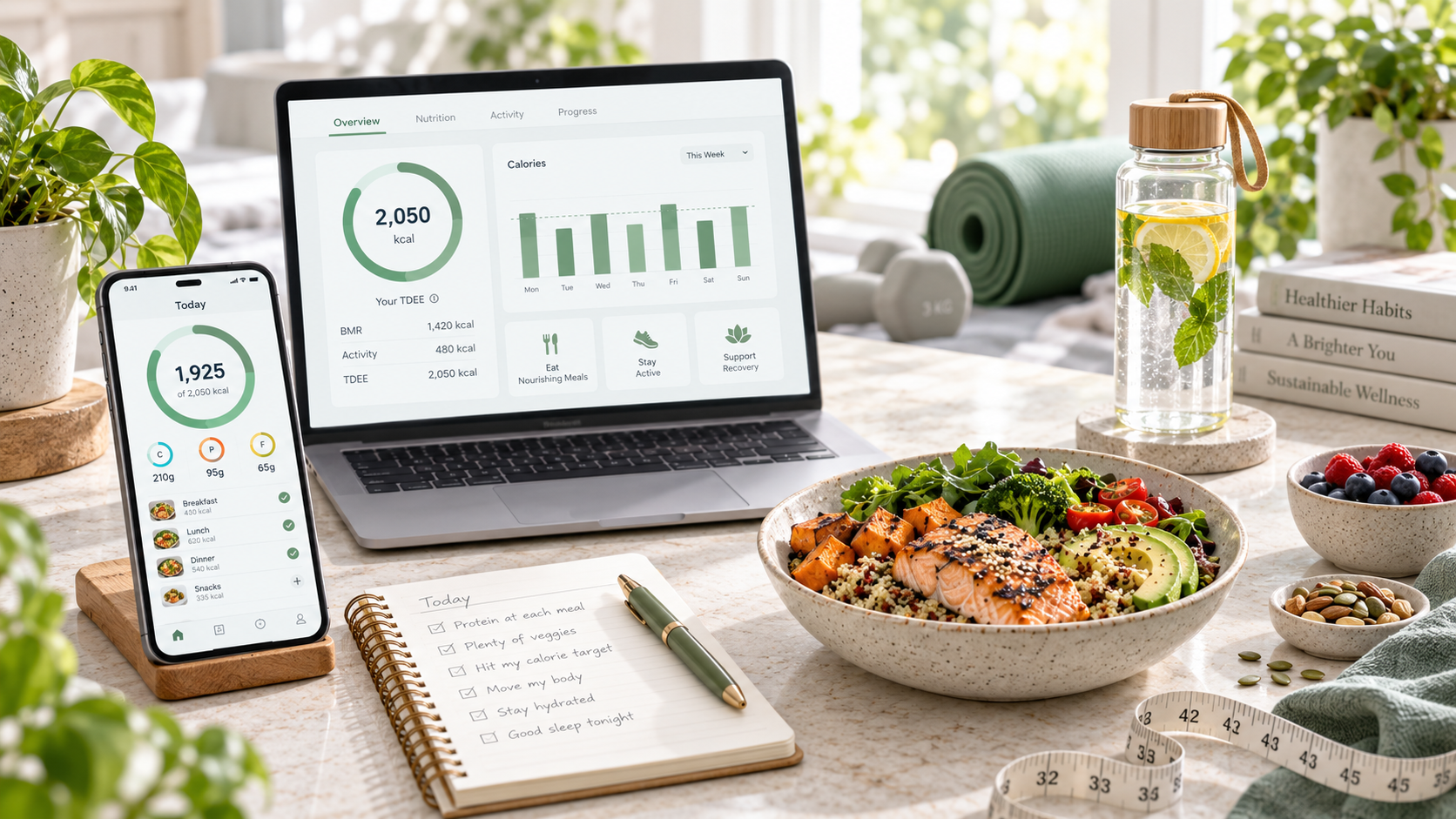
Calorie counting can be useful for understanding portions and eating patterns, but it does not need to mean weighing every ingredient forever.
Quick answer: Start by estimating your daily calorie needs, track the foods and portions you normally eat, pay extra attention to calorie-dense ingredients, and focus on your average pattern rather than trying to make every day perfect.
Calorie Calculator
Work out your daily calorie need in a minute.
Calculate →
Step 1: Know why you are tracking
Before counting anything, decide what you want the information for.
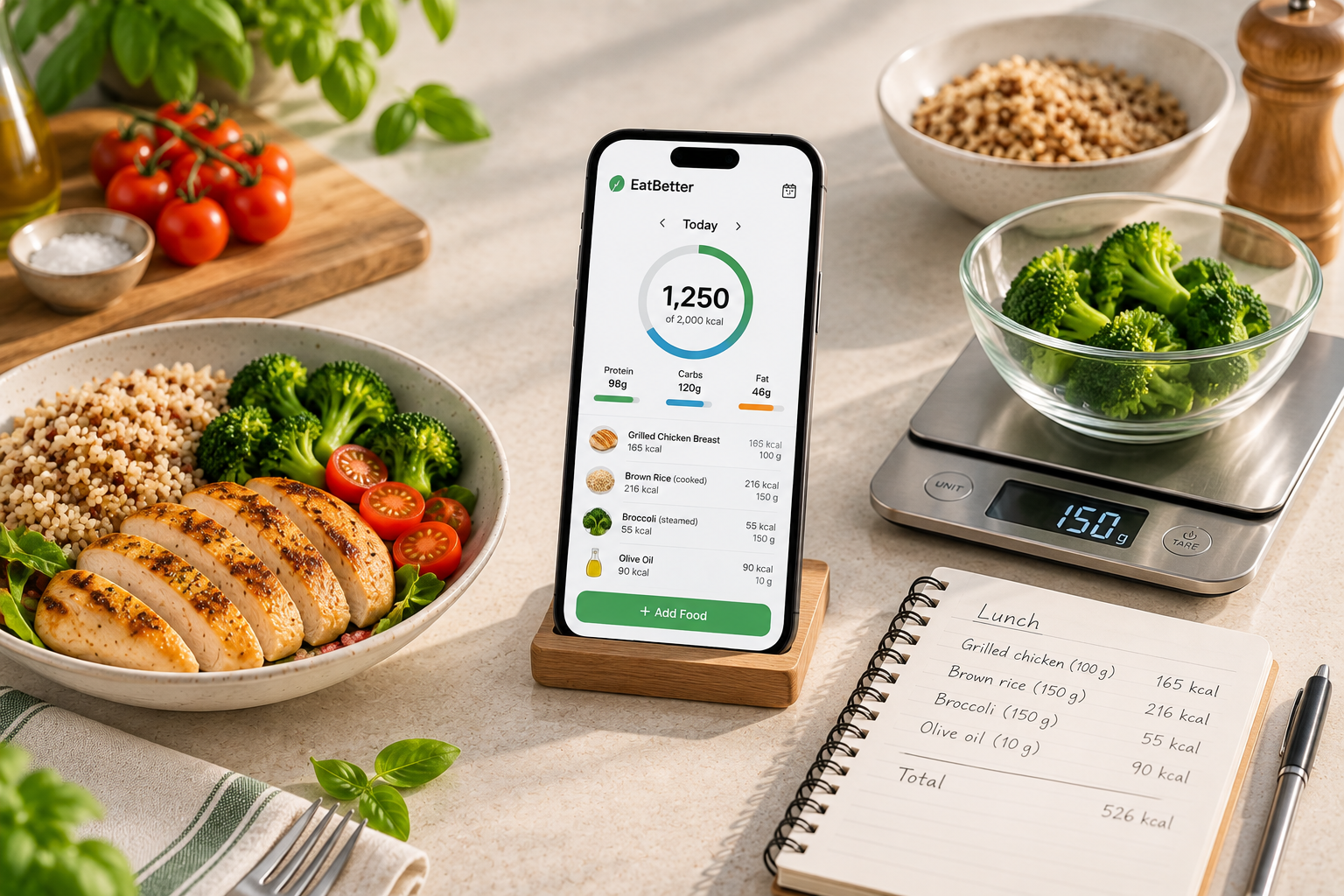
Common reasons include:
- maintaining weight
- losing weight
- gaining weight
- learning portion sizes
- improving meal structure
- understanding where calories come from
Your goal determines how detailed your tracking needs to be.
Someone who wants to learn typical portions may not need the same level of detail as someone working toward a specific nutrition target.
Step 2: Estimate your daily calorie needs
Start by estimating your maintenance calories.
A calorie calculator can use your:
- age
- height
- weight
- sex
- activity level
to estimate total daily energy expenditure.
Calorie Calculator
Work out your daily calorie need in a minute.
Calculate →
Remember that this is a starting estimate rather than a precise measurement.
Step 3: Track what you actually eat
For the first few days, it can be more useful to track your normal routine than to immediately try to create a "perfect" diet.
Record:
- meals
- snacks
- drinks
- sauces
- cooking oils
- desserts
- small bites
This gives you a clearer view of your real eating pattern.
Stop guessing your portions 📲
Photograph your meal and let EatBetter break down calories and macros in seconds.


Step 4: Pay attention to portions
One of the easiest ways to miscount calories is to choose the correct food but the wrong portion.
A food page may show values per 100 g, per cup or per piece.
But your actual portion may be:
- 60 g
- 150 g
- one tablespoon
- half a cup
- two pieces
The portion changes the total.
EatBetter food pages provide multiple serving options so you can compare the amount you actually ate rather than relying only on a 100 g reference.
Egg
proteins · 143 kcal / 100g
View →
Plain Yogurt
dairy · 61 kcal / 100g
View →
Chicken Breast
meat · 110 kcal / 100g
View →
Step 5: Be more precise with calorie-dense foods
Small portion differences matter more with foods that contain a lot of energy in a small amount.
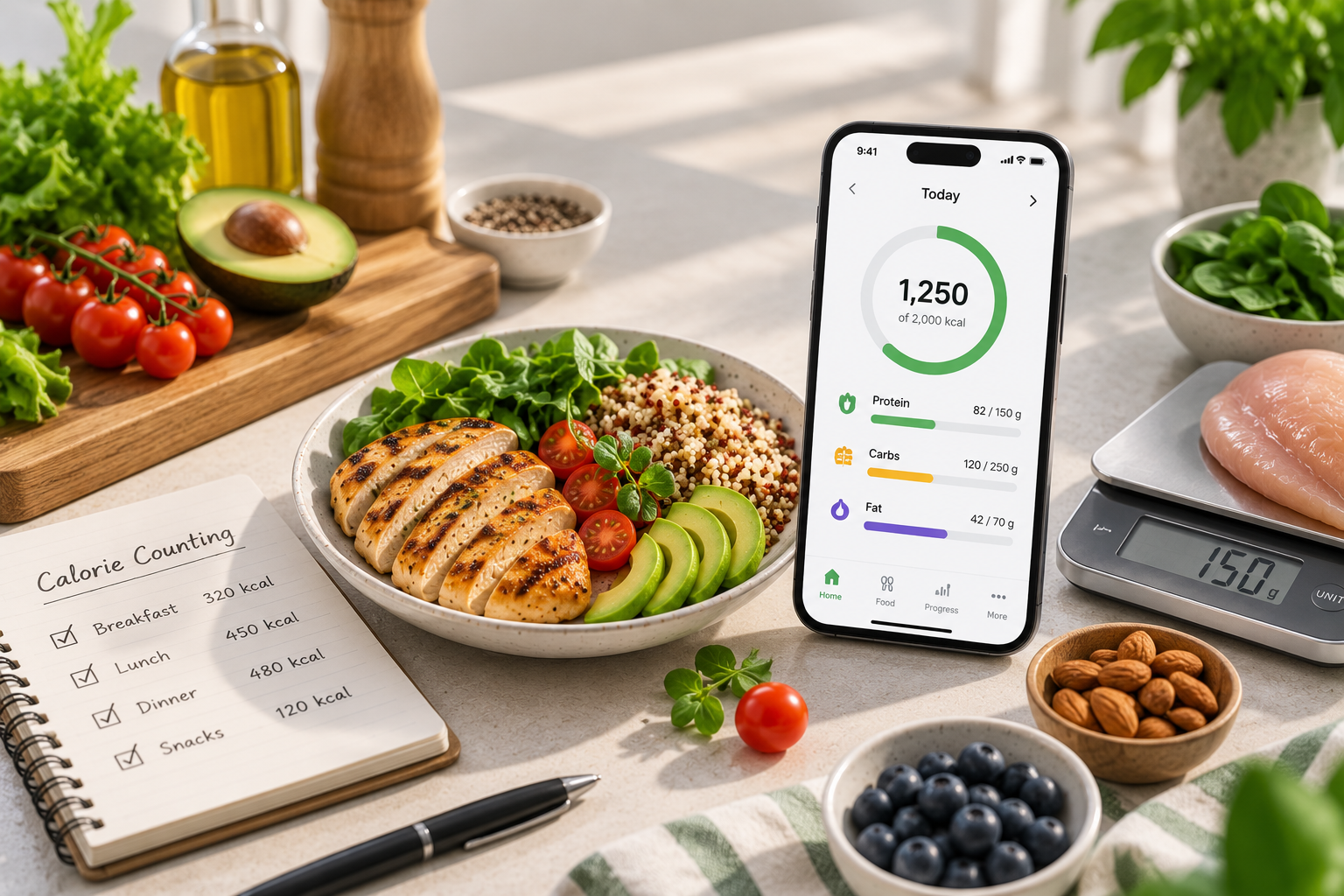
Examples can include:
- cooking oil
- butter
- nuts
- nut butter
- cheese
- dressings
- chocolate
- some sauces
You do not need to avoid these foods. The point is simply that eyeballing a small portion can create a larger calorie-counting error than eyeballing a low-energy vegetable.
EatBetter tip: The more calorie-dense a food is, the more useful accurate portion information becomes.
Step 6: Read food labels correctly
For packaged foods, start with:
Serving size
Then look at:
Calories per serving
One package may contain more than one serving.
The FDA notes that nutrition information is generally listed per serving and that serving size is not a recommendation of how much you should eat.
If one serving contains 200 calories and you eat two servings, the total is 400 calories.
Step 7: Do not forget drinks
Calories are not limited to solid food.
Depending on the product, drinks can contribute meaningful energy.
Examples include:
- sugary soft drinks
- fruit juice
- sweetened coffee
- milk-based drinks
- smoothies
- alcohol
The easiest solution is not necessarily to avoid every calorie-containing drink. It is to include them when you are trying to understand your total intake.
Step 8: Match the database entry to the food you ate
A generic food name can represent very different preparations.
For example:
- raw chicken breast
- cooked chicken breast
- chicken cooked in oil
- fried chicken
can have different calorie values.
Likewise, plain yogurt and a sweetened yogurt product may not have the same nutritional profile.
Choose the entry that most closely matches the food and preparation you actually consumed.
Step 9: Track nutrition, not only calories
A 500-calorie meal is not automatically "good" or "bad."
Calories tell you how much energy it contains.
They do not fully describe:
- protein
- fiber
- vitamins
- minerals
- sodium
- saturated fat
- food quality
- how filling the meal feels
This is why EatBetter food pages show calories alongside macros, micronutrients and other nutrition data.
Green Lentils (Boiled)
legumes · 116 kcal / 100g
View →
Step 10: Focus on consistency rather than perfection
Your intake does not need to be identical every day.
One day may be somewhat higher.
Another may be somewhat lower.
What matters more is the overall pattern.
Trying to hit an exact number every single day can make tracking unnecessarily rigid.
Do you have to weigh every food?
No.
A food scale can be useful when you are first learning portions or when you want more precision with energy-dense foods.
But tracking can also become easier over time as you learn the typical portions of meals you eat regularly.
The aim is to gain useful information, not create unnecessary complexity.
Make tracking easier with repeatable meals
One of the easiest ways to reduce tracking effort is to create a few meals you eat regularly.
For example:
Breakfast
- plain yogurt
- oats
- berries
- nuts or seeds
Once you have logged the usual portions once, repeating the meal takes much less effort.
The same idea works for:
- breakfasts
- packed lunches
- smoothies
- snacks
- meal-prep dinners
Common calorie-counting mistakes
1. Forgetting cooking oil
Oil used during cooking still contributes calories to the meal.
2. Guessing every portion
Visual estimates can be useful, but repeatedly underestimating energy-dense foods can produce larger errors.
3. Choosing the wrong database entry
Choose the food that best matches its preparation and portion.
4. Forgetting small snacks and drinks
Small items can become meaningful when they happen repeatedly.
5. Treating the target as a hard limit
A calorie estimate is a planning tool, not a pass-or-fail number.
6. Looking only at calories
Calories matter for energy balance, but they are not a complete measure of diet quality.
When calorie tracking may not be helpful
Tracking should provide useful information.
If tracking begins to create significant anxiety, guilt, rigid food rules or obsessive behavior, it may be better to stop and seek guidance from an appropriate professional.
People with a current or previous eating disorder should seek individualized advice before beginning restrictive calorie tracking.
Explore related EatBetter tools and foods
Sources
- FDA — Serving Size on the Nutrition Facts Label: https://www.fda.gov/food/nutrition-facts-label/serving-size-nutrition-facts-label
- FDA — Calories on the Nutrition Facts Label: https://www.fda.gov/food/nutrition-facts-label/calories-nutrition-facts-label
- NIDDK — Body Weight Planner: https://www.niddk.nih.gov/health-information/weight-management/body-weight-planner
Note: This article is for general educational purposes and is not a substitute for individualized medical or nutrition advice. People with a history of eating disorders or specific medical or nutrition needs should seek guidance from an appropriate healthcare professional.
Frequently asked questions
What is the easiest way to count calories?
Use a reliable nutrition database or tracking app, record portions and save meals you eat regularly.
Should I weigh food raw or cooked?
Use the form that matches the database entry. If the food entry is for raw weight, use raw weight. If it is for cooked food, use cooked weight.
How accurate is calorie counting?
It is an estimate. Food composition, restaurant preparation, serving size and measurement all introduce some uncertainty.
Do vegetables need to be tracked?
They contain calories, but how precisely you track them depends on your goal and desired level of accuracy.
Should I count calories forever?
Not necessarily. Tracking can be a temporary learning tool for understanding portions, food choices and eating patterns.
