


How to Calculate Maintenance Calories (TDEE)
Learn what maintenance calories are, how TDEE is estimated and how to find a practical calorie target for maintaining your current weight.
EatBetter · September 23, 2026 · 5 min read
Contents
Maintenance calories are the approximate number of calories you need to consume to keep your current body weight relatively stable over time.
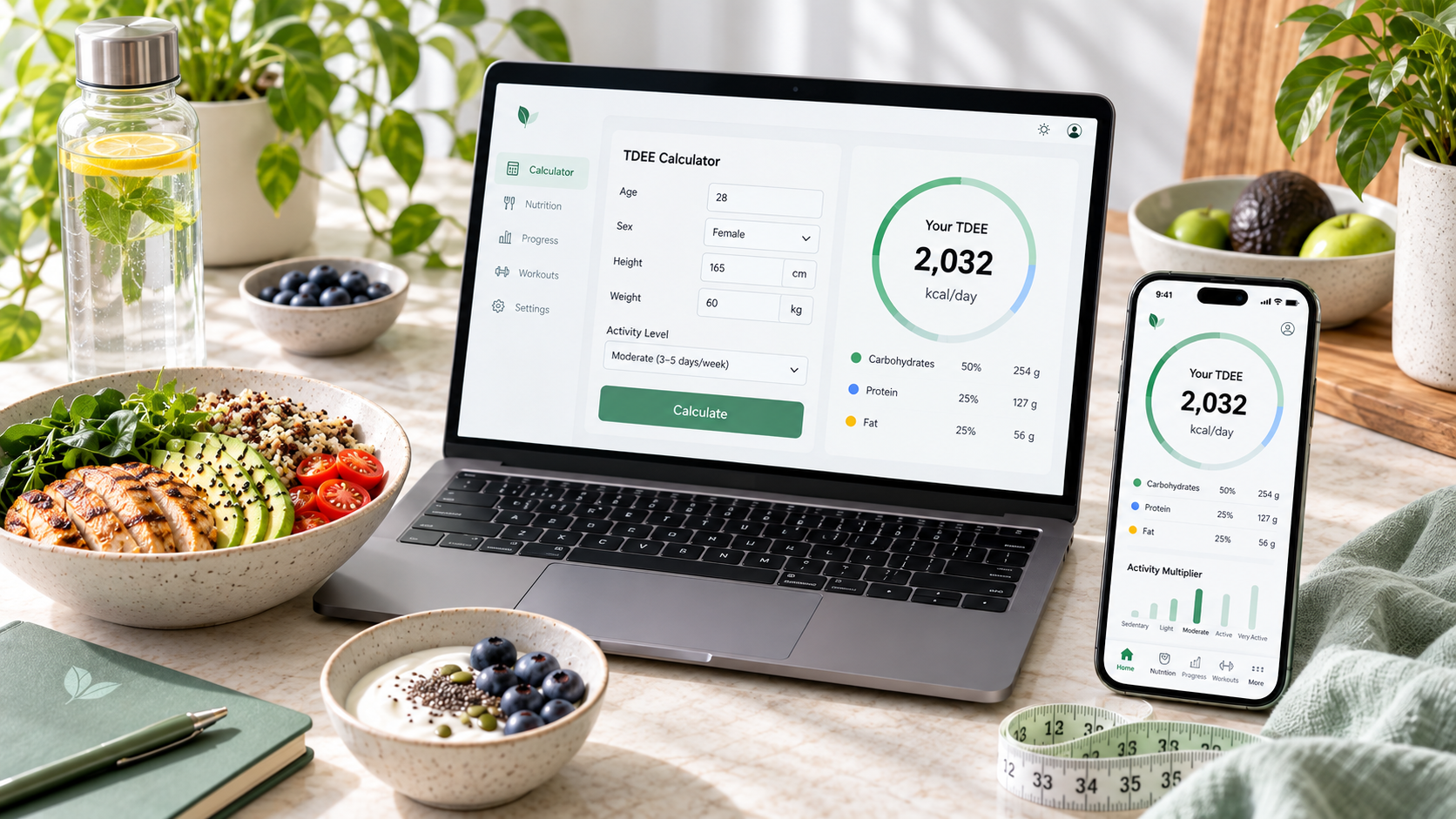
Quick answer: Your maintenance calories should be close to your average total daily energy expenditure, or TDEE. A calculator can estimate that number from your age, height, weight, sex and activity level, but your real-world weight trend is useful for checking whether the estimate is close.
Calorie Calculator
Work out your daily calorie need in a minute.
Calculate →
What are maintenance calories?
If average calorie intake is close to average energy expenditure, body weight will generally tend to remain relatively stable.
That makes maintenance calories a useful baseline for understanding:
- daily calorie needs
- calorie deficits
- calorie surpluses
- weight-loss planning
- weight-gain planning
The number is not permanently fixed. It can change when your body weight, activity or lifestyle changes.
What is TDEE?
TDEE stands for Total Daily Energy Expenditure.
It represents the energy your body uses across an entire day.
 Illustration of daily energy expenditure including sleep, food and physical activity
TDEE includes several components.
Resting energy expenditure
This is the energy required to support essential functions while at rest.
Physical activity
This includes structured exercise such as running or strength training, but also everyday movement such as walking, standing, commuting and household tasks.
The thermic effect of food
Your body also uses energy to digest, absorb and process food.
Together, these components contribute to your total daily energy expenditure.
How to estimate maintenance calories
Method 1: Use a calorie calculator
This is the fastest starting point.
A calculator can combine information such as:
- age
- sex
- height
- weight
- activity level
to estimate daily energy requirements.
Calorie Calculator
Work out your daily calorie need in a minute.
Calculate →
Method 2: Estimate resting energy expenditure first
One commonly used prediction model is the Mifflin-St Jeor equation.
It was developed using measured resting energy expenditure and uses variables including weight, height, age and sex.
Resting energy expenditure is not the same as total daily expenditure, so activity still needs to be considered when estimating TDEE.
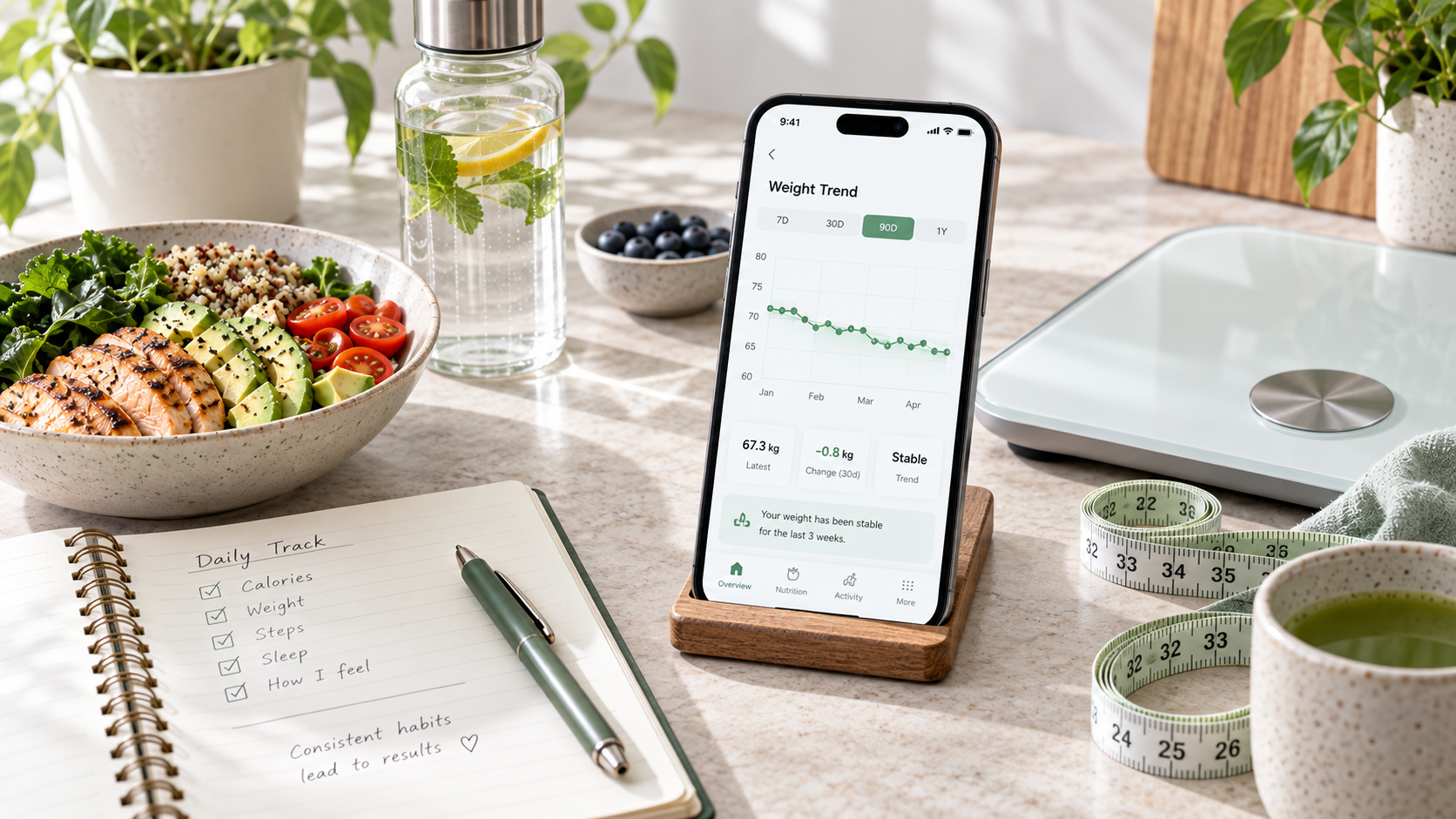
Method 3: Validate the estimate with your own trend
No equation knows exactly how much you move every day.
A practical check is to compare your estimated maintenance intake with your actual eating pattern and body-weight trend.
For example:
- calculate a starting estimate
- track your average intake
- monitor your weight trend for a reasonable period
- look for consistency
- adjust the estimate if needed
If average body weight stays relatively stable, your actual intake is likely somewhere near maintenance.
Stop guessing your portions 📲
Photograph your meal and let EatBetter break down calories and macros in seconds.


Why activity multipliers are imperfect
Labels such as:
- sedentary
- lightly active
- moderately active
- very active
are convenient, but they are subjective.
Two people who both choose "moderately active" may have very different routines.

One may work at a desk and exercise several times per week.
Another may work on their feet, walk thousands of additional steps and also train several times per week.
Their total energy expenditure may not be the same.
This is why the number from a calculator should be treated as an estimate rather than a laboratory measurement.
Maintenance calories can change
Your maintenance intake can change after:
- meaningful weight loss
- meaningful weight gain
- a change in exercise volume
- a new job with more or less movement
- an injury that reduces activity
- a major lifestyle change
If one of these changes occurs, recalculating your estimated needs may be useful.
How food choices fit into maintenance calories
Maintenance is about total energy balance, but that does not mean all foods are nutritionally identical.
Different foods can provide very different amounts of protein, fiber, vitamins and minerals for similar calorie totals.
Egg
proteins · 143 kcal / 100g
View →
Plain Yogurt
dairy · 61 kcal / 100g
View →
Green Lentils (Boiled)
legumes · 116 kcal / 100g
View →
Use EatBetter food pages to compare calories and nutrients by portion rather than treating the maintenance target as the only number that matters.
EatBetter tip: A maintenance target tells you approximately how much energy you may need. Food pages help you decide what that energy is coming from.
Example of a maintenance-calorie estimate
Imagine a calculator estimates your TDEE at 2,400 calories per day.
That does not mean your body uses exactly 2,400 calories every day.
One day may include:
- a long walk
- a gym session
- an active workday
Another day may involve much less movement.
The estimate is more useful as an average.
If your average intake is around that level and your body weight remains relatively stable over time, the estimate may be reasonably close to your real maintenance needs.
Maintenance calories vs calorie deficit
The basic relationship is simple:
| Goal | General energy relationship |
|---|---|
| Maintain weight | Intake ≈ expenditure |
| Lose weight | Intake < expenditure |
| Gain weight | Intake > expenditure |
The harder part is estimating energy expenditure accurately enough to create a useful starting target.
Explore related EatBetter tools
Sources
- Mifflin MD, et al. A new predictive equation for resting energy expenditure in healthy individuals: https://pubmed.ncbi.nlm.nih.gov/2305711/
- National Academies — Dietary Reference Intakes for Energy: https://nap.nationalacademies.org/catalog/26818/dietary-reference-intakes-for-energy
- NIDDK — Body Weight Planner: https://www.niddk.nih.gov/health-information/weight-management/body-weight-planner
Note: This article is for general educational purposes and is not a substitute for individualized medical or nutrition advice. People with medical conditions, pregnancy or breastfeeding, a history of eating disorders, or other specific nutrition needs should seek guidance from an appropriate healthcare professional.
Frequently asked questions
Are maintenance calories the same as TDEE?
They are closely related. If your average intake matches your average TDEE, your body weight would generally be expected to remain relatively stable.
Is TDEE the same every day?
No. Daily energy expenditure can change depending on exercise, steps, work activity and other movement.
How accurate are TDEE calculators?
They are estimates based on prediction equations and activity assumptions. Individual needs can differ from the calculated result.
How often should I recalculate maintenance calories?
Recalculating may be useful after a meaningful change in body weight, training or everyday activity.
Can I find my maintenance calories without a calculator?
You can estimate them by tracking average calorie intake during a period when your average body weight is relatively stable. A calculator is still useful as a starting point.
