

Ready & Packaged Foods
All →Vegetables & Legumes
All →Desserts & Confectionery
All →Meat & Protein
All →Grains & Bakery
All →Beverages
All →Milk & Dairy
All →

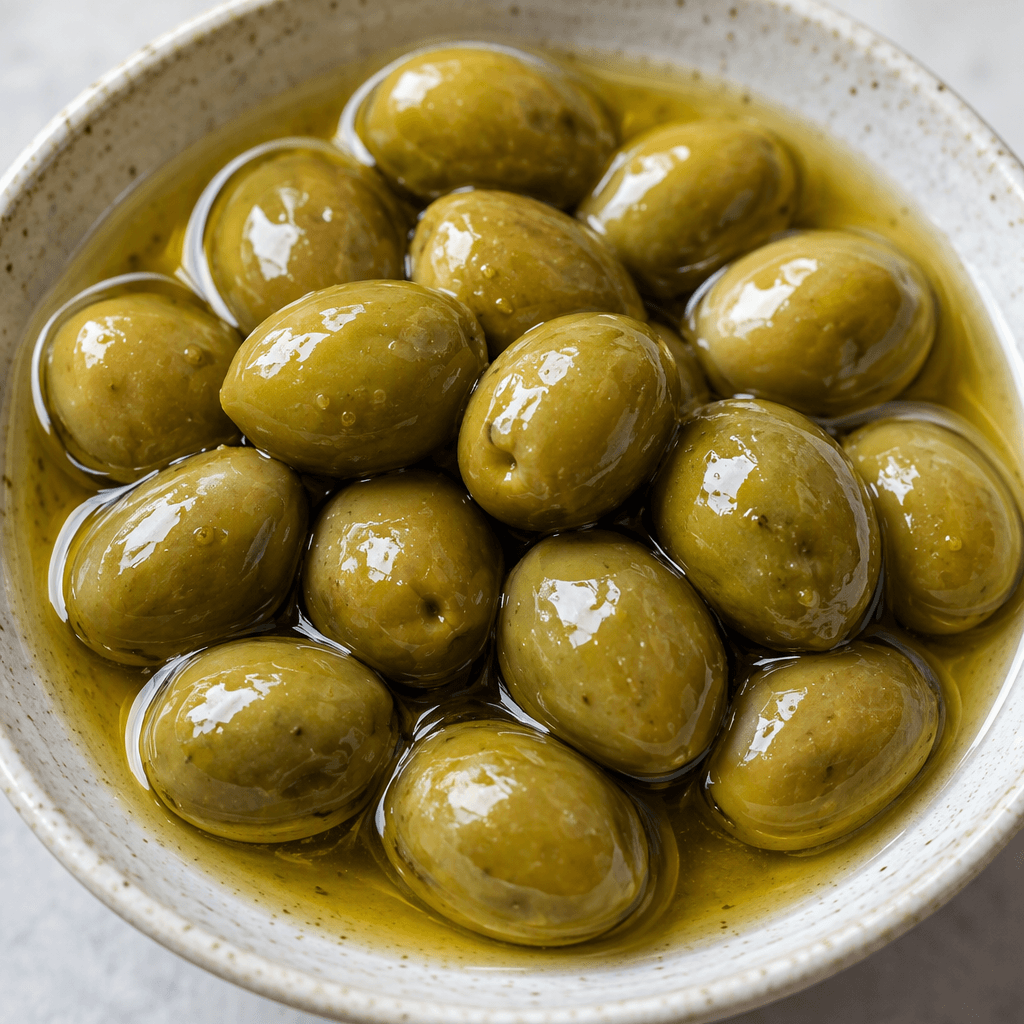
Green olives in oil Calories
Rich in monounsaturated fat, high in sodium
CALORIES
GI
POTASSIUM
FIBER
Quick answer
8 piece (medium) of Green olives in oil (32 g) has 59 calories. That works out to 185 calories per 100 g. It contains 1.5 g of carbs, 0.4 g of protein, 5.8 g of fat and 1.1 g of fiber. Its 464 mg of Sodium covers 20% of the Daily Value. Its glycemic index is 15 (low), so it raises blood sugar slowly.
What is Green olives in oil?
Green olives in oil are cured green olives dressed with olive oil, sometimes with herbs, garlic or citrus. Their firm, meaty bite and pleasantly bitter, briny flavour are softened by the oil. Across the Mediterranean they are served at breakfast, as part of a mezze spread, or alongside bread, cheese and drinks; they also make an easy addition to salads. They provide mostly fat, including monounsaturated fat, while the brining can make them quite salty. If you prefer a milder taste, rinse them briefly before serving, and pair them with fresh vegetables or unsalted bread.
Green olives in oil Nutrition Facts
Selected: 100 g
185
KCAL / 100G
Carbs
4.8g
· 2% DV
Protein
1.1g
· 2% DV
Fat
18g
· 23% DV
Fiber
3.3g
· 12% DV
DV is the share of the daily value covered, on a 2,000 kcal reference diet.
Calories come from: Carbs 10% · Protein 2% · Fat 88%
Green olives in oil Vitamins & Minerals
Vitamins
Vitamin E
3.8mg · 25% DV
Vitamin A
20µg · 2% DV
B1
0.02mg · 2% DV
B3
0.24mg · 2% DV
Minerals
Sodium
1450mg · 63% DV
Calcium
52mg · 5% DV
Magnesium
11mg · 3% DV
Selenium
0.9µg · 2% DV
How Nutritious Is Green olives in oil?
Nutrient density
Medium
How many vitamins, minerals and how much fiber this food carries per calorie. A high score means a lot of nutrition for few calories.
Satiety score
Medium
An EatBetter score computed from fiber, protein and calorie density. A high score means staying full longer on the same calories.
Both scores are calculated per 100 g and do not change with the selected portion. The satiety score is EatBetter's own calculation, not a clinical measure.
Green olives in oil Glycemic Index
GLYCEMIC INDEX
GLYCEMIC LOAD
Accounts for portion size — a more realistic measure than GI alone.
How to Burn Off Green olives in oil
To burn the 185 calories in 100 g:
🚶
Walking (5 km/h)
🏃
Running (8 km/h)
🚴
Cycling
🏊
Swimming
Times are calculated with the MET equation for a 70 kg adult. Actual burn varies with your weight, age and pace.
Is Green olives in oil Processed?
NOVA 3
Processed
1. Unprocessed
2. Minimally Processed
3. Processed
4. Ultra-Processed
NOVA classifies foods into 4 groups by industrial processing. NOVA 1 (unprocessed) is the healthiest.
Does Green olives in oil Contain Allergens?
No known major allergens
Which Diets Is Green olives in oil Good For?
Vegan
✓ Suitable
Vegetarian
✓ Suitable
Gluten-Free
✓ Suitable
Dairy-Free
— Not suitable
Mediterranean
✓ Suitable
Paleo
✓ Suitable
Whole30
— Not suitable
DASH
— Not suitable
Keto
✓ Suitable
Low FODMAP
— Not suitable
Green olives in oil Fat Profile
SATURATED
2.4g
MONOUNSATURATED
13.2g
POLYUNSATURATED
1.6g
Omega 6:3 ratio 18.1:1
Above the ideal 4:1 (18.1:1).
Compare Green olives in oil
Foods Similar to Green olives in oil
Frequently Asked Questions About Green olives in oil
Are green olives in oil healthy to eat?
Yes, green olives in oil can fit into a balanced diet and provide mostly unsaturated fat. They are also often salty, so enjoy them alongside less salty foods rather than treating them as a low-sodium snack.
How should you store green olives in oil after opening?
Keep green olives in oil refrigerated after opening, in a clean, tightly covered container. Make sure the olives remain covered by their oil or original brine, and remove portions with a clean utensil to limit contamination.
Can you freeze green olives in oil?
You can freeze green olives in oil, but freezing may soften their texture and make the oil separate when thawed. For best quality, keep them refrigerated and use them within the storage period advised on the package.
What is the difference between green olives in oil and brined green olives?
Green olives in oil are typically seasoned or coated with oil, while brined green olives are stored in a salt-water solution. Oil adds richness, but it does not necessarily remove the salt from olives that were cured in brine first.
Do you need to rinse green olives in oil before eating them?
No, green olives in oil are ready to eat without rinsing. If you want to reduce some surface salt or oil, drain them or briefly rinse them, then pat dry; rinsing will not remove all the salt absorbed during curing.
Can you cook with green olives in oil?
Yes, green olives in oil work in pasta sauces, roasted vegetables, stews, and grain dishes. Add them near the end of cooking to preserve their texture, and taste before adding salt because the olives can season the whole dish.
How are green olives in oil different from black olives?
Green olives in oil are harvested before they fully ripen, while black olives are generally harvested later or darkened during processing. Their flavour and firmness differ, so green olives often bring a sharper, firmer bite to salads and cooked dishes.
Can you eat green olives in oil straight from the jar?
Yes, green olives in oil are ready to eat straight from the jar. Drain a portion if you prefer less oil, and avoid eating directly from the container so crumbs or other food do not contaminate the remaining olives.
Why does the oil on green olives in oil turn cloudy in the fridge?
The oil on green olives in oil can turn cloudy or solid when chilled because olive oil naturally thickens at low temperatures. Let the portion sit at room temperature until the oil clears; this change alone does not mean the olives have spoiled.
What foods go well with green olives in oil?
Green olives in oil pair well with feta, tomatoes, roasted peppers, crusty bread, and chickpeas. Their briny, rich flavour can balance fresh or mild ingredients, so they also make a useful addition to antipasti plates and grain salads.
Have another question about Green olives in oil?
Ask the AI nutrition coach — calories, portions, alternatives and more, answered in seconds in the app.

Scan calories with your camera
Instant AI nutrition analysis

Nutrition data compiled from USDA FoodData Central and scientific sources.