

Ready & Packaged Foods
All →Vegetables & Legumes
All →Desserts & Confectionery
All →Meat & Protein
All →Grains & Bakery
All →Beverages
All →Milk & Dairy
All →

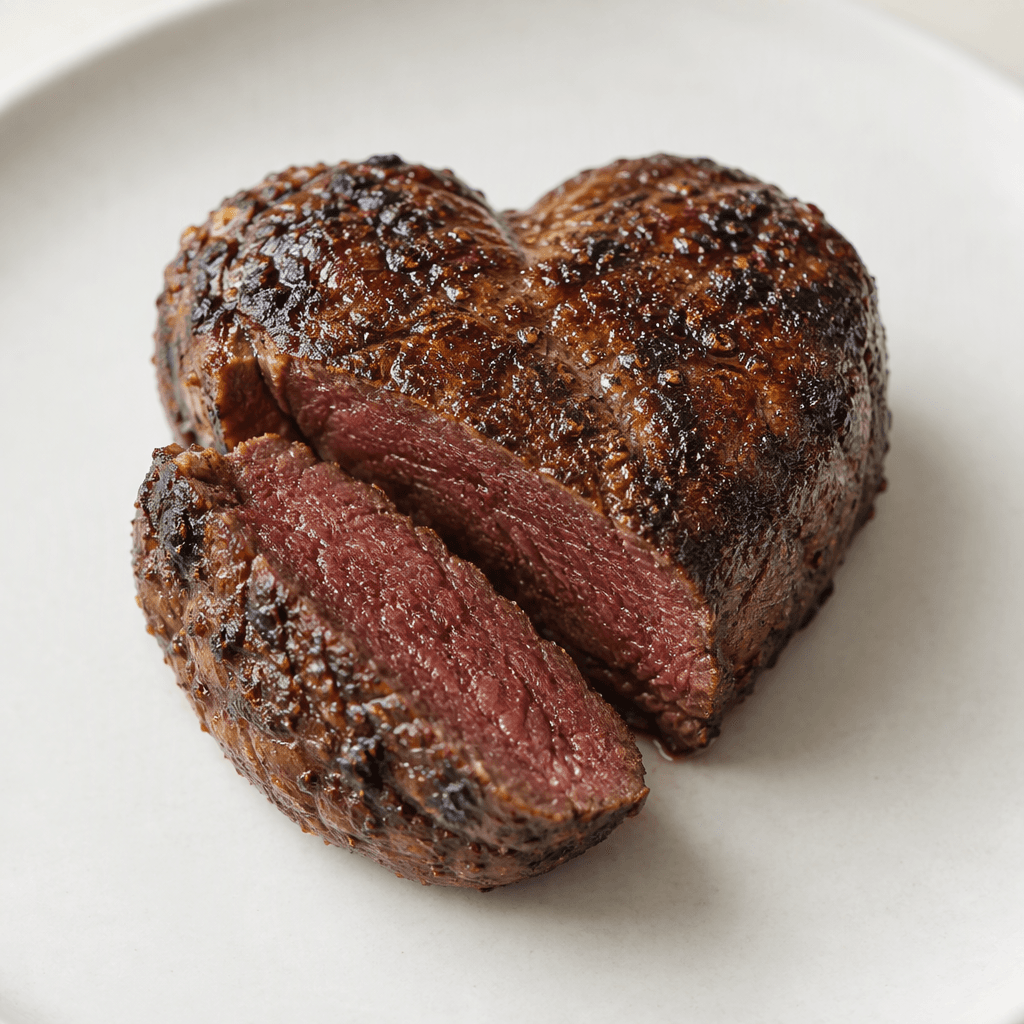
Cooked heart Calories
High in protein, B12, iron, and zinc
CALORIES · 100 G
GI
POTASSIUM · 100 G
FIBER · 100 G
Quick answer
100 g of Cooked heart has 177 calories. It contains 0 g of carbs, 26 g of protein, 7 g of fat and 0 g of fiber. Its 8 µg of B12 covers 333% of the Daily Value. Its glycemic index is 0 (low), so it raises blood sugar slowly.
Cooked heart Nutrition Facts
Selected: 100 g
177
KCAL / 100G
Carbs
0g
· 0% DV
Protein
26g
· 52% DV
Fat
7g
· 9% DV
Fiber
0g
· 0% DV
DV is the share of the daily value covered, on a 2,000 kcal reference diet.
Calories come from: Carbs 0% · Protein 62% · Fat 38%
Cooked heart nutrition facts table · 100 g
| Nutrient | Amount | % DV |
|---|---|---|
| Calories | 177 kcal | |
| Total fat | 7 g | 9% |
| Saturated fat | 2.1 g | 11% |
| Trans fat | 0.1 g | |
| Sodium | 98 mg | 4% |
| Total carbohydrate | 0 g | 0% |
| Fiber | 0 g | 0% |
| Protein | 26 g | 52% |
Calories: Calories measure energy. Average daily need is 2,000 kcal. Excess calories are stored as fat, too few cause weight loss.
Carbs: Your body's primary energy source. The brain runs exclusively on carbs. Daily need: 275g.
Protein: Essential for muscle repair and cell growth. Daily need: 50g. Keeps you full and boosts metabolism.
Fat: Needed for hormone production and vitamin absorption. Daily need: 78g. Limit saturated fats, choose unsaturated.
Fiber: Critical for digestive health and satiety. Daily need: 28g. Stabilizes blood sugar, lowers cholesterol.

Log this food in EatBetter
100,000+ people use it
- Get your daily calorie target
- Snap your meal, log it in seconds
- See every vitamin and mineral

📸 Scan the code to get the app free.

How Many Calories in 1 Serving of Cooked heart?
| Serving | Amount | Calories |
|---|---|---|
| 1 serving (medium) | 100 g | 177 kcal |
| 1 piece (small) | 50 g | 89 kcal |
| 3 ounce (medium) | 85 g | 150 kcal |
| 1 piece (medium) | 90 g | 159 kcal |
| 100 g | 100 g | 177 kcal |
| 1 cup (chopped) | 120 g | 212 kcal |
| 1 piece (large) | 140 g | 248 kcal |
| 1 cup (diced) | 140 g | 248 kcal |
| 1 serving (large) | 150 g | 266 kcal |
Calculated from 177 calories per 100 g.
Frequently Asked Questions About Cooked heart
What does cooked heart taste like?
Cooked heart tastes like rich, lean meat, with a firmer, denser texture than a steak and a mild mineral note. Its flavor varies by animal: lamb heart can taste more pronounced, while beef heart is often milder when trimmed and seasoned well.
How do you prepare cooked heart before cooking it?
To prepare heart for cooking, cut it open and remove visible clots, tough veins, and the outer membrane. Rinse briefly under cold water and pat it dry. Trimming carefully makes the texture more pleasant and helps the pieces brown instead of steam.
How do you cook heart so it doesn’t turn tough?
Cooked heart stays more tender when it is sliced thinly and cooked quickly over high heat. Avoid leaving it on the heat for a long time, which makes the dense muscle dry and chewy. Rest it briefly before serving so the juices settle.
Can you eat cooked heart rare?
Heart is muscle meat, but it can carry harmful bacteria on its surface and during handling. For a safer meal, cook heart thoroughly, especially if it has been minced or pierced; avoid serving it rare to anyone at higher risk from foodborne illness.
Is cooked heart beef, lamb, or chicken?
Cooked heart can come from beef, lamb, pork, or poultry; the name alone does not identify the animal. Beef heart is large and commonly sliced for grilling or braising, while chicken hearts are small and are often cooked whole on skewers.
What is the difference between cooked heart and liver?
Cooked heart is dense muscle meat with a firm, steak-like bite, whereas liver is a softer organ with a stronger, distinct flavor. They also behave differently in recipes: heart can be grilled or braised, while liver is usually cooked very briefly.
Can you freeze cooked heart?
Yes, cooked heart freezes well when cooled and sealed in an airtight container or freezer bag. Freeze it in meal-sized portions, then thaw it in the refrigerator and reheat it thoroughly. Freezing may make the texture a little less tender, particularly after prolonged storage.
How long does cooked heart last in the fridge?
Cooked heart keeps in the refrigerator for three to four days if it is chilled within two hours of cooking and stored covered. Discard it if it sat out too long, and do not rely on smell alone to judge whether leftovers are safe.
Can dogs eat cooked heart?
Dogs can eat plain, fully cooked heart in modest portions, provided it has no onion, garlic, heavy seasoning, or cooked bones mixed in. It should be an occasional addition rather than a replacement for a complete dog food.
Is cooked heart a good source of iron and B12?
Yes, cooked heart provides iron and vitamin B12, nutrients involved in making red blood cells and supporting normal nerve function. It can contribute to a varied diet, but it is not a treatment for a diagnosed deficiency.
Cooked heart Vitamins & Minerals
Vitamins
B12
8µg · 333% DV
B2
0.9mg · 69% DV
B3
7.5mg · 47% DV
B5
1.2mg · 24% DV
Minerals
Selenium
24µg · 44% DV
Copper
0.35mg · 39% DV
Phosphorus
230mg · 33% DV
Zinc
3.2mg · 29% DV
Potassium ⭐
287mg · 8% DV
Sodium
98mg · 4% DV
Cooked heart Glycemic Index
GLYCEMIC INDEX
GLYCEMIC LOAD
Accounts for portion size — a more realistic measure than GI alone.
How to Burn Off Cooked heart
To burn the 177 calories in 100 g:
🚶
Walking (5 km/h)
🏃
Running (8 km/h)
🚴
Cycling
🏊
Swimming
Times are calculated with the MET equation for a 70 kg adult. Actual burn varies with your weight, age and pace.
What is Cooked heart?
Cooked heart is the heart of an animal, commonly beef or lamb, prepared by grilling, pan-frying, or braising. Though it is an organ meat, heart is muscle, so it has a firmer, leaner bite than many other offal cuts. Heart dishes appear in many food traditions, and the cooking style varies by region.
Its flavour is savoury and distinctly meaty. It is often sliced or skewered and served hot, sometimes with herbs, onions, or a sharp sauce; slow, gentle cooking or a quick sear can both work, depending on the cut. Cooked heart is notably rich in protein, B12, iron, and zinc, with no carbohydrates per 100 g. Pair it with vegetables or a fresh salad for a balanced plate, and avoid overcooking if you prefer a tender texture.
How Nutritious Is Cooked heart?
Nutrient density
High
How many vitamins, minerals and how much fiber this food carries per calorie. A high score means a lot of nutrition for few calories.
Satiety score
Medium
An EatBetter score computed from fiber, protein and calorie density. A high score means staying full longer on the same calories.
Both scores are calculated per 100 g and do not change with the selected portion. The satiety score is EatBetter's own calculation, not a clinical measure.
Is Cooked heart Processed?
NOVA 2
Minimally Processed
1. Unprocessed
2. Minimally Processed
3. Processed
4. Ultra-Processed
NOVA classifies foods into 4 groups by industrial processing. NOVA 1 (unprocessed) is the healthiest.
Does Cooked heart Contain Allergens?
No known major allergens
Which Diets Is Cooked heart Good For?
Vegan
— Not suitable
Vegetarian
— Not suitable
Gluten-Free
✓ Suitable
Dairy-Free
— Not suitable
Mediterranean
✓ Suitable
Paleo
✓ Suitable
Whole30
— Not suitable
DASH
— Not suitable
Keto
✓ Suitable
Low FODMAP
— Not suitable
Cooked heart Fat Profile
SATURATED
2.1g
MONOUNSATURATED
2.6g
POLYUNSATURATED
0.5g
Omega 6:3 ratio 4:1
Below the ideal 4:1 — a good omega balance.
Compare Cooked heart
Foods Similar to Cooked heart
Have another question about Cooked heart?
Ask the AI nutrition coach — calories, portions, alternatives and more, answered in seconds in the app.

Scan calories with your camera
Instant AI nutrition analysis

Nutrition data compiled from USDA FoodData Central and scientific sources.