

Ready & Packaged Foods
All →Vegetables & Legumes
All →Desserts & Confectionery
All →Meat & Protein
All →Grains & Bakery
All →Beverages
All →Milk & Dairy
All →

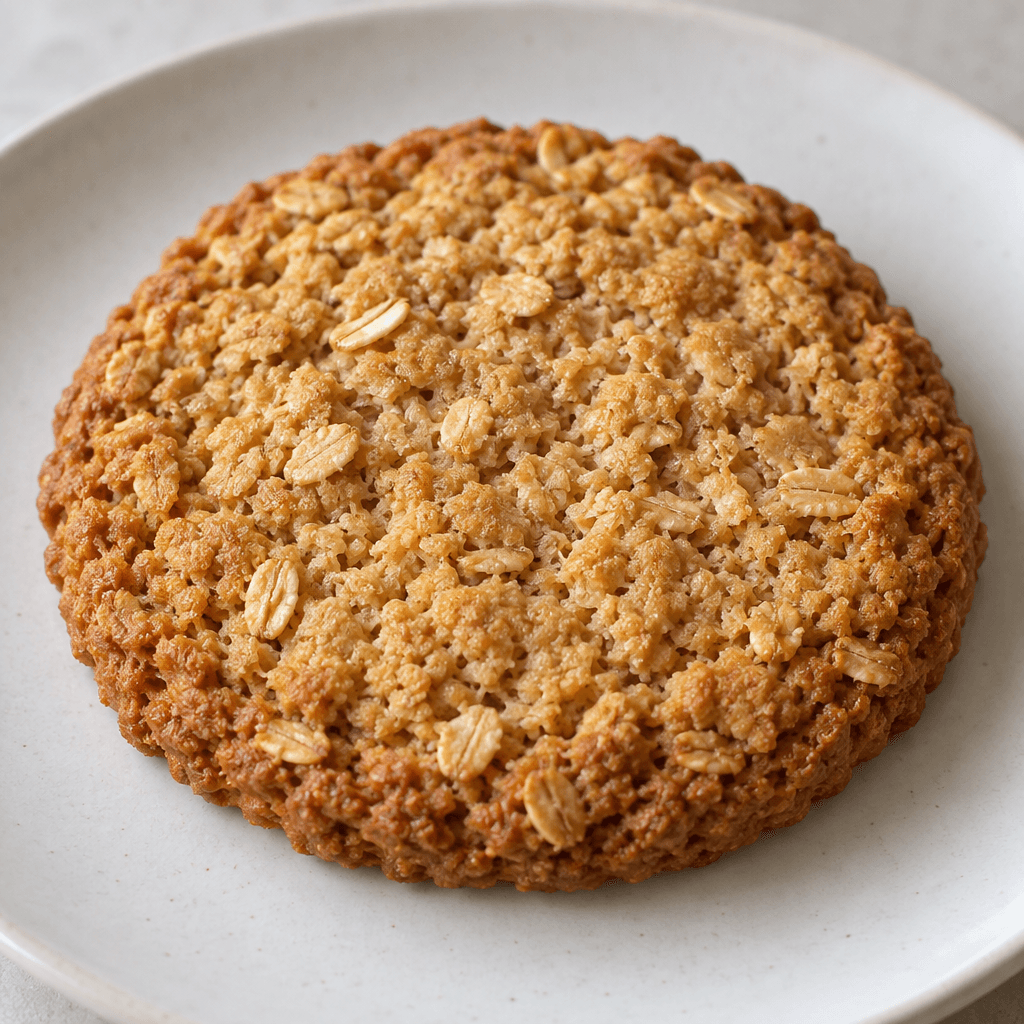
Oat biscuit Calories
High fiber, whole grain, mildly sweet
CALORIES
GI
POTASSIUM
FIBER
Quick answer
2 piece (medium) of Oat biscuit (30 g) has 135 calories. That works out to 450 calories per 100 g. It contains 20.4 g of carbs, 2.3 g of protein, 4.8 g of fat and 2 g of fiber. Its 0.3 mg of Manganese covers 14% of the Daily Value. Its glycemic index is 55 (medium), so it raises blood sugar at a moderate pace.
What is Oat biscuit?
An oat biscuit is a baked biscuit made with oats or oat flour, usually with some flour, fat and a little sweetener. Sweet versions are familiar in Britain, where they are often served with tea; recipes and texture vary, from crisp and crumbly to more substantial. The visible oats give it a pleasantly coarse bite and a mild, toasted flavour.
It also works as a quick snack, or crumbled over yoghurt and fruit. Oats contribute whole grains and fibre, but this is still an energy-dense biscuit: it provides 450 kcal per 100 g. For a lighter snack, keep to a small portion and pair it with fruit, or choose a less-sweet version.
Oat biscuit Nutrition Facts
Selected: 100 g
450
KCAL / 100G
Carbs
68g
· 25% DV
Protein
7.5g
· 15% DV
Fat
16g
· 21% DV
Fiber
6.5g
· 23% DV
DV is the share of the daily value covered, on a 2,000 kcal reference diet.
Calories come from: Carbs 61% · Protein 7% · Fat 32%
Oat biscuit Vitamins & Minerals
Vitamins
B1
0.18mg · 15% DV
B2
0.12mg · 9% DV
B5
0.4mg · 8% DV
Biotin
2.5µg · 8% DV
Minerals
Manganese
1mg · 43% DV
Phosphorus
120mg · 17% DV
Sodium
320mg · 14% DV
Magnesium
55mg · 13% DV
How Nutritious Is Oat biscuit?
Nutrient density
Medium
How many vitamins, minerals and how much fiber this food carries per calorie. A high score means a lot of nutrition for few calories.
Satiety score
Medium
An EatBetter score computed from fiber, protein and calorie density. A high score means staying full longer on the same calories.
Both scores are calculated per 100 g and do not change with the selected portion. The satiety score is EatBetter's own calculation, not a clinical measure.
Oat biscuit Glycemic Index
GLYCEMIC INDEX
GLYCEMIC LOAD
Accounts for portion size — a more realistic measure than GI alone.
How to Burn Off Oat biscuit
To burn the 450 calories in 100 g:
🚶
Walking (5 km/h)
🏃
Running (8 km/h)
🚴
Cycling
🏊
Swimming
Times are calculated with the MET equation for a 70 kg adult. Actual burn varies with your weight, age and pace.
Is Oat biscuit Processed?
NOVA 3
Processed
1. Unprocessed
2. Minimally Processed
3. Processed
4. Ultra-Processed
NOVA classifies foods into 4 groups by industrial processing. NOVA 1 (unprocessed) is the healthiest.
Does Oat biscuit Contain Allergens?
Contains these allergens:
Which Diets Is Oat biscuit Good For?
Vegan
— Not suitable
Vegetarian
✓ Suitable
Gluten-Free
— Not suitable
Dairy-Free
— Not suitable
Mediterranean
— Not suitable
Paleo
— Not suitable
Whole30
— Not suitable
DASH
— Not suitable
Keto
— Not suitable
Low FODMAP
— Not suitable
Oat biscuit Fat Profile
SATURATED
4.8g
MONOUNSATURATED
6.2g
POLYUNSATURATED
3.1g
Omega 6:3 ratio 17.5:1
Above the ideal 4:1 (17.5:1).
Compare Oat biscuit
Foods Similar to Oat biscuit
Frequently Asked Questions About Oat biscuit
Are oat biscuits healthy?
Oat biscuits can be a useful source of whole grains and fibre, but their nutritional value varies with the recipe. Some contain substantial added sugar or fat, so an oat-based name does not automatically make a biscuit a healthier choice.
Do oat biscuits help with weight loss?
Oat biscuits do not cause weight loss on their own. Their fibre may help you feel satisfied, but biscuits can be easy to overeat; pairing one with fruit or plain yogurt can make a snack more filling.
Are oat biscuits good for people with diabetes?
People with diabetes can include oat biscuits, but the carbohydrates and any added sugar can affect blood glucose. Recipes differ, so a suitable portion depends on an individual’s meal plan; a dietitian or clinician can give personal guidance.
What are oat biscuits made of?
Oat biscuits typically contain oats or oat flour, flour, fat and a sweetener. Some recipes also use eggs, dried fruit or spices, and packaged varieties differ, so the ingredient list is the best guide to a particular biscuit.
Are oat biscuits healthier than digestive biscuits?
Oat biscuits are not automatically healthier than digestive biscuits. The oat content may contribute more whole grains or fibre, but sugar and fat vary between recipes; compare the ingredients and nutrition information on the specific products.
How do you make oat biscuits without flour?
You can make flour-free oat biscuits by binding oats with ingredients such as mashed banana or nut butter and shaping the mixture into biscuits. They tend to be softer and less crumbly than versions made with flour.
How do you stop homemade oat biscuits from falling apart?
To stop homemade oat biscuits falling apart, use enough binding ingredients, such as egg or nut butter, and let the biscuits cool fully on the tray before moving them. They are particularly fragile while warm.
How long do oat biscuits last after baking?
Homemade oat biscuits generally keep for several days in an airtight container at room temperature, provided they have cooled completely before storage. Moist add-ins such as fresh fruit can shorten their shelf life.
Are oat biscuits the same as oatmeal cookies?
Oat biscuits and oatmeal cookies are similar, but the names often reflect regional baking styles. Oat biscuits, especially in the UK, are commonly crisp and lightly sweet, while oatmeal cookies may be softer and sweeter.
Can you eat oat biscuits for breakfast?
Yes, oat biscuits can be part of breakfast, but they usually provide less variety than a balanced meal. Pairing them with yogurt or milk and fruit adds protein and other nutrients and makes breakfast more substantial.
Have another question about Oat biscuit?
Ask the AI nutrition coach — calories, portions, alternatives and more, answered in seconds in the app.

Scan calories with your camera
Instant AI nutrition analysis

Nutrition data compiled from USDA FoodData Central and scientific sources.