

Ready & Packaged Foods
All →Vegetables & Legumes
All →Desserts & Confectionery
All →Meat & Protein
All →Grains & Bakery
All →Beverages
All →Milk & Dairy
All →

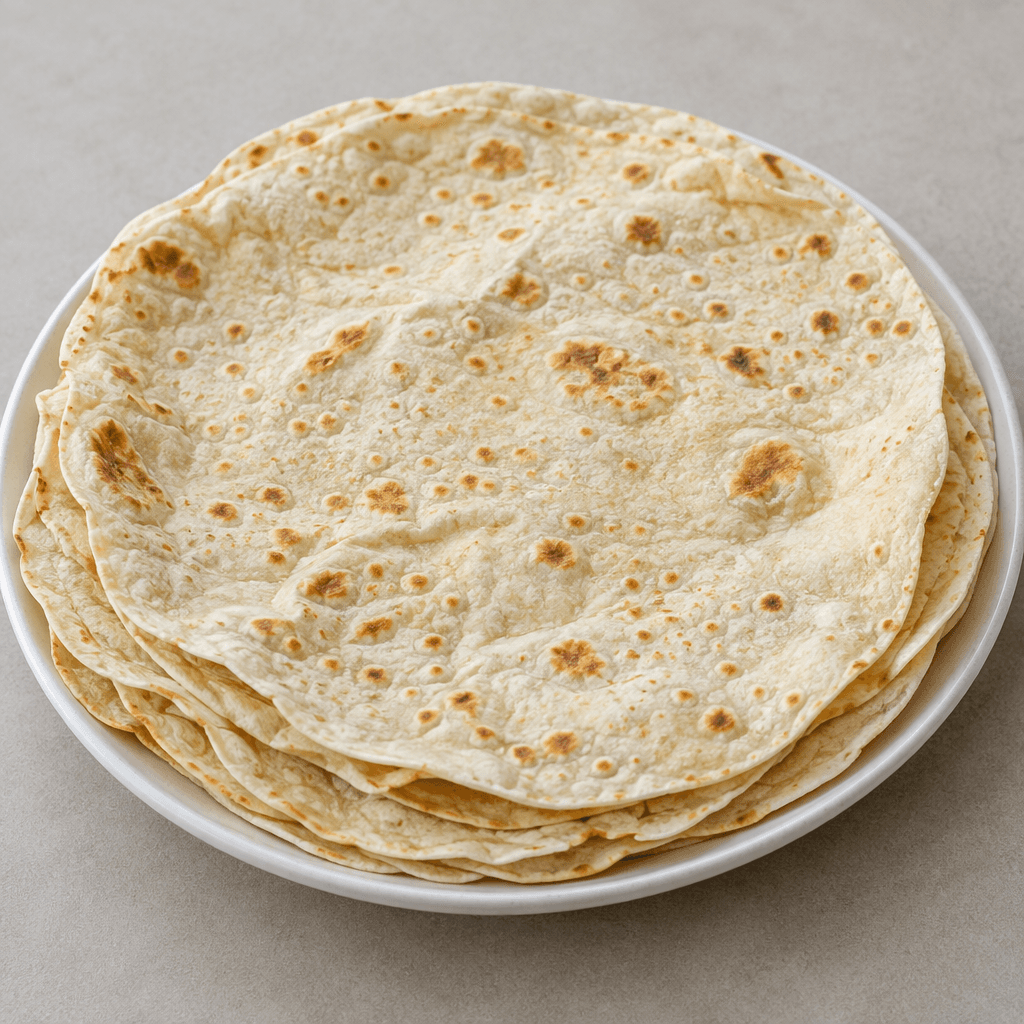
Yufka Bread Calories
Thin, round, traditional Turkish flatbread; low fat, high carbohydrate
In season: Spring · Summer · Autumn · Winter
CALORIES
GI
POTASSIUM
FIBER
Quick answer
1 piece (medium) of Yufka Bread (50 g) has 135 calories. That works out to 270 calories per 100 g. It contains 28 g of carbs, 4.3 g of protein, 0.8 g of fat and 1.4 g of fiber. Its 0.1 mg of B1 covers 8% of the Daily Value. Its glycemic index is 70 (high), so it raises blood sugar quickly.
What is Yufka Bread?
Yufka Bread is a traditional Turkish flatbread made from a simple dough of flour, water and salt, rolled into very thin rounds and cooked on a hot griddle. It is soft and flexible when fresh; dried sheets are commonly sprinkled or brushed with water to soften them before serving.
In Turkey, people eat it with cheese, olives or other breakfast foods, use it to wrap fillings, or layer it into börek. Its mild, lightly toasted flavour works well with both savoury and fresh ingredients. It is mostly a source of carbohydrate and contains little fat. For a more filling meal, serve it with beans, eggs or vegetables, or add a protein-rich filling when making a wrap.
Yufka Bread Nutrition Facts
Selected: 100 g
270
KCAL / 100G
Carbs
56g
· 20% DV
Protein
8.5g
· 17% DV
Fat
1.5g
· 2% DV
Fiber
2.7g
· 10% DV
DV is the share of the daily value covered, on a 2,000 kcal reference diet.
Calories come from: Carbs 83% · Protein 13% · Fat 4%
Yufka Bread Vitamins & Minerals
Vitamins
B3
2.5mg · 16% DV
B1
0.18mg · 15% DV
B5
0.3mg · 6% DV
Folate
22µg · 6% DV
Minerals
Sodium
340mg · 15% DV
Selenium
7µg · 13% DV
Phosphorus
75mg · 11% DV
Zinc
1mg · 9% DV
How Nutritious Is Yufka Bread?
Nutrient density
Low
How many vitamins, minerals and how much fiber this food carries per calorie. A high score means a lot of nutrition for few calories.
Satiety score
Medium
An EatBetter score computed from fiber, protein and calorie density. A high score means staying full longer on the same calories.
Both scores are calculated per 100 g and do not change with the selected portion. The satiety score is EatBetter's own calculation, not a clinical measure.
Yufka Bread Glycemic Index
GLYCEMIC INDEX
GLYCEMIC LOAD
Accounts for portion size — a more realistic measure than GI alone.
How to Burn Off Yufka Bread
To burn the 270 calories in 100 g:
🚶
Walking (5 km/h)
🏃
Running (8 km/h)
🚴
Cycling
🏊
Swimming
Times are calculated with the MET equation for a 70 kg adult. Actual burn varies with your weight, age and pace.
Is Yufka Bread Processed?
NOVA 2
Minimally Processed
1. Unprocessed
2. Minimally Processed
3. Processed
4. Ultra-Processed
NOVA classifies foods into 4 groups by industrial processing. NOVA 1 (unprocessed) is the healthiest.
Does Yufka Bread Contain Allergens?
Contains these allergens:
Which Diets Is Yufka Bread Good For?
Vegan
✓ Suitable
Vegetarian
✓ Suitable
Gluten-Free
— Not suitable
Dairy-Free
— Not suitable
Mediterranean
✓ Suitable
Paleo
— Not suitable
Whole30
— Not suitable
DASH
— Not suitable
Keto
— Not suitable
Low FODMAP
— Not suitable
Yufka Bread Fat Profile
SATURATED
0.3g
MONOUNSATURATED
0.2g
POLYUNSATURATED
0.25g
Omega 6:3 ratio 11:1
Above the ideal 4:1 (11:1).
Compare Yufka Bread
Foods Similar to Yufka Bread
Frequently Asked Questions About Yufka Bread
What is Yufka Bread?
Yufka Bread is a traditional Turkish flatbread made by rolling dough very thin and cooking it on a hot griddle. It is often dried for storage and briefly moistened before eating so it becomes flexible.
How do you soften Yufka Bread?
Lightly sprinkle Yufka Bread with water, then leave it between clean towels for a few minutes. Use only a little water: soaking it can make the thin bread sticky or soggy.
How should you store Yufka Bread?
Store Yufka Bread in a cool, dry place in an airtight container so moisture cannot reach it. Discard it if you see mold or notice an off smell; do not try to salvage spoiled bread by reheating it.
Can you freeze Yufka Bread?
Yes, Yufka Bread can be frozen. Separate the sheets with parchment paper, seal them in a freezer-safe bag, and thaw only what you need while wrapped so the sheets stay pliable.
What is the difference between Yufka Bread and lavash?
Yufka Bread is typically rolled exceptionally thin and made as large sheets, while lavash is often softer and served in smaller pieces. Their ingredients and shapes overlap, and the distinction varies across regions.
How do you use Yufka Bread?
Once softened, Yufka Bread can accompany meals or be folded around fillings such as cheese, vegetables, or meat. Moisten dry sheets first; otherwise, they may crack when you bend or roll them.
Can you make gözleme with Yufka Bread?
Yes, Yufka Bread works for a quick gözleme-style snack. Soften a sheet, add filling, fold it over, and warm it in a pan until heated through; handle dry sheets gently to keep them from tearing.
Is Yufka Bread the same as Turkish börek pastry sheets?
No, they are usually made for different uses. Yufka Bread is cooked as a flatbread, while börek sheets are generally moister and intended to form pastry layers. Names and styles can vary by region.
How is Yufka Bread traditionally made?
Yufka Bread is traditionally made by mixing flour, water, and salt into dough, resting it, and rolling it into very thin rounds. The sheets are then cooked briefly on a hot saç, a traditional griddle.
How can you use stale Yufka Bread?
If it is dry but not spoiled, lightly moisten Yufka Bread and leave it wrapped in a clean towel before warming it briefly in a pan. Throw it away if it has mold or an unpleasant smell.
Have another question about Yufka Bread?
Ask the AI nutrition coach — calories, portions, alternatives and more, answered in seconds in the app.

Scan calories with your camera
Instant AI nutrition analysis

Nutrition data compiled from USDA FoodData Central and scientific sources.