

Ready & Packaged Foods
All →Vegetables & Legumes
All →Desserts & Confectionery
All →Meat & Protein
All →Grains & Bakery
All →Beverages
All →Milk & Dairy
All →

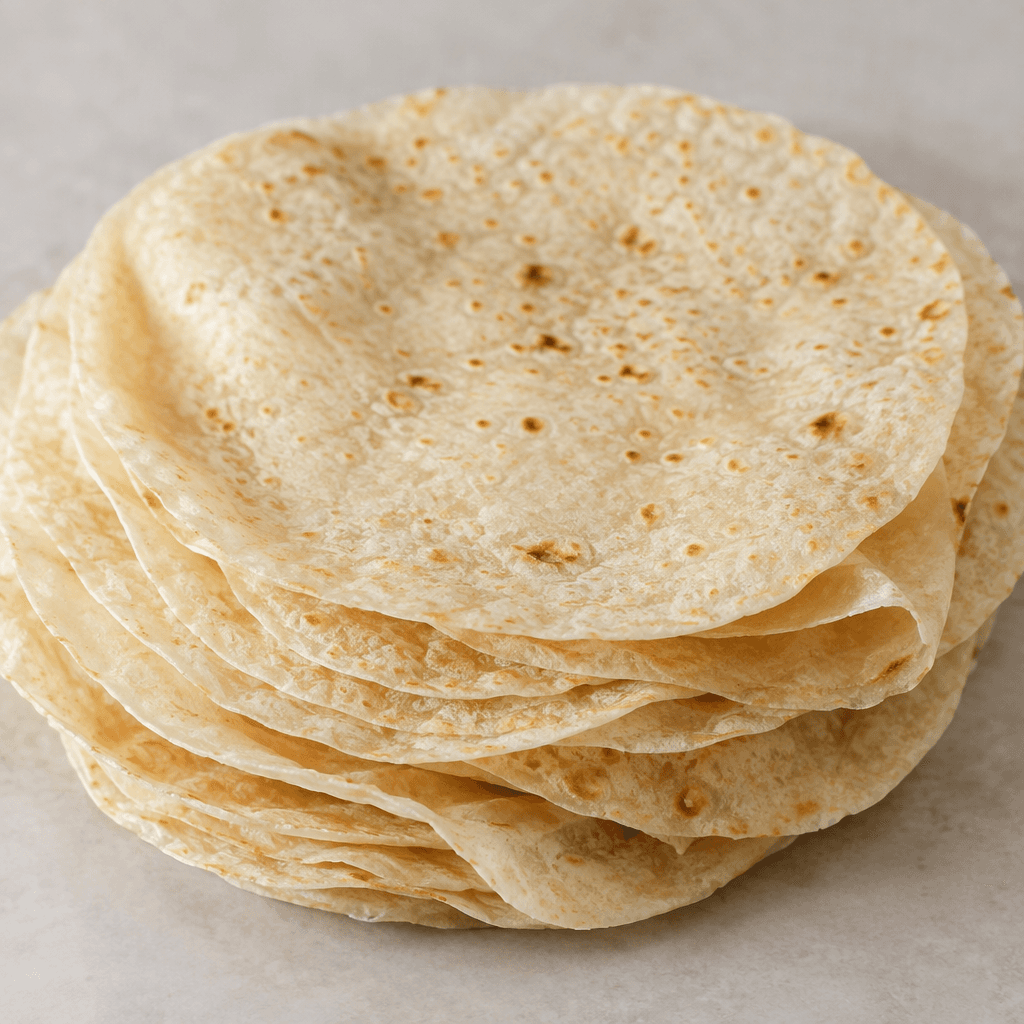
Yufka Calories
Thin, baked Turkish flatbread. Low fat, moderate carbs.
In season: Spring · Summer · Autumn · Winter
CALORIES
GI
POTASSIUM
FIBER
Quick answer
1 piece (medium) of Yufka (50 g) has 145 calories. That works out to 290 calories per 100 g. It contains 29.5 g of carbs, 4.3 g of protein, 0.8 g of fat and 1.4 g of fiber. Its 175 mg of Sodium covers 8% of the Daily Value. Its glycemic index is 70 (high), so it raises blood sugar quickly.
What is Yufka?
Yufka is a traditional Turkish flatbread made from a simple dough of flour, water and salt, rolled very thin and cooked on a hot griddle. The sheets are often dried for storage and softened with a little water before use.
It can stand in for bread at a meal, be wrapped around cheese or greens, or layered into börek. Its delicate, flexible texture makes it handy for quick wraps, while its nutrition is mostly carbohydrate with little fat. Pair it with protein-rich fillings and vegetables for a more substantial meal.
Yufka Nutrition Facts
Selected: 100 g
290
KCAL / 100G
Carbs
59g
· 21% DV
Protein
8.5g
· 17% DV
Fat
1.5g
· 2% DV
Fiber
2.8g
· 10% DV
DV is the share of the daily value covered, on a 2,000 kcal reference diet.
Calories come from: Carbs 83% · Protein 12% · Fat 5%
Yufka Vitamins & Minerals
Vitamins
B3
2.1mg · 13% DV
B1
0.12mg · 10% DV
Folate
22µg · 6% DV
B5
0.25mg · 5% DV
Minerals
Sodium
350mg · 15% DV
Selenium
6µg · 11% DV
Phosphorus
70mg · 10% DV
Zinc
1mg · 9% DV
How Nutritious Is Yufka?
Nutrient density
Low
How many vitamins, minerals and how much fiber this food carries per calorie. A high score means a lot of nutrition for few calories.
Satiety score
Medium
An EatBetter score computed from fiber, protein and calorie density. A high score means staying full longer on the same calories.
Both scores are calculated per 100 g and do not change with the selected portion. The satiety score is EatBetter's own calculation, not a clinical measure.
Yufka Glycemic Index
GLYCEMIC INDEX
GLYCEMIC LOAD
Accounts for portion size — a more realistic measure than GI alone.
How to Burn Off Yufka
To burn the 290 calories in 100 g:
🚶
Walking (5 km/h)
🏃
Running (8 km/h)
🚴
Cycling
🏊
Swimming
Times are calculated with the MET equation for a 70 kg adult. Actual burn varies with your weight, age and pace.
Is Yufka Processed?
NOVA 2
Minimally Processed
1. Unprocessed
2. Minimally Processed
3. Processed
4. Ultra-Processed
NOVA classifies foods into 4 groups by industrial processing. NOVA 1 (unprocessed) is the healthiest.
Does Yufka Contain Allergens?
Contains these allergens:
Which Diets Is Yufka Good For?
Vegan
✓ Suitable
Vegetarian
✓ Suitable
Gluten-Free
— Not suitable
Dairy-Free
— Not suitable
Mediterranean
✓ Suitable
Paleo
— Not suitable
Whole30
— Not suitable
DASH
— Not suitable
Keto
— Not suitable
Low FODMAP
— Not suitable
Yufka Fat Profile
SATURATED
0.3g
MONOUNSATURATED
0.2g
POLYUNSATURATED
0.15g
Omega 6:3 ratio 12:1
Above the ideal 4:1 (12:1).
Compare Yufka
Foods Similar to Yufka
Frequently Asked Questions About Yufka
What is yufka bread?
Yufka is a traditional Turkish flatbread made by rolling dough into very thin sheets and cooking them on a hot surface. It may be eaten fresh or dried for storage, and is often used to make börek.
Is yufka the same as filo pastry?
No, yufka and filo are related thin doughs but are not identical. Yufka sheets are generally thicker and sturdier, while filo is rolled extremely thin and is commonly layered with butter or oil for pastries.
How do you use yufka to make börek?
To make börek, layer or roll yufka around a filling such as cheese, spinach, or seasoned meat, then bake until browned. Brush the sheets lightly with oil or a suitable sauce so they hold together without becoming soggy.
How do you soften dried yufka sheets?
Lightly dampen dried yufka with a clean cloth or a little water, then cover it briefly until pliable. Add moisture gradually: soaking can make the sheets tear and turn soft or gummy when cooked.
How should you store yufka after opening?
Keep opened yufka sealed against air so it does not dry out. Refrigerate fresh yufka and store dried sheets in a cool, dry place; follow the package directions because storage needs vary between fresh and dried products.
Can you freeze yufka?
Yes, yufka can be frozen. Separate the sheets with baking paper, seal them in a freezer-safe bag, and thaw them in the refrigerator before use. Handle thawed sheets gently, as they can tear if they are still cold or dry.
Why does yufka börek turn soggy?
Yufka börek often turns soggy when the filling releases water, too much sauce is added, or the pastry is underbaked. Drain wet fillings well, use only enough liquid to soften the sheets, and bake until the base is cooked through.
Can you use yufka instead of tortillas for wraps?
Yes, yufka can work for wraps, especially when the sheets are fresh and flexible. Warm one briefly so it bends without cracking, and avoid overfilling it; dried yufka is better softened first or used for baked dishes.
Is yufka the same as lavash?
No, yufka and lavash are different flatbreads. Yufka is commonly sold as a thin sheet for börek and similar dishes, while lavash is typically softer and used as a wrap or served alongside meals.
Can people with diabetes eat yufka?
People with diabetes can include yufka, but its carbohydrates can raise blood glucose. Portion size and the rest of the meal matter, so anyone managing diabetes should fit it into their individual eating plan with guidance from their care team.
Have another question about Yufka?
Ask the AI nutrition coach — calories, portions, alternatives and more, answered in seconds in the app.

Scan calories with your camera
Instant AI nutrition analysis

Nutrition data compiled from USDA FoodData Central and scientific sources.