

Ready & Packaged Foods
All →Vegetables & Legumes
All →Desserts & Confectionery
All →Meat & Protein
All →Grains & Bakery
All →Beverages
All →Milk & Dairy
All →

Yozgat Tarhana Soup Calories
Traditional fermented soup, probiotic, fiber-rich, nutritious
In season: Autumn · Winter
CALORIES
GI
POTASSIUM
FIBER
Quick answer
1 cup (medium) of Yozgat Tarhana Soup (250 g) has 138 calories. That works out to 55 calories per 100 g. It contains 22.8 g of carbs, 5.5 g of protein, 2.8 g of fat and 5 g of fiber. Its 525 mg of Sodium covers 23% of the Daily Value. Its glycemic index is 55 (medium), so it raises blood sugar at a moderate pace.
What is Yozgat Tarhana Soup?
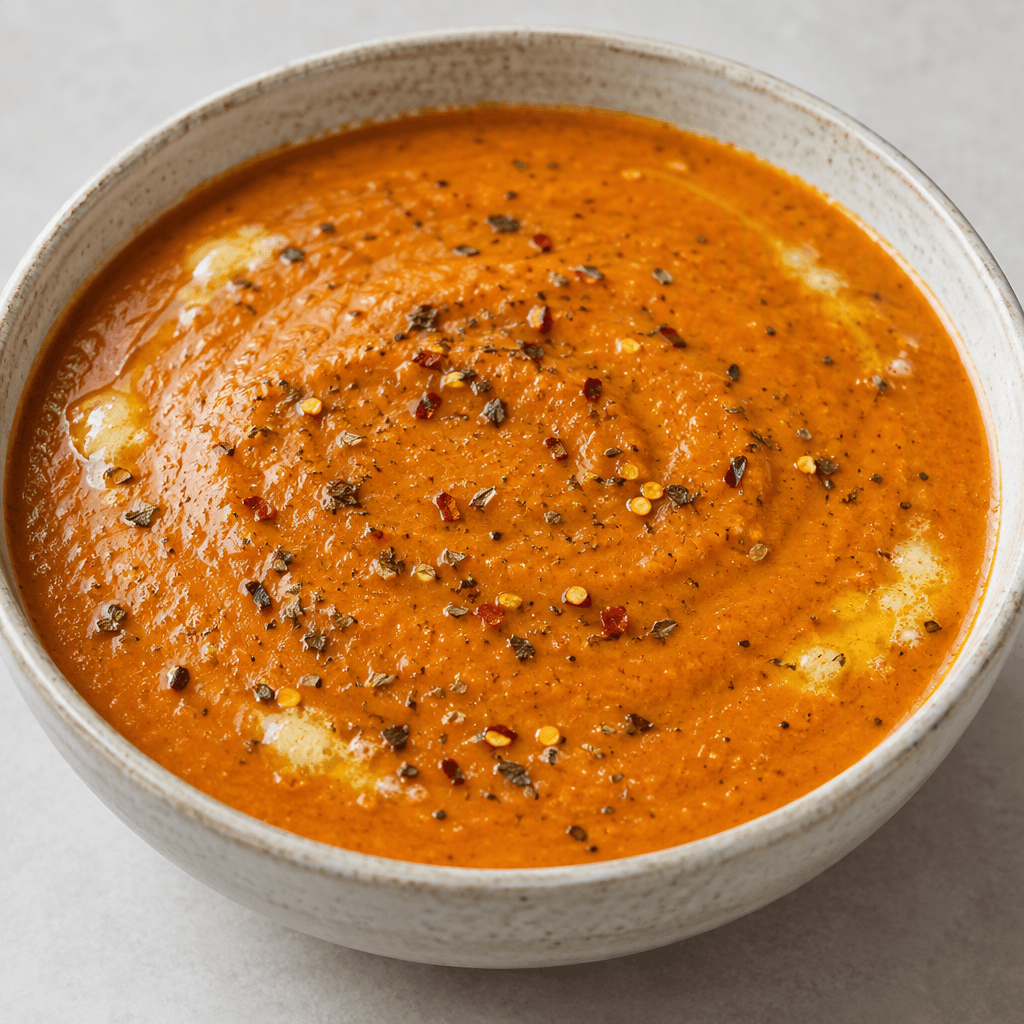
Yozgat Tarhana Soup is a Central Anatolian soup made by cooking dried tarhana, a fermented mixture typically based on yoghurt and grain, with water or stock. Its fermentation gives the soup a gently tangy depth, while the exact blend can vary from household to household.
The finished soup is thick and smooth, often served hot with a little butter and red pepper or dried herbs on top. In Turkey it is a comforting meal on chilly days, eaten with bread or served as a first course; elsewhere, it fits easily into a simple lunch or supper. It provides 9.1 g of carbohydrate and 2 g of fibre per 100 g. For a lighter bowl, go easy on the butter and pair it with a fresh salad.
Yozgat Tarhana Soup Nutrition Facts
Selected: 100 g
55
KCAL / 100G
Carbs
9.1g
· 3% DV
Protein
2.2g
· 4% DV
Fat
1.1g
· 1% DV
Fiber
2g
· 7% DV
DV is the share of the daily value covered, on a 2,000 kcal reference diet.
Calories come from: Carbs 66% · Protein 16% · Fat 18%

Log this food in EatBetter
100,000+ people use it
- Get your daily calorie target
- Snap your meal, log it in seconds
- See every vitamin and mineral

📸 Scan the code to get the app free.

Yozgat Tarhana Soup Vitamins & Minerals
Vitamins
Biotin
1.2µg · 4% DV
B1
0.04mg · 3% DV
B6
0.05mg · 3% DV
Vitamin C
2.5mg · 3% DV
Minerals
Sodium
210mg · 9% DV
Phosphorus
28mg · 4% DV
Potassium ⭐
95mg · 3% DV
Copper
0mg · 0% DV
Manganese
0mg · 0% DV
How Nutritious Is Yozgat Tarhana Soup?
Nutrient density
Medium
How many vitamins, minerals and how much fiber this food carries per calorie. A high score means a lot of nutrition for few calories.
Satiety score
Medium
An EatBetter score computed from fiber, protein and calorie density. A high score means staying full longer on the same calories.
Both scores are calculated per 100 g and do not change with the selected portion. The satiety score is EatBetter's own calculation, not a clinical measure.
Yozgat Tarhana Soup Glycemic Index
GLYCEMIC INDEX
GLYCEMIC LOAD
Accounts for portion size — a more realistic measure than GI alone.
How to Burn Off Yozgat Tarhana Soup
To burn the 55 calories in 100 g:
🚶
Walking (5 km/h)
🏃
Running (8 km/h)
🚴
Cycling
🏊
Swimming
Times are calculated with the MET equation for a 70 kg adult. Actual burn varies with your weight, age and pace.
Is Yozgat Tarhana Soup Processed?
NOVA 3
Processed
1. Unprocessed
2. Minimally Processed
3. Processed
4. Ultra-Processed
NOVA classifies foods into 4 groups by industrial processing. NOVA 1 (unprocessed) is the healthiest.
Does Yozgat Tarhana Soup Contain Allergens?
Contains these allergens:
Which Diets Is Yozgat Tarhana Soup Good For?
Vegan
— Not suitable
Vegetarian
✓ Suitable
Gluten-Free
— Not suitable
Dairy-Free
— Not suitable
Mediterranean
✓ Suitable
Paleo
— Not suitable
Whole30
— Not suitable
DASH
— Not suitable
Keto
— Not suitable
Low FODMAP
— Not suitable
Yozgat Tarhana Soup Fat Profile
SATURATED
0.18g
MONOUNSATURATED
0.32g
POLYUNSATURATED
0.13g
Omega 6:3 ratio 3:1
Below the ideal 4:1 — a good omega balance.
Compare Yozgat Tarhana Soup
Foods Similar to Yozgat Tarhana Soup
Frequently Asked Questions About Yozgat Tarhana Soup
How do you make Yozgat Tarhana Soup?
To make Yozgat Tarhana Soup, whisk the dried tarhana with cool water until smooth, then simmer it while stirring. Recipes may add tomato paste, butter, mint, garlic, or red pepper; add liquid gradually to get the thickness you prefer.
What is in Yozgat Tarhana Soup?
Yozgat Tarhana Soup is made primarily from dried tarhana, a fermented mixture commonly prepared with yogurt, grain, and vegetables. The soup may also include tomato paste, butter, herbs, or spices, with ingredients varying among household recipes.
What makes Yozgat Tarhana Soup different from other tarhana soups?
Yozgat Tarhana Soup is associated with the tarhana and preparation traditions of Yozgat, which can give it a distinctive tang and texture. Tarhana recipes differ between regions and households, so there is not just one version of the soup.
Why does Yozgat Tarhana Soup taste sour?
Yozgat Tarhana Soup can taste tangy because its dried tarhana is fermented before it is cooked. The strength of the sourness varies with the tarhana recipe and fermentation; adjust seasoning after the soup has simmered.
How do you stop Yozgat Tarhana Soup from getting lumpy?
For lump-free Yozgat Tarhana Soup, first mix the tarhana with cool water until it forms a smooth slurry. Pour it into the pot while stirring, and keep stirring as it heats; add a little water if it thickens too much.
Can you freeze Yozgat Tarhana Soup?
Yes, Yozgat Tarhana Soup can be frozen in an airtight container once fully cooled. Leave space for expansion, thaw it in the refrigerator, and reheat gently while stirring; the texture may thicken or separate slightly, so add water as needed.
Does Yozgat Tarhana Soup contain live probiotics after cooking?
Not necessarily. Yozgat Tarhana Soup is made with fermented tarhana, but simmering can reduce or destroy live microorganisms. Fermentation contributes to tarhana’s characteristic tang, but the cooked soup should not be relied on as a source of live probiotics.
What should you serve with Yozgat Tarhana Soup?
Serve Yozgat Tarhana Soup with crusty bread, a simple salad, or pickles. Its thick texture and tangy taste pair well with uncomplicated sides, and some versions are finished with melted butter, dried mint, or red pepper.
How long does Yozgat Tarhana Soup keep in the fridge?
Yozgat Tarhana Soup keeps for about three days in the refrigerator when cooled promptly and stored in a covered container. Reheat it until steaming, stirring in water if it has thickened; discard it if its smell or appearance has changed.
Can you make Yozgat Tarhana Soup without tomato paste?
Yes, you can make Yozgat Tarhana Soup without tomato paste. The soup will have a milder, less tomato-forward flavor; use the tarhana, water, and seasonings as the base, then adjust the herbs and pepper to taste.
Have another question about Yozgat Tarhana Soup?
Ask the AI nutrition coach — calories, portions, alternatives and more, answered in seconds in the app.

Scan calories with your camera
Instant AI nutrition analysis

Nutrition data compiled from USDA FoodData Central and scientific sources.