

Ready & Packaged Foods
All →Vegetables & Legumes
All →Desserts & Confectionery
All →Meat & Protein
All →Grains & Bakery
All →Beverages
All →Milk & Dairy
All →

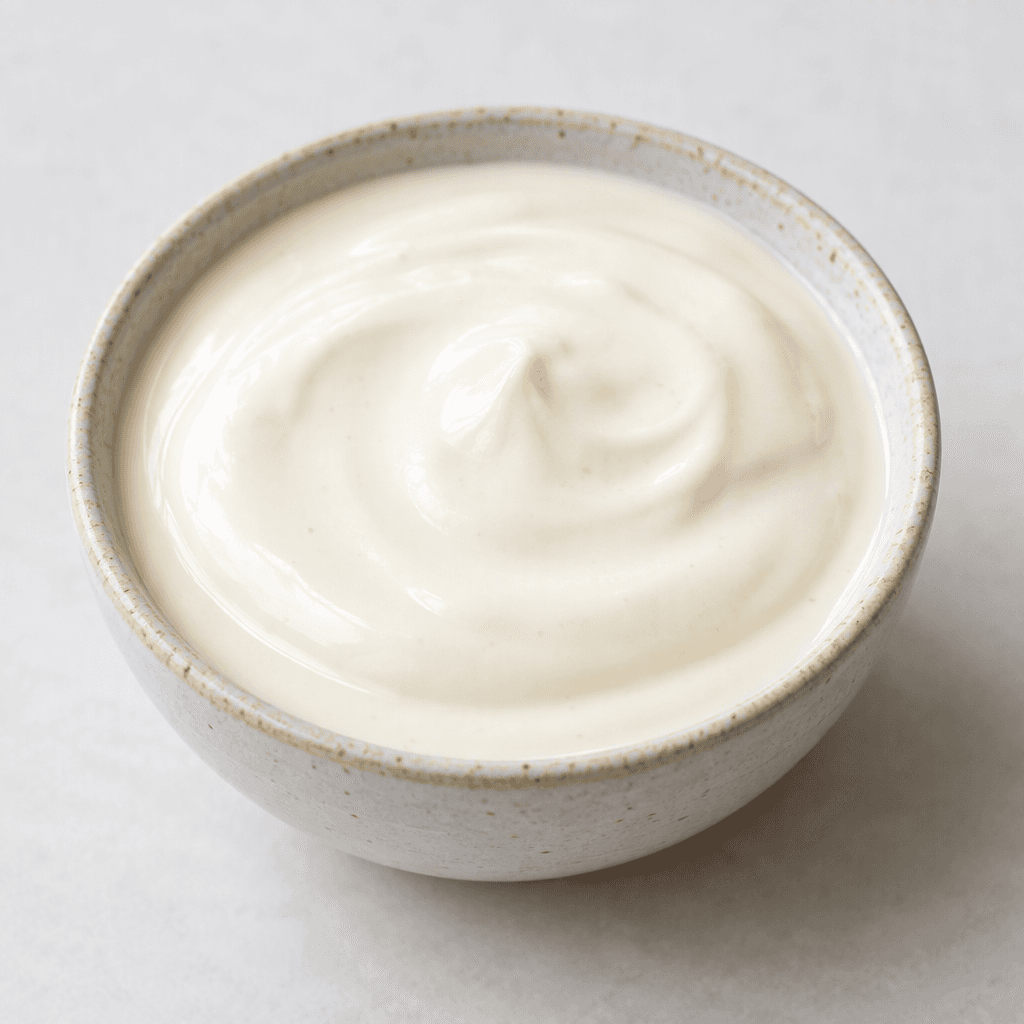
Yogurt Salad Dressing Calories
Yogurt-based, low-fat, refreshing salad dressing
In season: Spring · Summer · Autumn · Winter
CALORIES
GI
POTASSIUM
FIBER
Quick answer
2 tablespoon (medium) of Yogurt Salad Dressing (30 g) has 20 calories. That works out to 65 calories per 100 g. It contains 1.6 g of carbs, 0.8 g of protein, 1.1 g of fat and 0.1 g of fiber. Its 0.1 µg of B12 covers 5% of the Daily Value. Its glycemic index is 35 (low), so it raises blood sugar slowly.
What is Yogurt Salad Dressing?
Yogurt salad dressing is a creamy dressing made with yogurt, usually loosened with a little water or lemon juice and seasoned to taste. Garlic, herbs and spices are common additions, though recipes vary. Its mild tang and smooth texture coat leafy salads well without the heaviness of many oil-based dressings.
It is an easy fit for everyday salads, crunchy vegetables, grain bowls or roasted vegetables, whether mixed through or served on the side for dipping. Yogurt gives it some protein, while the listed 3.5 g of fat per 100 g makes it a relatively light option. Add lemon juice or water to thin it, or extra herbs for more flavour without making it richer.
Yogurt Salad Dressing Nutrition Facts
Selected: 100 g
65
KCAL / 100G
Carbs
5.2g
· 2% DV
Protein
2.8g
· 6% DV
Fat
3.5g
· 4% DV
Fiber
0.2g
· 1% DV
DV is the share of the daily value covered, on a 2,000 kcal reference diet.
Calories come from: Carbs 33% · Protein 18% · Fat 49%
Yogurt Salad Dressing Vitamins & Minerals
Vitamins
B12
0.38µg · 16% DV
B2
0.18mg · 14% DV
B5
0.35mg · 7% DV
Biotin
2.2µg · 7% DV
Minerals
Phosphorus
85mg · 12% DV
Calcium
110mg · 11% DV
Sodium
180mg · 8% DV
Iodine
9µg · 6% DV
How Nutritious Is Yogurt Salad Dressing?
Nutrient density
Medium
How many vitamins, minerals and how much fiber this food carries per calorie. A high score means a lot of nutrition for few calories.
Satiety score
Medium
An EatBetter score computed from fiber, protein and calorie density. A high score means staying full longer on the same calories.
Both scores are calculated per 100 g and do not change with the selected portion. The satiety score is EatBetter's own calculation, not a clinical measure.
Yogurt Salad Dressing Glycemic Index
GLYCEMIC INDEX
GLYCEMIC LOAD
Accounts for portion size — a more realistic measure than GI alone.
How to Burn Off Yogurt Salad Dressing
To burn the 65 calories in 100 g:
🚶
Walking (5 km/h)
🏃
Running (8 km/h)
🚴
Cycling
🏊
Swimming
Times are calculated with the MET equation for a 70 kg adult. Actual burn varies with your weight, age and pace.
Is Yogurt Salad Dressing Processed?
NOVA 3
Processed
1. Unprocessed
2. Minimally Processed
3. Processed
4. Ultra-Processed
NOVA classifies foods into 4 groups by industrial processing. NOVA 1 (unprocessed) is the healthiest.
Does Yogurt Salad Dressing Contain Allergens?
Contains these allergens:
Which Diets Is Yogurt Salad Dressing Good For?
Vegan
— Not suitable
Vegetarian
✓ Suitable
Gluten-Free
— Not suitable
Dairy-Free
— Not suitable
Mediterranean
✓ Suitable
Paleo
— Not suitable
Whole30
— Not suitable
DASH
— Not suitable
Keto
— Not suitable
Low FODMAP
— Not suitable
Yogurt Salad Dressing Fat Profile
SATURATED
2.2g
MONOUNSATURATED
0.8g
POLYUNSATURATED
0.1g
Omega 6:3 ratio 0.3:1
Below the ideal 4:1 — a good omega balance.
Compare Yogurt Salad Dressing
Foods Similar to Yogurt Salad Dressing
Frequently Asked Questions About Yogurt Salad Dressing
How do you make Yogurt Salad Dressing?
Mix plain yogurt with lemon juice or vinegar, a little olive oil, and seasonings to make Yogurt Salad Dressing. Whisk until smooth, then taste and adjust the acidity or seasoning before tossing it with salad.
What salads go well with Yogurt Salad Dressing?
Yogurt Salad Dressing works well with crisp green salads, cucumber and tomato, slaw, and grain salads. Its tangy creaminess also pairs nicely with roasted vegetables, so it can dress warm or chilled ingredients.
Can Yogurt Salad Dressing be used as a marinade?
Yes, Yogurt Salad Dressing can work as a quick marinade for chicken or vegetables. The yogurt coats the food and adds tang; wipe off excess dressing before cooking so it browns rather than steams.
Can you use Greek yogurt in Yogurt Salad Dressing?
Yes, Greek yogurt makes Yogurt Salad Dressing especially thick and creamy. Thin it gradually with lemon juice, vinegar, or water until it pours easily; adding too much liquid at once can make it runny.
Is Yogurt Salad Dressing healthier than ranch dressing?
Yogurt Salad Dressing is often a lighter alternative to ranch because yogurt can replace some of the richer creamy ingredients. The comparison depends on the recipe, especially how much oil, mayonnaise, salt, and added sugar it contains.
How long does homemade Yogurt Salad Dressing last in the fridge?
Homemade Yogurt Salad Dressing keeps for a few days when refrigerated in a clean, airtight container. Stir it before serving, and discard it if its smell, appearance, or texture changes; dressing already mixed into salad spoils faster.
Can Yogurt Salad Dressing be frozen?
Freezing Yogurt Salad Dressing is not recommended. Yogurt tends to separate and turn grainy when thawed, so the dressing may lose its smooth texture; make a fresh batch instead of freezing leftovers.
Why does Yogurt Salad Dressing separate?
Yogurt Salad Dressing can separate when its watery and creamy parts settle apart, or when acidic ingredients sit in it for a while. Whisk it again before serving, and add lemon juice or vinegar gradually when mixing.
Can Yogurt Salad Dressing replace mayonnaise in coleslaw?
Yes, Yogurt Salad Dressing can replace mayonnaise in coleslaw for a tangier, less rich result. Use thick yogurt so the cabbage stays coated, and add the dressing shortly before serving to keep the slaw crisp.
Can Yogurt Salad Dressing be served as a dip?
Yes, Yogurt Salad Dressing makes an easy dip for raw vegetables, pita, or roasted potatoes. For a thicker dip, start with Greek yogurt and add less lemon juice or water than you would for a pourable salad dressing.
Have another question about Yogurt Salad Dressing?
Ask the AI nutrition coach — calories, portions, alternatives and more, answered in seconds in the app.

Scan calories with your camera
Instant AI nutrition analysis

Nutrition data compiled from USDA FoodData Central and scientific sources.