

Ready & Packaged Foods
All →Vegetables & Legumes
All →Desserts & Confectionery
All →Meat & Protein
All →Grains & Bakery
All →Beverages
All →Milk & Dairy
All →

Yeast Bread Calories
Traditional yeast bread, source of carbohydrates and fiber
In season: Spring · Summer · Autumn · Winter
CALORIES
GI
POTASSIUM
FIBER
Quick answer
1 slice (medium) of Yeast Bread (35 g) has 93 calories. That works out to 265 calories per 100 g. It contains 17.2 g of carbs, 3 g of protein, 1.1 g of fat and 0.9 g of fiber. Its 4.6 µg of Selenium covers 8% of the Daily Value. Its glycemic index is 70 (high), so it raises blood sugar quickly.
What is Yeast Bread?
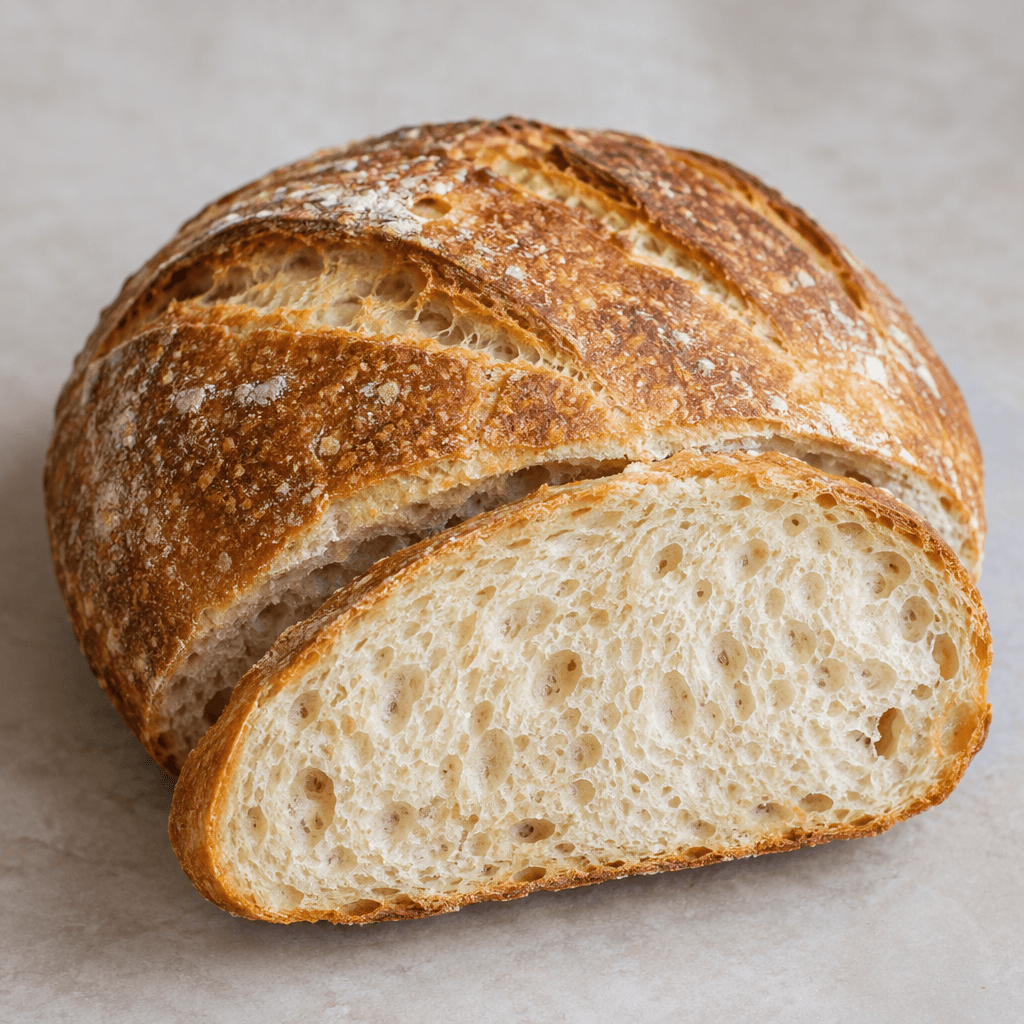
Yeast bread is made by mixing flour and water with yeast, often with salt, then letting the dough rise before baking. It may be shaped as a round loaf or an elongated one; a browned crust surrounds a soft, airy crumb. Recipes vary, and the flour used can change its colour and texture.
It is a familiar everyday bread in many parts of the world, served with meals, toasted for breakfast, or used for sandwiches. Its mild, slightly yeasty flavour makes it easy to pair with sweet or savoury toppings. Nutritionally, it is mainly a source of carbohydrates, with some protein and fibre. For a more filling meal, choose a whole-grain version and pair a slice with eggs, beans, cheese or vegetables.
Yeast Bread Nutrition Facts
Selected: 100 g
265
KCAL / 100G
Carbs
49g
· 18% DV
Protein
8.5g
· 17% DV
Fat
3.2g
· 4% DV
Fiber
2.7g
· 10% DV
DV is the share of the daily value covered, on a 2,000 kcal reference diet.
Calories come from: Carbs 76% · Protein 13% · Fat 11%
Yeast Bread Vitamins & Minerals
Vitamins
B1
0.25mg · 21% DV
B3
2.1mg · 13% DV
B2
0.15mg · 12% DV
Folate
35µg · 9% DV
Minerals
Selenium
13µg · 24% DV
Sodium
490mg · 21% DV
Iron
3mg · 17% DV
Phosphorus
90mg · 13% DV
How Nutritious Is Yeast Bread?
Nutrient density
Medium
How many vitamins, minerals and how much fiber this food carries per calorie. A high score means a lot of nutrition for few calories.
Satiety score
Medium
An EatBetter score computed from fiber, protein and calorie density. A high score means staying full longer on the same calories.
Both scores are calculated per 100 g and do not change with the selected portion. The satiety score is EatBetter's own calculation, not a clinical measure.
Yeast Bread Glycemic Index
GLYCEMIC INDEX
GLYCEMIC LOAD
Accounts for portion size — a more realistic measure than GI alone.
How to Burn Off Yeast Bread
To burn the 265 calories in 100 g:
🚶
Walking (5 km/h)
🏃
Running (8 km/h)
🚴
Cycling
🏊
Swimming
Times are calculated with the MET equation for a 70 kg adult. Actual burn varies with your weight, age and pace.
Is Yeast Bread Processed?
NOVA 3
Processed
1. Unprocessed
2. Minimally Processed
3. Processed
4. Ultra-Processed
NOVA classifies foods into 4 groups by industrial processing. NOVA 1 (unprocessed) is the healthiest.
Does Yeast Bread Contain Allergens?
Contains these allergens:
Which Diets Is Yeast Bread Good For?
Vegan
— Not suitable
Vegetarian
✓ Suitable
Gluten-Free
— Not suitable
Dairy-Free
— Not suitable
Mediterranean
— Not suitable
Paleo
— Not suitable
Whole30
— Not suitable
DASH
— Not suitable
Keto
— Not suitable
Low FODMAP
— Not suitable
Yeast Bread Fat Profile
SATURATED
0.7g
MONOUNSATURATED
0.6g
POLYUNSATURATED
1.1g
Omega 6:3 ratio 15:1
Above the ideal 4:1 (15:1).
Compare Yeast Bread
Foods Similar to Yeast Bread
Frequently Asked Questions About Yeast Bread
What is yeast bread made of?
Yeast bread is typically made from flour, water, yeast, and salt. The yeast ferments sugars in the dough and releases gas, which helps the loaf rise and gives its crumb a light, airy texture.
Why won't my yeast bread dough rise?
Yeast bread dough may not rise if the yeast is inactive or the liquid used to mix it was too hot. Keep salt from sitting directly on the yeast, and let the covered dough rest somewhere warm and draft-free.
Why is my yeast bread dense?
Yeast bread often turns out dense when the dough has not risen enough, or when too much flour makes it stiff. Give the dough time to expand before baking, and add flour gradually while kneading.
How do you get a crisp crust on yeast bread?
For a crisp yeast bread crust, bake the loaf in a fully heated oven and introduce steam early in baking. A covered Dutch oven can trap that steam; uncover it near the end so the crust can brown.
How long does yeast bread last?
Yeast bread usually keeps best at room temperature in a bread box or sealed bag, with the cut side protected. It can become stale faster in the refrigerator, so freeze extra portions if you will not eat them soon.
Can you freeze yeast bread?
Yes, yeast bread freezes well. Slice the loaf first and seal the slices in a freezer-safe bag so you can thaw only what you need; individual slices can also go straight into a toaster.
Can yeast bread dough rise overnight?
Yes, yeast bread dough can rise overnight in the refrigerator. The cold slows fermentation, so cover the dough well and allow it to warm up before shaping or baking it the next day.
Why does yeast bread collapse after baking?
Yeast bread can collapse if it is overproofed and its structure becomes too weak, or if the center is underbaked. Avoid leaving the shaped loaf to rise too long, and make sure it is fully baked before removing it.
Is yeast bread healthy?
Yeast bread can be part of a balanced meal and provides carbohydrates, while its fiber content depends on the flour used. Choosing a whole-grain yeast loaf is a practical way to get more fiber than from a refined-flour version.
Does yeast bread cause bloating?
Yeast bread can cause bloating in some people, often because of wheat components or the amount eaten. If it repeatedly causes discomfort, note which breads and portions trigger symptoms rather than assuming the yeast itself is always the cause.
Have another question about Yeast Bread?
Ask the AI nutrition coach — calories, portions, alternatives and more, answered in seconds in the app.

Scan calories with your camera
Instant AI nutrition analysis

Nutrition data compiled from USDA FoodData Central and scientific sources.