

Ready & Packaged Foods
All →Vegetables & Legumes
All →Desserts & Confectionery
All →Meat & Protein
All →Grains & Bakery
All →Beverages
All →Milk & Dairy
All →

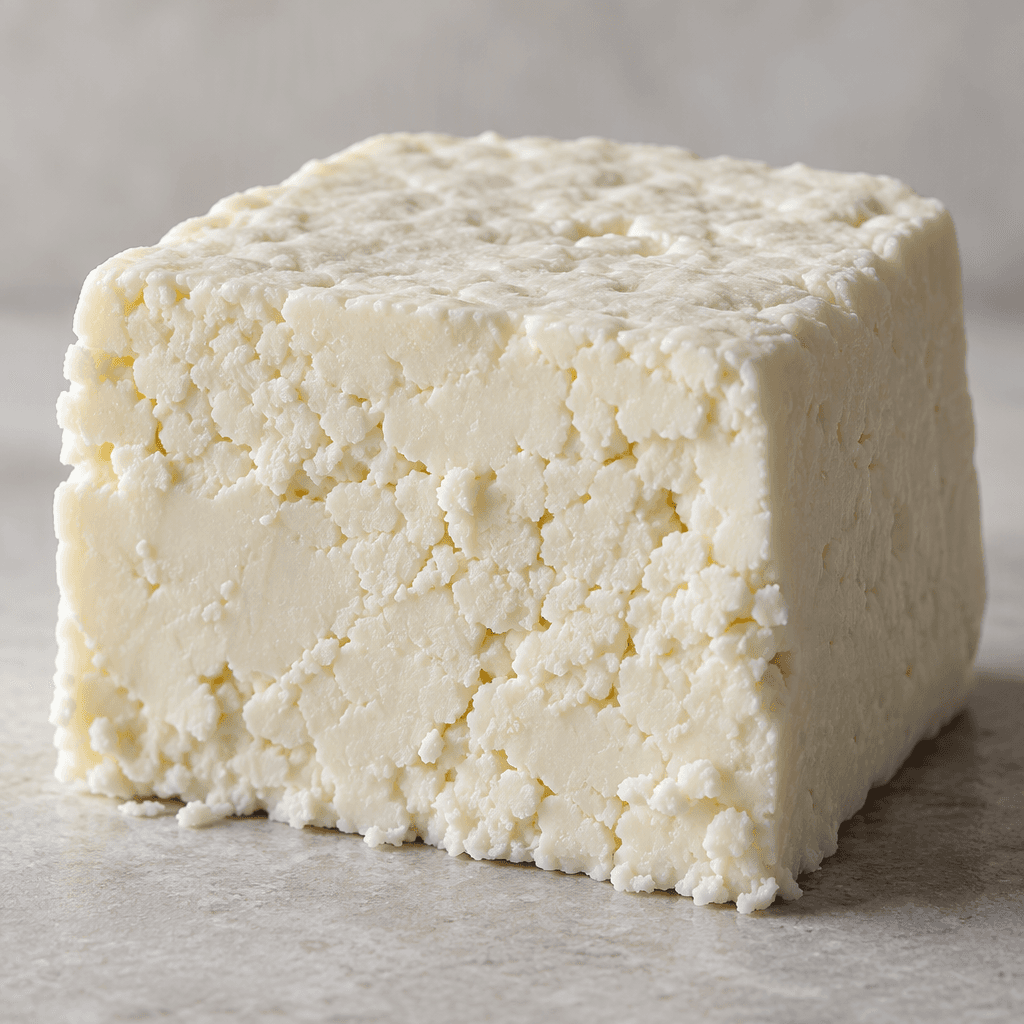
Yayla cheese Calories
Salty white brined cheese, rich in protein and calcium
CALORIES · 100 G
GI
POTASSIUM · 100 G
FIBER · 100 G
Quick answer
1 slice (thin) of Yayla cheese (30 g) has 80 calories. That works out to 265 calories per 100 g. It contains 0.6 g of carbs, 5 g of protein, 6.3 g of fat and 0 g of fiber. Its 0.3 µg of B12 covers 14% of the Daily Value. Its glycemic index is 0 (low), so it raises blood sugar slowly.
Yayla cheese Nutrition Facts
Selected: 1 slice (thin) · 30 g
80
KCAL / 30G
Carbs
0.6g
· 0% DV
Protein
5g
· 10% DV
Fat
6.3g
· 8% DV
Fiber
0g
· 0% DV
DV is the share of the daily value covered, on a 2,000 kcal reference diet.
Calories come from: Carbs 3% · Protein 25% · Fat 72%
Yayla cheese nutrition facts table · 1 slice (thin) (30 g)
| Nutrient | Amount | % DV |
|---|---|---|
| Calories | 80 kcal | |
| Total fat | 6.3 g | 8% |
| Saturated fat | 4.05 g | 20% |
| Trans fat | 0.21 g | |
| Sodium | 345 mg | 15% |
| Total carbohydrate | 0.6 g | 0% |
| Fiber | 0 g | 0% |
| Protein | 5 g | 10% |
Calories: Calories measure energy. Average daily need is 2,000 kcal. Excess calories are stored as fat, too few cause weight loss.
Carbs: Your body's primary energy source. The brain runs exclusively on carbs. Daily need: 275g.
Protein: Essential for muscle repair and cell growth. Daily need: 50g. Keeps you full and boosts metabolism.
Fat: Needed for hormone production and vitamin absorption. Daily need: 78g. Limit saturated fats, choose unsaturated.
Fiber: Critical for digestive health and satiety. Daily need: 28g. Stabilizes blood sugar, lowers cholesterol.

Log this food in EatBetter
100,000+ people use it
- Get your daily calorie target
- Snap your meal, log it in seconds
- See every vitamin and mineral

📸 Scan the code to get the app free.

How Many Calories in 1 Thin Slice of Yayla cheese?
| Serving | Amount | Calories |
|---|---|---|
| 1 slice (thin) | 30 g | 80 kcal |
| 1 slice (thin) | 20 g | 53 kcal |
| 1 slice (medium) | 30 g | 80 kcal |
| 1 piece (small) | 40 g | 106 kcal |
| 1 slice (thick) | 45 g | 119 kcal |
| 1 serving (medium) | 50 g | 133 kcal |
| 2 slice (medium) | 60 g | 159 kcal |
| 1 piece (medium) | 70 g | 186 kcal |
| 100 g | 100 g | 265 kcal |
| 1 serving (large) | 100 g | 265 kcal |
Calculated from 265 calories per 100 g.
Frequently Asked Questions About Yayla cheese
What is Yayla cheese made from?
Yayla cheese is a salty white cheese kept in brine. The exact milk type and ingredients can vary by producer, so the name alone does not tell you whether it is made from cow’s, sheep’s, or mixed milk.
What does Yayla cheese taste like?
Yayla cheese tastes salty and tangy, with a mild dairy flavor typical of white brined cheese. Its exact sharpness and firmness can vary, so taste a little before adding it to a dish.
Is Yayla cheese the same as feta?
No, Yayla cheese and feta are not necessarily the same cheese. Both can be salty and brined, but their milk, production methods, and texture may differ; Yayla cheese is not automatically a direct substitute for feta.
How should you store Yayla cheese after opening?
Keep Yayla cheese refrigerated in a covered container, ideally submerged in its original brine. If there is no brine, seal it well and use it according to the package instructions; avoid leaving it out at room temperature.
Can you freeze Yayla cheese?
Yes, you can freeze Yayla cheese, but thawing may make it drier or more crumbly. Freeze it in a sealed portion and save the thawed cheese for cooked dishes rather than expecting its original texture for serving.
Can you use Yayla cheese in a salad?
Yes, Yayla cheese works well crumbled over salads, especially with tomatoes, cucumbers, olives, or leafy greens. Since it is salty, taste the salad before adding extra salt or a salty dressing.
How can you make Yayla cheese less salty?
Soak Yayla cheese briefly in cold water, then taste it and drain it when the salt level suits you. A longer soak removes more salt but can also soften the cheese and dull its flavor.
Does Yayla cheese melt well on pizza?
Yayla cheese softens when heated but usually does not melt into the stretchy, smooth layer associated with mozzarella. It can work as a salty topping, especially when crumbled alongside a milder melting cheese.
Can people with lactose intolerance eat Yayla cheese?
Some people with lactose intolerance tolerate small portions of cheese, but the lactose content of Yayla cheese can vary by producer. If it causes symptoms, reduce the portion or choose a product specifically labeled lactose-free.
Is Yayla cheese safe to eat during pregnancy?
Yayla cheese can be eaten during pregnancy if it is made with pasteurized milk and has been kept refrigerated. If the milk is unpasteurized or you cannot confirm how it was stored, ask your healthcare professional before eating it.
Yayla cheese Vitamins & Minerals
Vitamins
B12
0.33µg · 14% DV
B2
0.1mg · 8% DV
Vitamin A
54µg · 6% DV
Biotin
0.9µg · 3% DV
Minerals
Sodium
345mg · 15% DV
Calcium
144mg · 14% DV
Phosphorus
96mg · 14% DV
Zinc
0.72mg · 7% DV
Potassium ⭐
29mg · 1% DV
Yayla cheese Glycemic Index
GLYCEMIC INDEX
GLYCEMIC LOAD
Accounts for portion size — a more realistic measure than GI alone.
How to Burn Off Yayla cheese
To burn the 80 calories in 1 slice (thin) (30 g):
🚶
Walking (5 km/h)
🏃
Running (8 km/h)
🚴
Cycling
🏊
Swimming
Times are calculated with the MET equation for a 70 kg adult. Actual burn varies with your weight, age and pace.
What is Yayla cheese?
Yayla cheese is a salty, white brined cheese made from milk. It fits the Turkish tradition of white cheeses kept in brine, though the name alone does not identify a specific region or production style. Its flavour is savoury and tangy, and the texture is firm enough to slice but can crumble when pressed.
In Turkey, it is commonly served at breakfast with bread, olives and fresh vegetables, and it also works in salads or as a filling for pastries. It provides protein and calcium, with fat and salt also contributing to its nutritional profile. Pair a modest slice with tomatoes, cucumber and herbs for a balanced plate; a brief rinse can soften its saltiness.
How Nutritious Is Yayla cheese?
Nutrient density
Medium
How many vitamins, minerals and how much fiber this food carries per calorie. A high score means a lot of nutrition for few calories.
Satiety score
Medium
An EatBetter score computed from fiber, protein and calorie density. A high score means staying full longer on the same calories.
Both scores are calculated per 100 g and do not change with the selected portion. The satiety score is EatBetter's own calculation, not a clinical measure.
Is Yayla cheese Processed?
NOVA 3
Processed
1. Unprocessed
2. Minimally Processed
3. Processed
4. Ultra-Processed
NOVA classifies foods into 4 groups by industrial processing. NOVA 1 (unprocessed) is the healthiest.
Does Yayla cheese Contain Allergens?
Contains these allergens:
Which Diets Is Yayla cheese Good For?
Vegan
— Not suitable
Vegetarian
✓ Suitable
Gluten-Free
✓ Suitable
Dairy-Free
— Not suitable
Mediterranean
✓ Suitable
Paleo
— Not suitable
Whole30
— Not suitable
DASH
— Not suitable
Keto
✓ Suitable
Low FODMAP
— Not suitable
Yayla cheese Fat Profile
SATURATED
4.05g
MONOUNSATURATED
1.68g
POLYUNSATURATED
0.18g
Omega 6:3 ratio 3.5:1
Below the ideal 4:1 — a good omega balance.
Compare Yayla cheese
Foods Similar to Yayla cheese
Have another question about Yayla cheese?
Ask the AI nutrition coach — calories, portions, alternatives and more, answered in seconds in the app.

Scan calories with your camera
Instant AI nutrition analysis

Nutrition data compiled from USDA FoodData Central and scientific sources.